
Care Team Collaboration: How Doctors, Pharmacists, and Patients Work Together for Better Outcomes
When it comes to managing medications, care team collaboration, the coordinated effort between healthcare providers and patients to ensure safe, effective treatment. Also known as interdisciplinary care, it’s not just a buzzword—it’s what keeps you alive when you’re on five different pills, dealing with side effects, and trying not to mix your heart meds with your antifungal cream. Too many people think their doctor is the only one who matters. But your pharmacist? They’re the one who catches the interaction between your statin and grapefruit juice before you end up in the ER. Your nurse? They notice you’re skipping doses because the pills are too expensive. And you? You’re the only one who knows if the new medication made you too dizzy to walk the dog.
Real care team collaboration, the coordinated effort between healthcare providers and patients to ensure safe, effective treatment. Also known as interdisciplinary care, it’s not just a buzzword—it’s what keeps you alive when you’re on five different pills, dealing with side effects, and trying not to mix your meds with your antifungal cream. isn’t about meetings and charts. It’s about a pharmacist calling your doctor because your insulin got left in a hot car. It’s about your doctor asking you, "What’s stopping you from taking this?" instead of just writing another prescription. It’s about knowing that pharmacist advice, expert guidance on drug interactions, dosing, and storage from licensed pharmacy professionals. Also known as medication review, it’s a free service most people never use. The posts here show how this works in real life: how medication safety, the practice of preventing harm from drugs through proper use, storage, and monitoring. Also known as drug safety, it’s the goal of every care team. isn’t just about avoiding overdoses—it’s about catching hidden risks like PPIs killing your antifungal treatment, or how humidity ruins your pills before the expiration date. It’s about knowing when a generic isn’t just cheaper—it’s the only thing keeping you alive because your insurance won’t cover the brand.
You don’t need to be a medical expert to make care team collaboration work. You just need to ask: "What does this do?", "What happens if I skip it?", and "Can my pharmacist help me with this?" The posts below cover everything from how TNF inhibitors affect cancer risk to why your OTC nasal spray is making your congestion worse. You’ll see how patients who used their pharmacy consultation service caught dangerous interactions before they got sick. You’ll learn why some people take separate generic pills instead of combo packs—and why that can backfire. This isn’t theory. It’s what’s happening in clinics, pharmacies, and kitchens across the country. And if you’re taking any meds at all, it’s happening to you too.
Dec
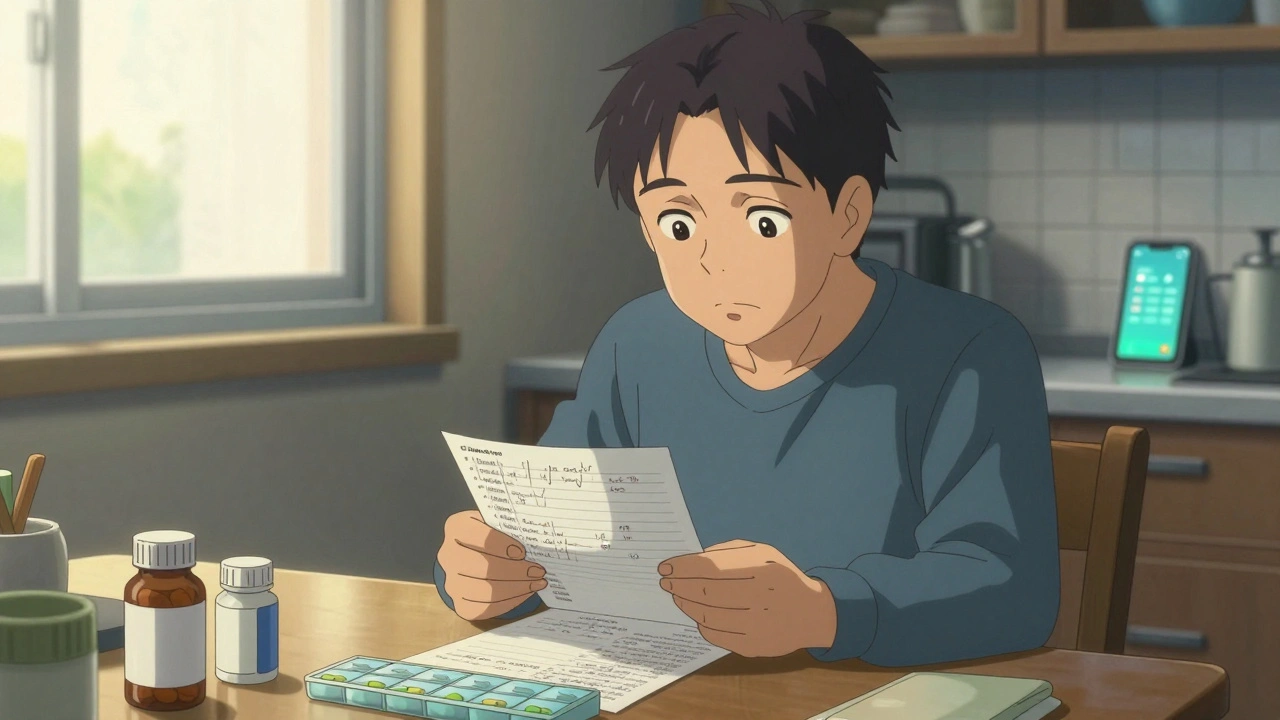
How to Build a Personal Medication Safety Plan with Your Care Team
Build a personal medication safety plan with your care team to prevent dangerous drug interactions, reduce side effects, and avoid hospital visits. Start with a full list of all medications, store them safely, use a pill organizer, and check in regularly.