
Storing Medications: How to Keep Your Pills Safe and Effective
When you buy medicine, you’re not just paying for the drug—you’re paying for its storing medications, the practices that keep pills and capsules active, safe, and ready to work when you need them. Also known as pharmaceutical storage, it’s not just about keeping bottles in a cabinet—it’s about controlling temperature, moisture, light, and even air exposure to prevent degradation. Many people think if a pill still looks the same, it’s still good. That’s a dangerous assumption. Moisture can turn tablets into mush. Heat can break down biologics before their expiration date. And leaving meds in a hot car or a steamy bathroom? That’s how you end up with useless—or worse, harmful—medication.
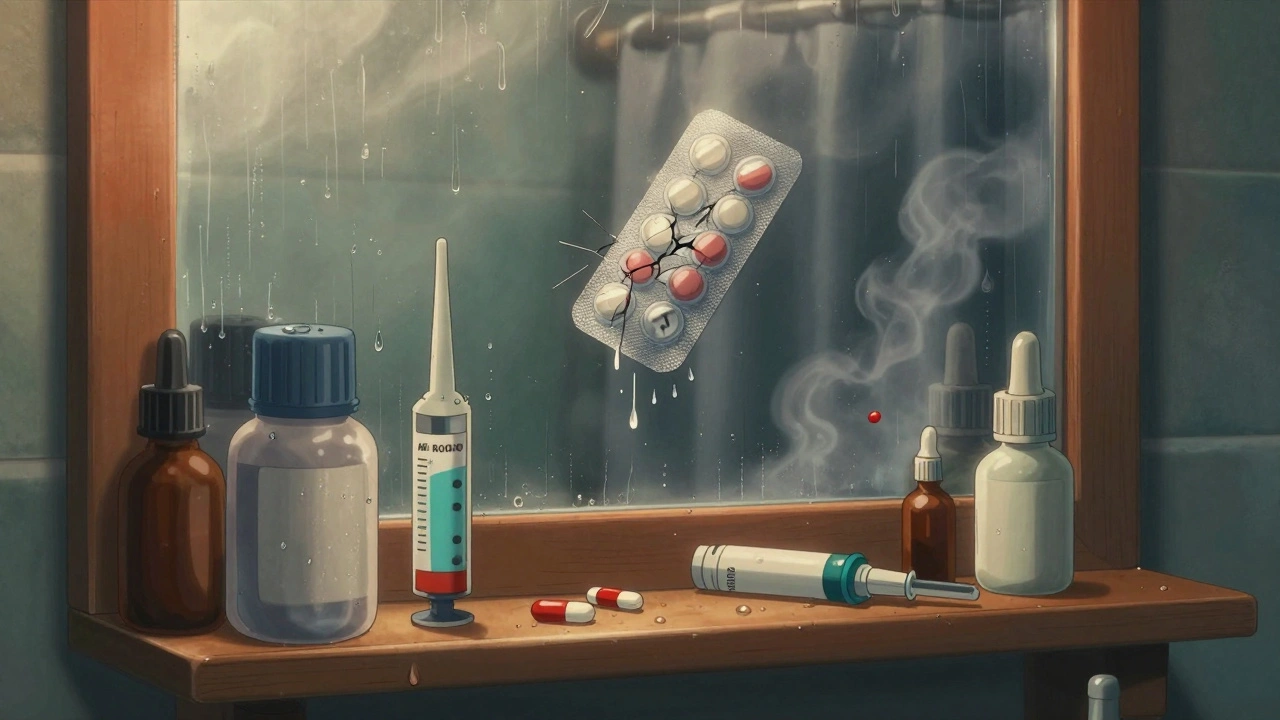
One of the biggest threats to your meds is moisture damage pills, a silent killer of drug potency that happens when humidity seeps into bottles, even sealed ones. This isn’t just about old aspirin turning sticky. Even modern capsules can absorb water, changing how fast they dissolve in your body. That means your blood pressure pill might not kick in fast enough, or your antibiotic could fail to reach therapeutic levels. Desiccants—the little packets you find in medicine bottles—are there for a reason. Don’t throw them out. And never transfer pills to a plastic bag or a jar without a tight seal. The original packaging? It’s designed to block moisture and light. Use it. pharmaceutical moisture control, the science behind how drugs resist humidity and environmental stress, is why some meds come in blister packs or amber glass. These aren’t just marketing tricks—they’re survival tools. Heat is just as bad. Storing insulin in a hot garage? It’s ruined. Keeping your thyroid med in a sunlit windowsill? It loses strength. The ideal spot is a cool, dry place—like a bedroom drawer, not the bathroom cabinet.
And don’t forget about drug interactions, how improper storage can create hidden risks beyond just losing effectiveness. If your pills degrade, they might produce unknown byproducts. Some medications, like nitroglycerin, can become unstable and even dangerous if exposed to light or air. Others, like liquid antibiotics, can grow mold if left unrefrigerated. You’re not just risking treatment failure—you could be risking poisoning. The same goes for mixing meds in one container. A pill that needs to stay dry next to a liquid that leaks? That’s a recipe for disaster. Always keep them separate. Label everything. And if you’re unsure? Ask your pharmacist. They see this every day.
What you’ll find below are real, practical guides from people who’ve been there—whether it’s how to protect your meds during a power outage, why your asthma inhaler fails in cold weather, or how to spot when your pills have gone bad. No fluff. No theory. Just what works. Because when your health depends on it, storing medications right isn’t optional—it’s life-saving.
Dec
How Humidity and Heat Speed Up Medication Expiration
Heat and humidity can make your medications lose potency before their expiration date. Learn which drugs are most at risk, where to store them safely, and how to spot damage that could harm your health.