
Humidity and Drugs: How Moisture Ruins Medications and What to Do About It
When you think about medication safety, you probably worry about side effects or drug interactions—but humidity and drugs, the invisible threat that degrades pills and capsules over time rarely cross your mind. Yet moisture is one of the most common killers of medicine. A pill sitting in a bathroom cabinet can lose potency in weeks. Capsules can stick together, crumble, or even grow mold. This isn’t theoretical—it’s why people end up with ineffective treatments or unexpected reactions.
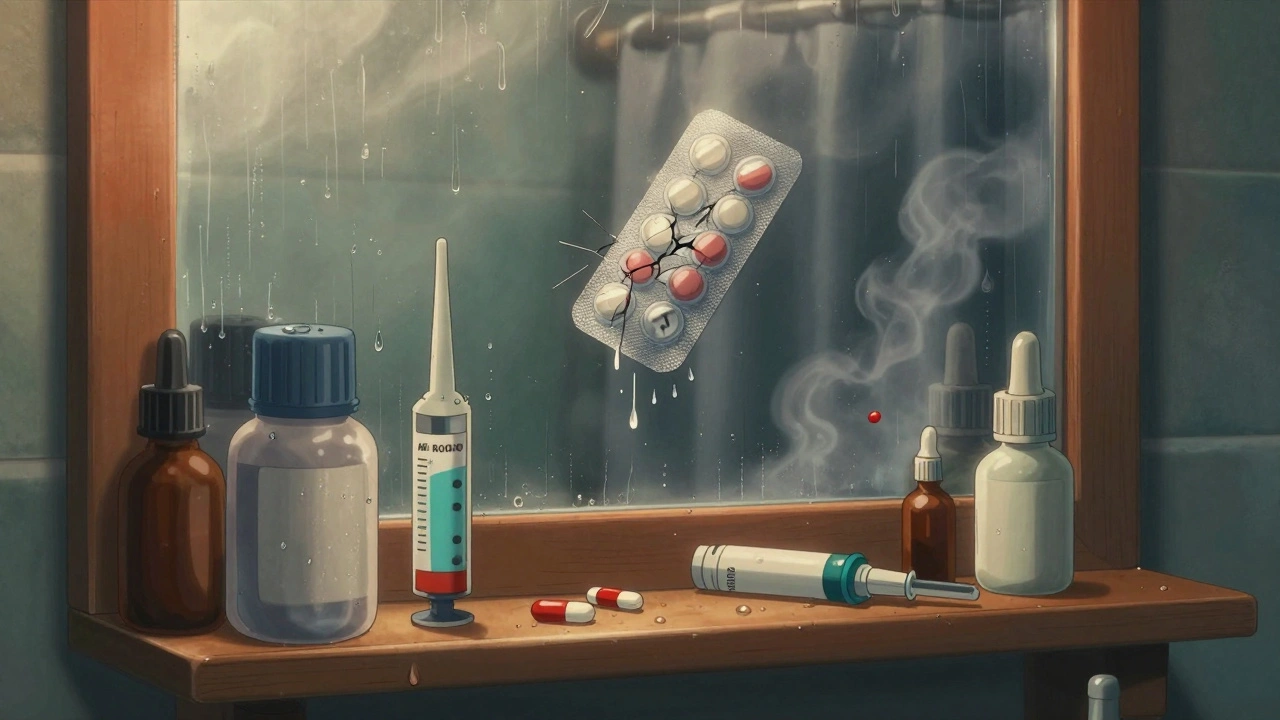
Moisture damage pills, a silent problem affecting nearly every household happens faster than you think. Heat and humidity speed up chemical breakdowns in medications like antibiotics, heart pills, and thyroid drugs. Even if the bottle looks fine, the active ingredient might be 20% weaker. That’s not a small drop—it could mean your blood pressure stays high, your infection doesn’t clear, or your pain isn’t controlled. And it’s not just about the medicine inside. The packaging matters too. Blister packs with thin foil? They’re useless against moisture. Bottles with cotton? That’s a moisture trap, not protection. Desiccants for medicine, those little packets labeled "Do Not Eat" you toss out are actually your best defense. Keep them in the bottle. Don’t remove them. They soak up the water vapor before it touches your pills.
Where you store your meds is just as important as how you store them. The bathroom? Bad. The kitchen? Risky near the stove. A bedroom drawer or a cool, dry closet? That’s ideal. Some people keep meds in the fridge—but only if the label says to. Most don’t need cold, and condensation from taking them in and out can make things worse. Pharmaceutical moisture control, the science behind keeping drugs stable is built into the design of your meds, but only if you don’t sabotage it. If you’ve ever opened a bottle and found pills stuck together or discolored, that’s moisture at work. It’s not your fault—you were never taught this. But now you know.
And it’s not just about old pills. Even new prescriptions can be damaged before you even get them. Delivery in hot weather? A package left on a porch in summer? That’s a risk. Always check your meds when you pick them up. If they feel sticky, smell odd, or look different, ask the pharmacist. They’ve seen it before—and they can replace it. This isn’t about being paranoid. It’s about making sure your medicine does what it’s supposed to.
Below, you’ll find real-world guides on protecting your meds from moisture, understanding what packaging actually works, and how to spot when your pills have gone bad. No fluff. No theory. Just what you need to keep your medications safe, strong, and ready to work when you need them most.
Dec
How Humidity and Heat Speed Up Medication Expiration
Heat and humidity can make your medications lose potency before their expiration date. Learn which drugs are most at risk, where to store them safely, and how to spot damage that could harm your health.