
Ever lay in bed for hours, staring at the ceiling, while your brain refuses to shut off? You’re not broken. You’re stuck in a cycle most people don’t even realize they’re in. Sleep restriction therapy isn’t about forcing yourself to sleep harder-it’s about resetting your body’s natural sleep pattern by doing the opposite of what you think you should do: spending less time in bed. Sounds counterintuitive? It works. And it’s backed by decades of clinical research.
Why Your Bed Feels Like a Wake-Up Call
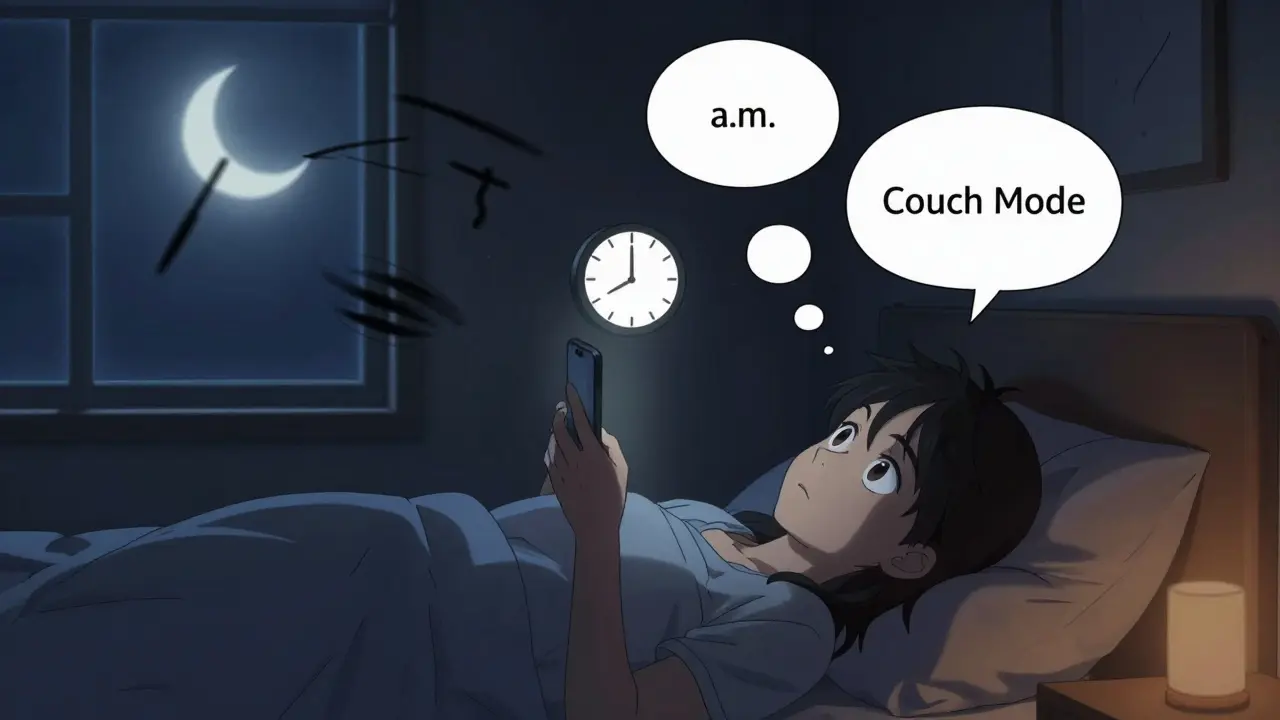
Most people with chronic insomnia do the same thing over and over: they go to bed earlier, lie there longer, toss and turn, then finally give up and scroll on their phone. They think more time in bed = more sleep. But here’s the truth: your brain learns associations. If you’ve spent 7 hours in bed for 5 hours of sleep, your brain starts treating your bed like a couch with a 2 a.m. movie channel. That’s why you lie awake for 45 minutes before falling asleep-and wake up three times in the night. Sleep restriction therapy breaks that pattern by making your bed a place where sleep happens… and only sleep happens.How Sleep Restriction Therapy Actually Works
This isn’t about sleep deprivation. It’s about precision. The goal? To build up enough sleep pressure so that when you get into bed, you fall asleep fast and stay asleep. Here’s how it’s done:- Track your sleep for a week. Write down when you get into bed, when you fall asleep, when you wake up, and any time you’re awake during the night. You need real data-not guesses. Most people think they sleep 6 hours. They actually sleep 4.5.
- Set your initial time-in-bed limit. Take your average total sleep time over the week. If you slept 5 hours on average, your time in bed is now 5 hours. No more. No less. That means if you wake up at 6 a.m., you get into bed at 1 a.m. It’s brutal at first. But it’s the only way to reset your system.
- Stick to a fixed wake time. Every day. Weekends included. No exceptions. Your body needs consistency more than you need extra sleep on Saturday. This is non-negotiable.
- Only go to bed when sleepy. If you’re not tired, stay up. Read. Walk. Listen to music. Don’t lie in bed awake. This is how you rebuild the association between bed and sleep.
- Increase time in bed slowly. Once your sleep efficiency (time asleep divided by time in bed) hits 85-90% for three nights in a row, add 15 minutes to your time in bed. Keep going until you’re getting 7-8 hours of solid sleep. Most people get there in 4-8 weeks.
This method doesn’t just help you sleep more. It helps you sleep better. Studies show it cuts the time it takes to fall asleep by nearly half and reduces nighttime awakenings by 60% or more. And unlike sleeping pills, the results last.
What You’ll Feel in the First Two Weeks
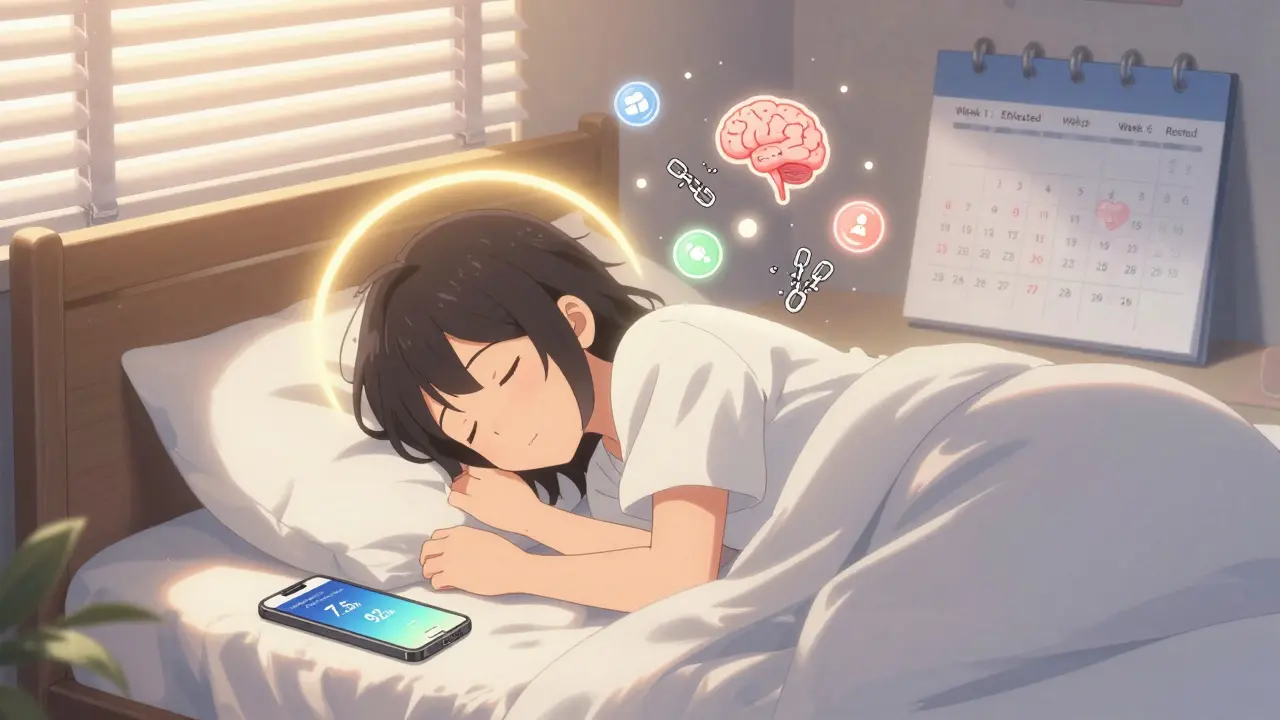
Let’s be honest: the first week is rough. You’ll be tired. You might feel foggy. You might snap at your partner. You might consider quitting. That’s normal. This isn’t a quick fix-it’s a reset. And resets hurt.But here’s what happens after day 7: your body starts to adapt. Sleep pressure builds. Your brain realizes: this bed is for sleeping. The lying awake stops. The anxiety around sleep fades. People who stick with it report falling asleep in under 15 minutes, not 45. They wake up once, not three times. They feel rested in the morning.
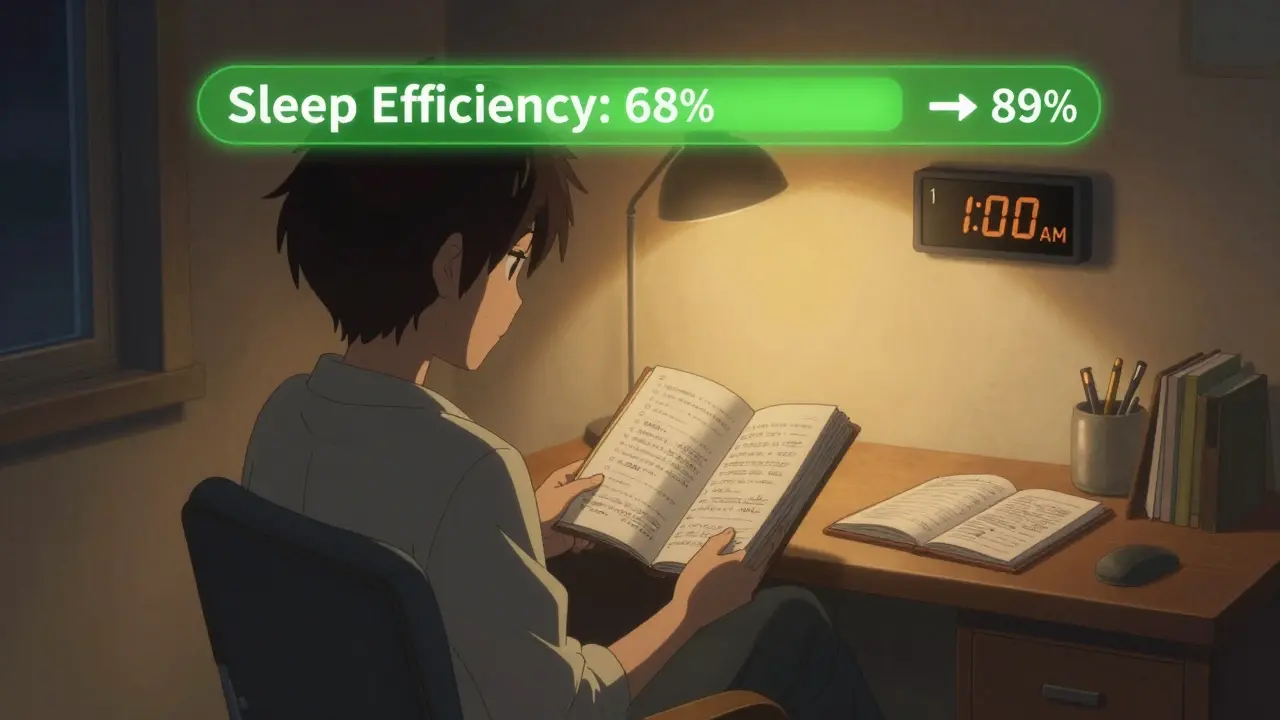
One Reddit user, SleepSeeker89, tracked their progress: after three weeks of strict SRT, their sleep efficiency jumped from 68% to 89%. They went from 4 hours of sleep to 7.5 hours-not by sleeping more, but by sleeping better. That’s the power of this method.
Why It Beats Sleeping Pills
Medication might help you fall asleep tonight. But tomorrow? You’ll need it again. And the next night. And the next. That’s the trap. Sleeping pills like benzodiazepines only work about 60-70% of the time-and when you stop, your insomnia often comes back worse.Sleep restriction therapy? A 2023 study found 78% of people who completed SRT still had better sleep six months later. Compare that to just 32% for people on sleeping pills. And it’s not even close. The American Academy of Sleep Medicine calls CBT-I-which includes SRT-the first-line treatment for chronic insomnia. Not medication. Not melatonin. Not weighted blankets. SRT.
Even melatonin, which reduces sleep onset latency by 12-18 minutes on average, doesn’t touch the long-term gains of SRT. Melatonin tricks your body into thinking it’s time to sleep. SRT reteaches your body how to sleep naturally.
Who Should Avoid It
This isn’t for everyone. If you have severe depression, bipolar disorder, or untreated anxiety, SRT can make things worse. The temporary sleep deprivation can spike anxiety or mood swings. In those cases, it needs to be paired with cognitive therapy.Shift workers? It’s risky. If your schedule changes every few days, sticking to a fixed wake time is nearly impossible. You might get more harm than benefit.
And if you drive long distances or operate heavy machinery? Don’t try SRT without medical supervision. Daytime fatigue is real in the first two weeks. You might not feel it, but your reaction time is slower.
The Tools You Need
You don’t need a fancy app or a therapist to start-but you do need structure. Here’s what helps:- A sleep diary. Paper or digital. Track everything. Bedtime, lights out, sleep onset, awakenings, wake time. This isn’t optional.
- A consistent alarm. Set it for your wake time. No snoozing. No exceptions.
- Stimulus control. Only use your bed for sleep and sex. No reading, no phone, no TV. If you’re not asleep in 20 minutes, get up. Go to another room. Come back only when sleepy.
- No naps. Even 20 minutes can undo your progress. If you’re exhausted, try a walk outside instead.
Apps like CBT-i Coach (free from the VA) and Sleepio offer guided SRT programs. One 2023 study found 72% of users were satisfied with digital CBT-I. And in January 2024, the American College of Physicians officially recognized digital CBT-I as equal to in-person therapy. That means you can do this from your phone.
Why Most People Fail
The biggest reason SRT fails? People cheat. They think, “I’ll just go to bed at midnight on Friday.” Or they nap because they’re “so tired.” Or they skip the sleep diary because “I remember.”Research shows 41% of people who quit SRT did so because they extended their time in bed on weekends. That one weekend of 10 hours in bed? It undoes three weeks of progress. Your brain doesn’t care if it’s Friday. It only cares about patterns.
Another 22% dropped out because daytime sleepiness affected their job. That’s why it’s critical to start during a low-stress period-not during tax season or a big project deadline.
The people who succeed? They treat it like a medical protocol. No shortcuts. No exceptions. And they track everything.
The Bigger Picture
Only 15% of people with insomnia get CBT-I. Why? Lack of access. Lack of awareness. Insurance doesn’t cover it in most states-only 12 states require coverage as of February 2024. But that’s changing. The global insomnia treatment market is growing fast. And digital platforms are making SRT more accessible than ever.Companies like Somryst, an FDA-cleared app, deliver SRT remotely with 64% effectiveness. The NIH just funded $2.3 million to study personalized SRT using circadian biomarkers. That means in the next few years, your sleep plan might be tailored to your body clock, not a one-size-fits-all schedule.
Dr. Colleen Carney, a leading sleep researcher, calls SRT “the most durable insomnia treatment available.” Unlike pills, its effects don’t fade. They get stronger. Because you’re not masking the problem. You’re fixing the root cause.
Ready to Try It?
Start tonight. Get a notebook. Track your sleep for seven nights. Calculate your average sleep time. Set your time-in-bed limit. Wake up at the same time every day. No naps. No phone in bed. No exceptions.You don’t need to be a sleep expert. You don’t need a prescription. You just need to be consistent. And patient. Because this isn’t about forcing sleep. It’s about letting it come back on its own.
Can I do sleep restriction therapy on my own without a therapist?
Yes. Many people successfully complete sleep restriction therapy using self-guided tools like the CBT-i Coach app or printed sleep diaries. The key is strict adherence to the protocol: fixed wake time, no naps, tracking sleep accurately, and only going to bed when sleepy. However, if you have anxiety, depression, or another medical condition, working with a CBT-I-certified provider is strongly recommended.
How long until I see results from sleep restriction therapy?
Most people notice improvements in sleep efficiency within 1-3 weeks. Falling asleep faster and waking up less often often happens by week two. Full results-7-8 hours of consolidated sleep-typically take 4-8 weeks. The first week is usually the hardest due to daytime fatigue, but that’s when the real reset begins.
What if I can’t stick to the same wake time on weekends?
If you can’t maintain a consistent wake time, sleep restriction therapy won’t work well. Your body needs a fixed anchor. Even one late morning on the weekend can disrupt your progress. If your schedule is unpredictable (like shift work), SRT may not be suitable unless you can stabilize your wake time. In those cases, other CBT-I components like stimulus control or cognitive restructuring are better starting points.
Is sleep restriction therapy the same as sleep deprivation?
No. Sleep deprivation is random, uncontrolled, and harmful. Sleep restriction therapy is precise, temporary, and therapeutic. It’s not about cutting sleep-you’re only limiting time in bed to match your actual sleep. The goal is to increase sleep pressure so you sleep more efficiently. Within weeks, you’ll be getting more sleep than before, just in a tighter, more effective window.
Can I use melatonin or sleeping pills while doing SRT?
It’s not recommended. Using sleep aids while doing SRT can interfere with the brain’s ability to relearn natural sleep patterns. The therapy works by building up sleep pressure naturally. Medications mask that signal. If you’re on medication, don’t stop abruptly-talk to your doctor about tapering while starting SRT. The goal is to replace pills with better sleep habits.



been doing this for 6 weeks now. woke up at 5:30 am every day like a robot. no phone, no reading, just lying there until my body said "ok". day 3 was hell. day 14? i fell asleep in 8 minutes. no pills. no fancy tech. just consistency. my brain finally got the memo.
you people are delusional. this is just sleep deprivation dressed up as science. 85% sleep efficiency? that’s not a metric, that’s a lie. if you’re only in bed 5 hours, you’re not resetting anything-you’re just punishing yourself. and don’t even get me started on "no naps." what if you work two jobs? your method is for privileged people with 9-to-5 lives and no responsibilities. this isn’t therapy. it’s a cult.
oh sweet jesus, another person who thinks their sleep schedule is a moral victory. congrats, you slept 7.5 hours. now go get a life. also, "no phone in bed"? you mean like... the thing you use to call 911 if you fall and crack your skull? just saying.
i was skeptical but i tried it. day one i cried. day three i yelled at my cat. day seven? i slept like a baby. not because i forced it, but because i finally stopped fighting it. your bed isn’t a couch. it’s a sanctuary. and when you treat it that way? magic happens. you got this. seriously. you’re not broken-you’re just out of rhythm.
you’re all missing the point. this isn’t about sleep efficiency. it’s about control. if you can’t control your sleep, you can’t control your life. the people who fail? they’re the ones who still scroll at midnight. who nap because they "feel tired." who think weekends are exempt. you don’t get to pick and choose when your biology matters. this is a reset. not a suggestion.
india has been sleeping right for centuries. we don’t need american sleep science. we nap in the afternoon, we sleep late on weekends, we eat dinner at 10. our bodies know better than your graphs. this therapy? it’s colonial. your sleep is too rigid. ours is alive.
the real question isn’t whether this works-it’s whether you’re willing to surrender your illusion of control. we think sleep is something we manage, like a calendar. it’s not. it’s a tide. you don’t command it. you align with it. the bed is not a place to rest your thoughts. it’s a vessel for surrender. and if you’ve spent years turning it into a war zone? you’re not broken. you’re just out of sync with the rhythm of your own biology. this isn’t a hack. it’s a return.
did it. 3 weeks. fell asleep in 10 mins. woke up once. no meds. no apps. just the 5-hour window. the first week sucked. now i feel like a new person. simple. brutal. effective.
you know what’s wild? the first night i did this, i cried because i was so tired. the second night, i smiled because i fell asleep before my thoughts caught up. it’s not about willpower. it’s about trust. trust your body. trust the process. trust that rest isn’t a reward-it’s a right. 🌙
the science is clear. this is the gold standard. if you are struggling, it is not because the method is flawed. it is because you are resisting the structure. consistency is not optional. it is the foundation. your body is not asking for permission. it is asking for rhythm. honor that rhythm. you are capable of this.
if this worked, why are 70% of americans still exhausted? because sleep isn’t a math problem. it’s a cultural collapse. you think restricting time in bed fixes anxiety? nah. it’s your job, your screen time, your loneliness, your trauma. this is a bandaid for a hemorrhage. and you’re all here like it’s a religious ritual. pathetic.