
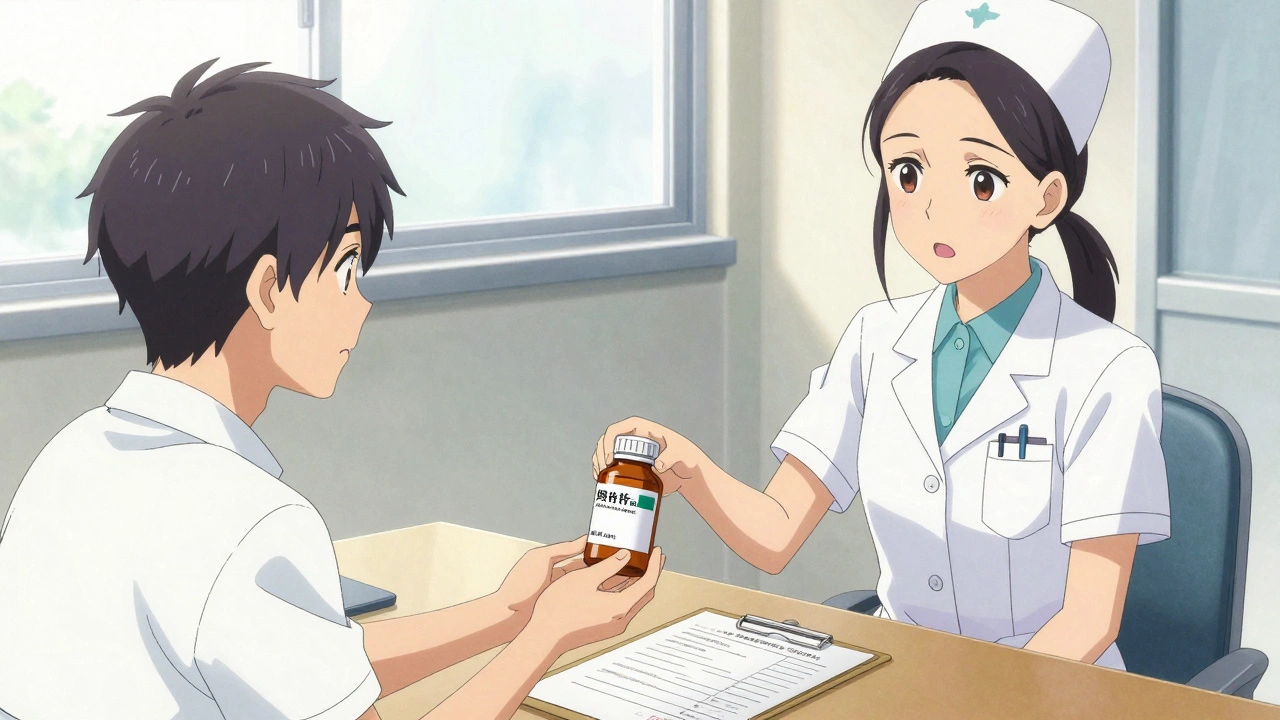
When your child needs to take medication during school hours, it’s not just about handing over a pill bottle. It’s about making sure the right medicine gets to the right kid, at the right time, in the right way. Too often, parents assume the school will handle it automatically. But without clear steps from you, mistakes happen - and they can be serious. According to the American Academy of Pediatrics, about half of all school-aged kids take daily medication for conditions like asthma, ADHD, diabetes, or allergies. That’s why every parent needs to know exactly what’s required - and what happens if they skip a step.
What the School Actually Needs From You
Schools don’t just accept any medicine you bring in. Every bottle must be in its original, sealed container with the pharmacy label still intact. That label needs your child’s full name, the exact medication name, the dose, how often to give it, and the prescribing doctor’s name. No exceptions. Even if the bottle looks right, if the label is missing or faded, the school will refuse it. The American Academy of Pediatrics makes this clear: the label on the medicine bottle is not sufficient for school use.
You also need a signed form - not just any form, but one that’s been completed by both your child’s doctor and you, the parent. This form must include:
- Your child’s full name and grade
- Medication name and strength
- Exact dosage (e.g., “1 tablet by mouth at 8 a.m. and 3 p.m.”)
- Route of administration (swallowed, inhaled, injected, nasal spray, etc.)
- Start and end dates for the medication
- Potential side effects to watch for
- Special instructions (e.g., “take with food,” “do not crush”)
- The prescribing doctor’s license number
Some schools, like those in New York State, require this form to be renewed every year. Others, like Frederick County Schools, ask for a separate form if the medication is needed for more than 30 days. Don’t wait until the first day of school. Submit these forms by June 1 if you’re in New York City - that’s the deadline to avoid any gap in care.
How Medication Gets to School - And Who Delivers It
Never let your child bring medication to school themselves. Even if they’re older and responsible, this is a hard rule. All medications must be delivered in person by a parent or legal guardian. The school nurse or designated staff member will sign a receipt when they take possession. This isn’t just bureaucracy - it’s a safety check. If the wrong child gets the wrong pill, someone has to be accountable. That’s why the school requires a physical handoff.
For inhalers, EpiPens, or insulin pens, the same rule applies. Even if your child has used their inhaler for years, the school needs to see it in its original packaging with the label. Some districts, like NYC Public Schools, provide free inhalers - but only if you’ve submitted the proper paperwork. No form? No inhaler. No exceptions.
Where Medications Are Stored - And Why It Matters
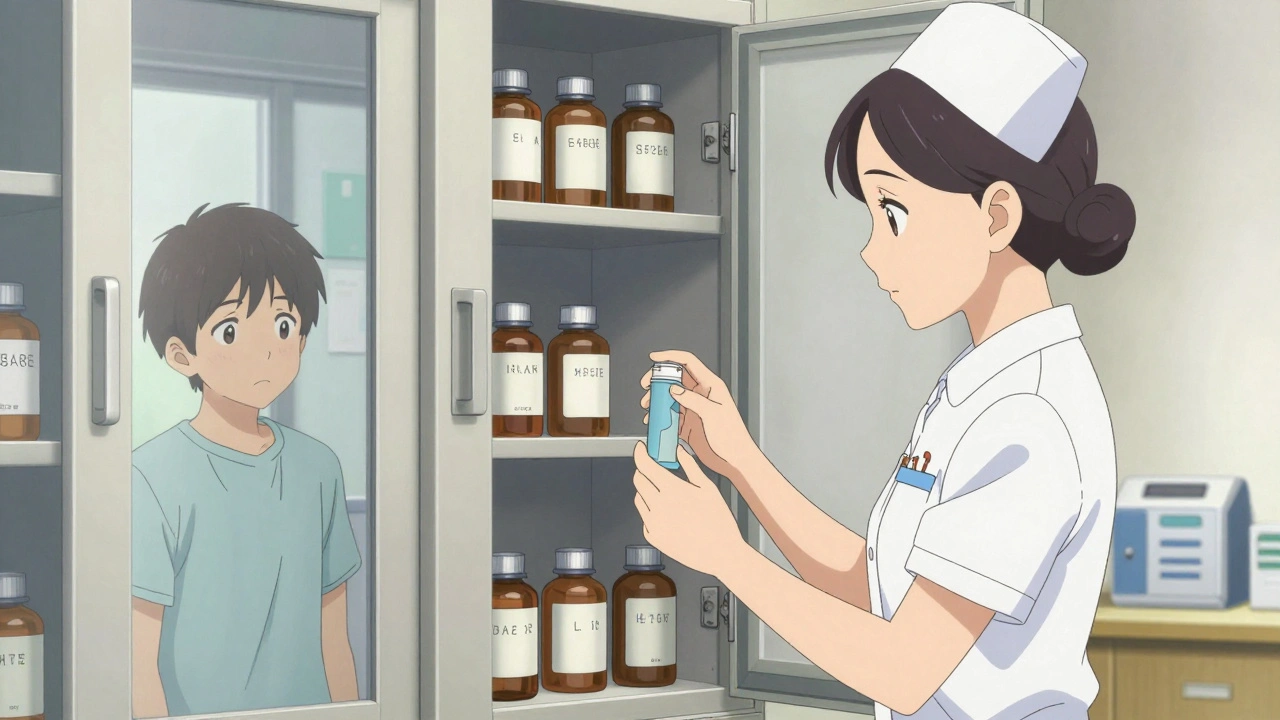
Medications aren’t kept in a desk drawer or a teacher’s purse. They’re locked in a secure cabinet, often in the nurse’s office. Refrigerated medicines - like insulin or certain antibiotics - must be stored between 2°C and 8°C (36°F to 46°F). That’s the same temperature as a home fridge. Schools are required to use dedicated refrigerators, not the one in the staff lounge. Mixing medicine with food is a serious violation.
Only trained staff can access these locked containers. That means teachers, coaches, and aides can’t just grab a pill when they think your child needs it. Even if your child has asthma and uses an inhaler daily, only the nurse or a trained assistant can hand it over - unless your child has been approved for self-administration.
Can Your Child Take Their Own Medicine?
Some kids, especially teens, can be trusted to manage their own meds. But it’s not automatic. In New York, a student can self-administer only if both the doctor and parent sign a special “Self-Medication Release Form.” In California, the student must first demonstrate they can use the medication correctly - like an inhaler or EpiPen - under the nurse’s supervision. They’ll be watched doing it multiple times before being allowed to carry it themselves.
Even then, the school keeps a backup dose on hand. And if your child refuses to take their medicine, the nurse must call you immediately. Some kids skip doses because they’re embarrassed, forgetful, or just don’t want to be different. That’s why experts say student assent - meaning the child understands why they need the medicine - reduces missed doses by 32%.
What Happens If Something Changes?
Life isn’t static. Your child’s dose might change. A new side effect might show up. The doctor might switch medications. When any of that happens, you must notify the school right away. Don’t wait until the next parent-teacher meeting. Call the nurse. Email the office. Submit a new form if needed.
According to the National Association of School Nurses, 18% of medication errors happen because parents didn’t update the school. That’s not a small number. It’s one in five. And it’s preventable.
Also, if your child is on a long-term medication - say, for ADHD or seizures - you can’t just assume it’ll keep being given next year. You have to re-submit the entire authorization form before the new school year starts. Some schools will send you a reminder, but don’t rely on it. Mark your calendar.
End of the Year - What You Must Do
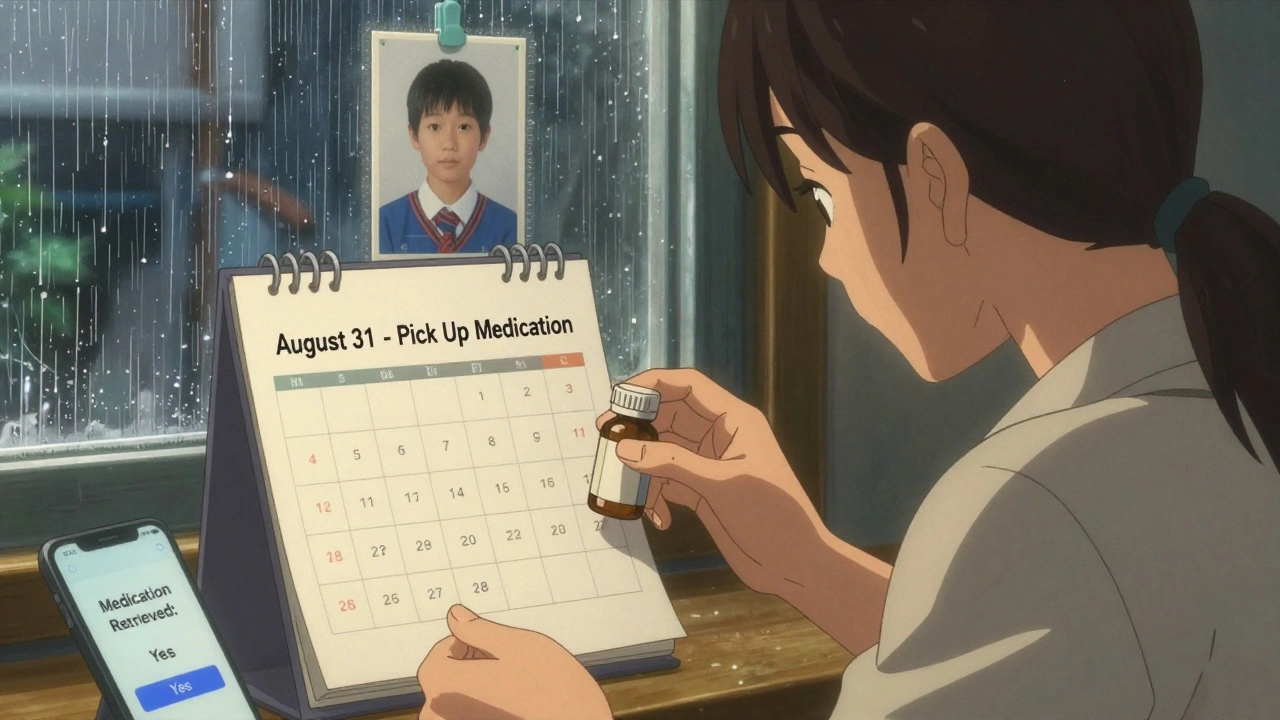
When the school year ends, you must pick up any leftover medication. No exceptions. Frederick County Schools says: “No medication will be kept over the summer.” New York State requires you to retrieve all unused medicine by August 31. After that, it’s destroyed. No one will hold onto it for you.
Why? Because storing old or expired medicine is a risk. Pills can degrade. Liquids can grow bacteria. A bottle left behind could be found by another student. Schools aren’t pharmacies. They’re schools. They can’t be responsible for your medicine after June.
What About New Medications - Like Mental Health Drugs?
More kids are being prescribed medications for anxiety, depression, and other mental health conditions. In fact, requests for psychiatric meds in schools are up 23% since 2022. The same rules apply: doctor’s order, parent signature, original bottle, locked storage. But there’s more to it.
These medications often have complex side effects - drowsiness, appetite changes, mood swings. Schools need to know what to watch for. And parents need to be honest. If your child starts acting differently after starting a new drug, tell the nurse. That’s not overstepping - it’s part of the safety plan.
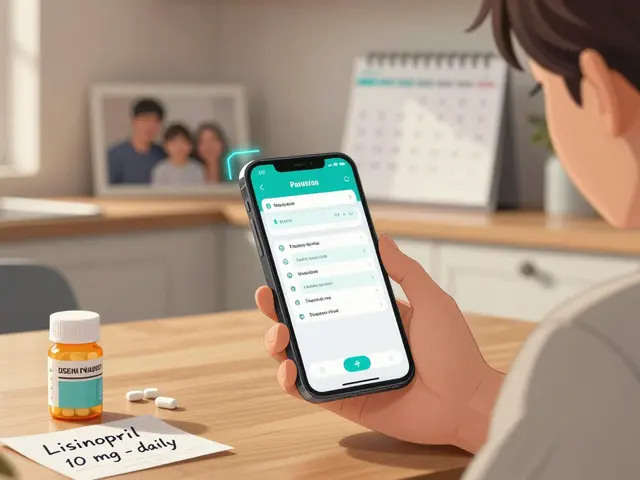
Some districts are testing apps that send you a text or email every time your child gets their medicine. Early results show a 27% drop in parent calls asking, “Did they take it today?” That kind of transparency helps everyone sleep better.
Why This All Matters - And What Happens When It Doesn’t Work
Proper school medication administration reduces errors by up to 75%. That’s not a guess. It’s from research backed by the American Academy of Pediatrics and the National Association of School Nurses.
But when things go wrong, the consequences can be life-threatening. A child with asthma can go into respiratory distress. A child with epilepsy can have a seizure. A child with a severe allergy can go into anaphylaxis - and die if their EpiPen isn’t given on time.
The U.S. Department of Education has recorded 127 complaints over the last five years. The top two? Medication not given as prescribed, and paperwork missing or incomplete. These aren’t edge cases. They’re preventable.
Schools are doing their part. Nearly 90% now use electronic systems to track doses. That cuts documentation errors by more than half. But none of it works without you.
Your Role Is Non-Negotiable
This isn’t something you hand off to the school and forget about. You’re the link between your child’s doctor and the school nurse. You’re the one who knows your child’s routine, their habits, their moods. You’re the one who notices if something’s off.
Here’s your checklist:
- Get the doctor’s signed form - include license number
- Bring the medicine in its original bottle - no transfers
- Deliver it in person - never let your child carry it
- Confirm storage location and who administers it
- Ask if your child qualifies for self-administration
- Update the school immediately if anything changes
- Pick up all unused meds by August 31
Follow these steps, and you’re not just protecting your child. You’re helping the whole school stay safe. Every parent who does this right makes it easier for everyone else. And in a world where kids need more support than ever, that’s not just good practice - it’s essential.

Man, I wish my kid’s school had this clear when we started with the inhaler last year. I just handed over the bottle and thought that was it. Ended up with a week of missed doses because they didn’t have the form signed right. Don’t be like me - do the paperwork before the first bell.
Spot on. The original bottle requirement isn’t bureaucracy - it’s liability protection for everyone. I’m a pharmacist, and I’ve seen parents transfer meds to pill organizers for ‘convenience.’ That’s a one-way ticket to a school nurse panic attack. Original label. Full name. Dose. No shortcuts. Ever.
My daughter’s ADHD med got switched last semester and I didn’t realize I had to resubmit the form until she missed her afternoon dose. The nurse called me crying because she didn’t know what to do. I felt awful. But honestly? This post saved me. I now have a folder with all the forms, expiration dates, and contact numbers. Every parent should do this. It’s not extra work - it’s peace of mind.
Just wanted to add: if your child is on a psychiatric med, make sure the school has a clear plan for side effects. My son got drowsy after starting sertraline and the teacher thought he was ‘being lazy.’ I had to email the nurse with the med’s official side effect sheet. Don’t assume they know - educate them. It’s your job.
Oh please. Like schools actually care. My kid’s EpiPen sat in the office for three weeks because the nurse was ‘on leave’ and no one was trained. They didn’t even call me until he had a reaction. This whole thing is a performance of responsibility. The system’s broken. Stop pretending it’s not.
My kid carries his own inhaler. He’s 14 and responsible. Why are we treating teens like toddlers? 😤
Oh wow. So now parents are responsible for the school’s incompetence? 🤡 I’m supposed to jump through hoops so the district can save money on hiring trained staff? You’re telling me a 10-year-old can’t be trusted with a pill but the school can’t afford a nurse who knows how to read a label? This is the American education system in a nutshell.
My daughter has type 1 diabetes. The school nurse is amazing - she’s the reason my kid isn’t a statistic. But I still show up every September with the meds, the forms, the insulin cooler, and a bag of gummy bears ‘for emergencies.’ She laughs every time. We’ve built trust. That’s what this is really about - not rules. Relationships.
So… we’re telling parents to be pharmacists, lawyers, and bureaucrats so the state doesn’t have to hire adults? Brilliant. Next they’ll ask us to fix the AC and grade the essays too. 🤷♂️ At least the EpiPen comes with a nice sticker.
My son’s school started using that app that texts you when meds are given. First week I got 12 notifications. Now I get 2. It’s the little things. It doesn’t fix the system, but it gives you a thread of calm. I didn’t even know this existed until last year. You’re not alone - there are tools out there.
They make you pick up meds by August 31? That’s cruel. What if you’re on vacation? What if you’re in the hospital? What if your kid needs it in September because they’re still on it? This isn’t a library book return. It’s medicine. The system is designed to fail families.
My kid’s school lets him self-administer his inhaler but only after he demonstrated it to the nurse 3 times. She filmed it. Said she needed proof. I thought it was overkill - until last month when a kid in 3rd grade used someone else’s inhaler. That’s why. It’s not control. It’s safety.
so like… you have to hand over the meds in person? lol. what next? you gotta sign a waiver saying you wont poison the kid? 😂
Just want to say thank you to the school nurses out there. They’re the unsung heroes. I used to think they just handed out bandaids. Now I know they’re managing blood sugar, seizures, anxiety meds, and asthma - all while keeping the peace during lunch. Don’t take them for granted.