
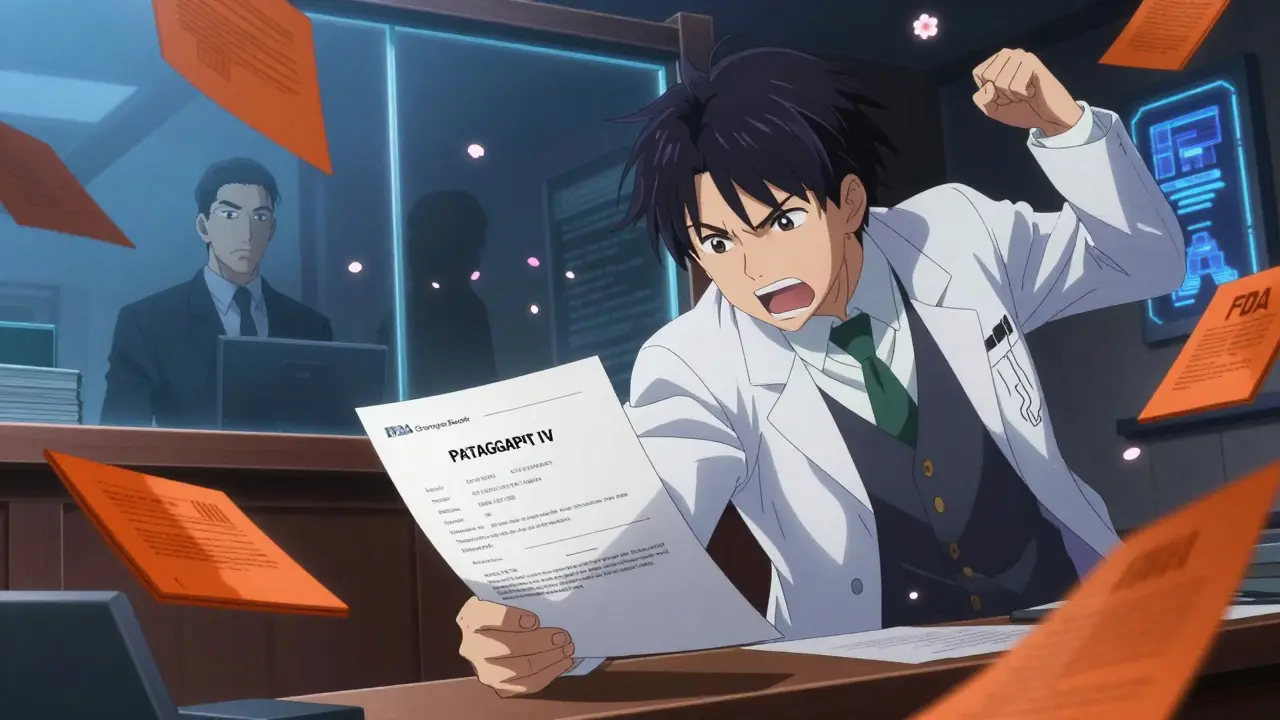
When a brand-name drug hits the market, its patent gives the company a monopoly-often for 20 years. But that monopoly isn’t absolute. Under the Paragraph IV certification system, generic drug makers can legally challenge those patents before the drug even hits shelves. This isn’t a loophole. It’s a carefully designed part of U.S. drug law called the Hatch-Waxman Act, passed in 1984. And it’s why you can now buy generic versions of almost every major brand-name drug at a fraction of the price.
How Paragraph IV Certification Works
Every time a drug company gets FDA approval, it must list any patents protecting that drug in the Orange Book. This public database includes patents on the drug’s chemical structure, formulation, or how it’s used. When a generic company wants to sell a copy, they file an Abbreviated New Drug Application (ANDA). But if the brand drug still has active patents, the generic company must check a box: Paragraph IV.
That box isn’t just a formality. It’s a legal declaration: "One or more of these patents are invalid, unenforceable, or won’t be infringed by our product." This single statement triggers a chain reaction. Within 20 days, the generic company must notify the brand-name maker and patent holder. Then, the brand has exactly 45 days to sue for patent infringement.
If they do, the FDA can’t approve the generic for 30 months. That’s the "stay." But here’s the twist: even though the generic hasn’t sold a single pill yet, the act of filing the Paragraph IV certification is treated by law as an "artificial act of infringement." It’s a legal fiction designed to resolve disputes before market chaos. No other industry works like this. In tech or manufacturing, you have to actually make the product before someone can sue you for copying. In pharma, you’re sued before you even start production.
The 180-Day Exclusivity Prize
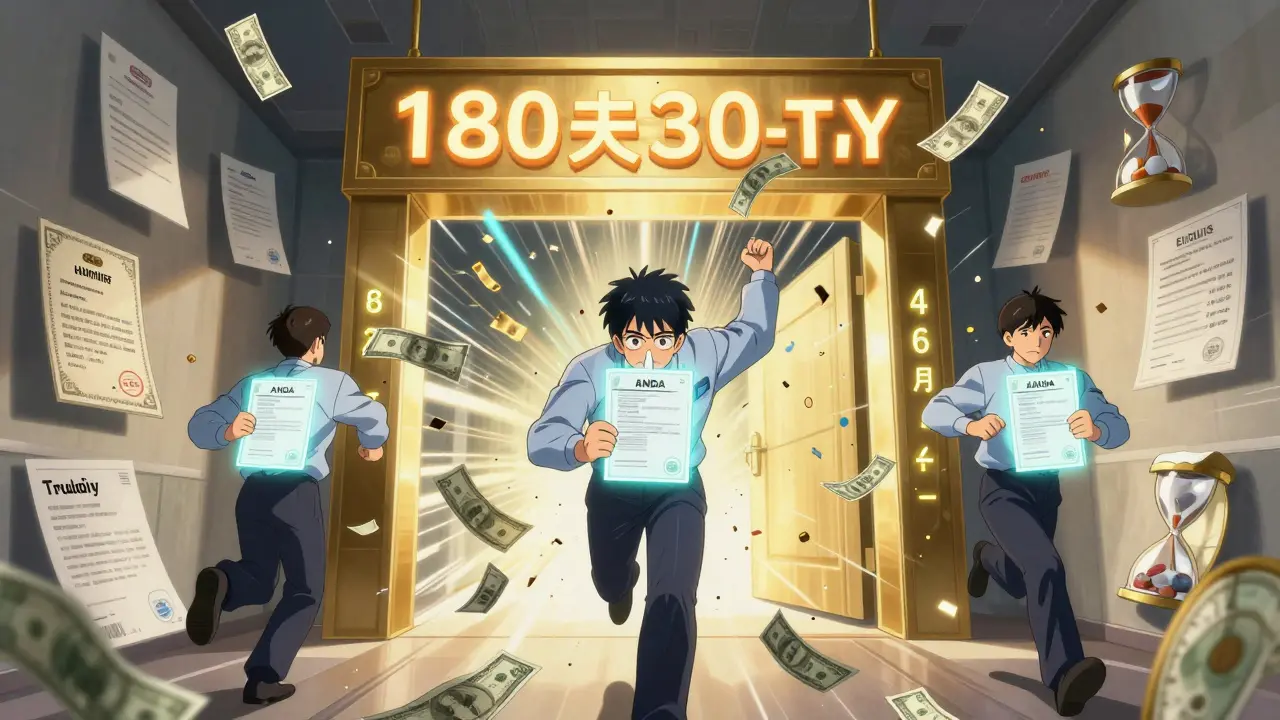
Why would any generic company risk a multi-million-dollar lawsuit? Because the first one to file a successful Paragraph IV challenge gets a massive reward: 180 days of exclusive market access. No other generic can enter during that time. For a blockbuster drug like Humira or Eliquis, that window can mean hundreds of millions in extra revenue.
In 2023 alone, first-filers earned $4.7 billion from this exclusivity. That’s not a small incentive. It’s why companies like Teva, Mylan, and Sandoz spend millions on legal teams just to be first in line. But it’s also why brand companies fight so hard. If you’re the second generic to file, you get nothing. You wait your turn. So the race to file is intense-and expensive.
Costs, Delays, and Strategic Games
Challenging a patent isn’t cheap. On average, a single Paragraph IV challenge costs generic companies $12.3 million in legal fees. Cases take nearly 29 months to resolve. And the 30-month FDA stay? It often stretches to 36 months because of court delays or procedural moves. That’s extra time the generic company pays for-without selling anything.
Some companies try to cut losses with "at-risk" launches. That means they start selling the generic even before the court rules. If they win, they keep the profits. If they lose, they pay damages-sometimes over $200 million. In 2024, 22% of Paragraph IV challengers took this gamble. Most didn’t.
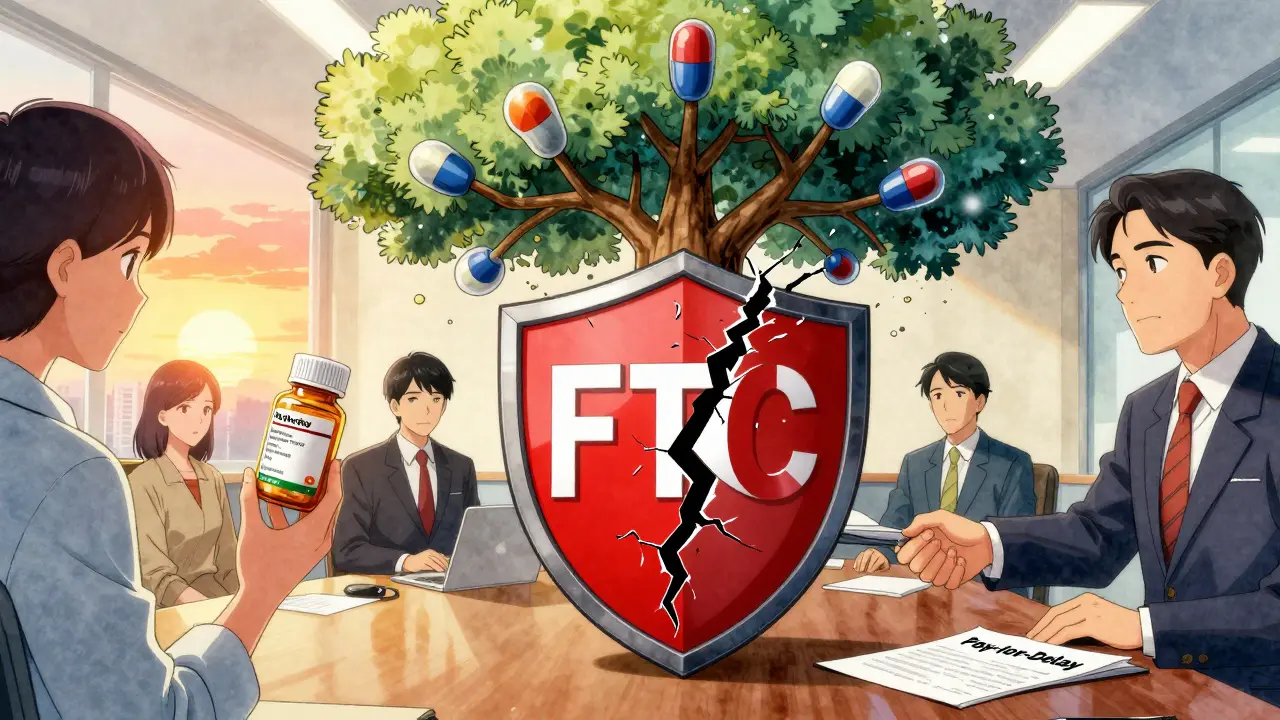
More common? Settlements. About 78% of cases end in deals. But many of these deals aren’t fair. In 68% of settlements, the brand company pays the generic to delay launch. These "pay-for-delay" agreements cost consumers billions. The FTC has filed 17 lawsuits since 2023 targeting these deals. One settlement in 2024 delayed a generic version of a $1.2 billion drug by 28 months. That’s $280 million in lost savings for patients.
Carve-Outs and Patent Thickets
Not all patents are created equal. Some cover the drug’s use for a specific condition-say, treating rheumatoid arthritis. But the same drug might also be approved for psoriasis. If only the arthritis patent is active, the generic can ask for a "skinny label"-selling the drug only for psoriasis. This is called a Section viii carve-out. About 37% of Paragraph IV filings use this trick to get to market faster.
But brand companies have responded by filing more patents. In 2005, a typical drug had 7 patents listed in the Orange Book. By 2024, that number jumped to 17.3. This is called "patent thicketing." It’s like surrounding a drug with dozens of legal fences. Even if one patent falls, five more are still standing. Teva faced 28 Paragraph IV challenges on Humira alone. Eli Lilly’s Trulicity saw 24. Pfizer’s Eliquis, 21. Each one requires a separate legal battle.
Who Wins and Who Loses
Patients win when generics enter the market. Since 1984, Paragraph IV challenges have saved U.S. consumers $2.2 trillion. In 2024, they saved $192 billion in a single year. That’s why 90% of all prescriptions in the U.S. are now for generics.
But the system is under strain. Generic companies say the process is too slow, too expensive, and too easy for brands to game. Brand companies say generics abuse the system with frivolous challenges. The FDA tried to fix it in 2022 with new rules on amending certifications. Now, if a court rules a patent is valid, the generic can’t just tweak their application and try again. They have to be clear about what they’re asking for.
And the courts are shifting. Since 2020, generic companies have won 58% of Paragraph IV cases-up from 41% in the previous 16 years. Why? The Supreme Court has narrowed what kinds of patents are even eligible. Patents on minor chemical changes or obvious formulations are getting tossed out.
What’s Next?
The FDA is considering a new rule in 2026 that would force brand companies to justify every patent they list in the Orange Book. Analysts predict this could cut patent thickets by 30-40%. That would mean fewer legal battles and faster generic entry.
The FTC is also stepping up. Their 2025 plan targets pay-for-delay deals with more lawsuits. If they succeed, generics could enter the market 4-6 months sooner on average.
For now, Paragraph IV certification remains the most powerful tool generic companies have to break drug monopolies. It’s complex, costly, and often messy. But it’s also the reason your insulin, your blood pressure pill, or your cholesterol med costs 90% less than it did 15 years ago. Without it, most of those drugs would still be locked behind patents.
What is a Paragraph IV certification?
A Paragraph IV certification is a legal statement filed by a generic drug company with the FDA as part of its ANDA. It claims that one or more patents listed for the brand-name drug are invalid, unenforceable, or won’t be infringed by the generic product. This triggers a patent lawsuit from the brand company and starts a 30-month FDA approval delay.
Why do generic companies file Paragraph IV certifications?
They file to challenge patents early and gain market access faster. The first company to successfully challenge a patent gets 180 days of exclusive rights to sell the generic version. This exclusivity can generate billions in revenue for a blockbuster drug.
How long does the 30-month stay last?
The 30-month stay is the maximum time the FDA must wait before approving a generic while litigation is ongoing. But it often lasts longer-up to 36 months-due to court delays, motions, or appeals. The stay ends early if the court rules in favor of the generic or if the patent expires.
What is a "skinny label"?
A "skinny label" lets a generic company market its drug for only the non-patented uses of the original drug. For example, if a drug is approved for three conditions but only one is patented, the generic can sell it for the other two. This allows faster entry without infringing the patent.
What are "pay-for-delay" agreements?
Pay-for-delay agreements are settlements where a brand company pays a generic company to delay launching its cheaper version. These deals are controversial and often illegal. The FTC has sued 17 such agreements since 2023, arguing they hurt consumers by keeping prices high.
How many Paragraph IV challenges happen each year?
In 2024, there were 1,247 Paragraph IV certifications filed-up from just 187 in 2003. The number has grown by about 10% per year. Most are filed against top-selling drugs like Humira, Trulicity, and Eliquis, which face multiple challenges from different generic makers.
So let me get this straight - we’ve turned pharmaceuticals into a courtroom MMA fight where the only winner is the lawyer billing by the hour? And somehow this is supposed to be good for patients? I mean, I get it - generics save money - but also, why does my insulin cost $300 when the pill itself probably costs $0.12 to make? Someone’s making bank, and it ain’t me.
The Paragraph IV system is a brilliant legal hack - it forces innovation and competition into a market that otherwise would stagnate under patent monopolies. But the real issue isn’t the mechanism; it’s the distortion of incentives. The 180-day exclusivity creates a race to the bottom in terms of legal aggression rather than genuine innovation. And pay-for-delay? That’s not a settlement - it’s collusion dressed up as capitalism. The system works, but only if you ignore the fact that it’s designed to be gamed by the richest players.
They don’t want you to know this, but the FDA and Big Pharma are in bed together. Paragraph IV? A placebo. The real patents are hidden in offshore shell companies. The 30-month stay? A smokescreen. They’re buying judges. Look at the revolving door - former pharma lawyers now running the FDA. And don’t get me started on how they use ‘skinny labels’ to trick the public into thinking generics are safe. They’re not. They’re just cheaper poison with the same side effects. You think your blood pressure med is saving you? It’s just keeping you alive until the next bill comes.
It is deeply troubling, and frankly morally indefensible, that our legal system permits the commodification of human health to such an extreme degree. The notion that a corporation can extend its monopoly on life-saving medication through the strategic filing of frivolous, incremental patents - often on trivial modifications like coating thickness or inactive ingredients - is not merely a loophole in the law; it is a systemic failure of ethical governance. The 180-day exclusivity period, while ostensibly intended to incentivize competition, instead functions as a perverse reward for litigation aggression rather than therapeutic advancement. And when we consider that the average cost of a Paragraph IV challenge exceeds $12 million, we must ask ourselves: is this capitalism, or is it legalized extortion? The fact that consumers are forced to subsidize this entire circus through higher premiums and out-of-pocket expenses is not just inequitable - it is a violation of the social contract.
Patents are for losers. Pharma’s just playing chess while the rest of us pay for the board.
I’ve watched my mother struggle with insulin costs for years. She’s 72, on a fixed income, and still chooses between her meds and groceries. The Paragraph IV system is the only reason she’s alive today. I don’t care how messy the legal battles are - if it gets her a $15 vial instead of $300, then the chaos is worth it. This isn’t about corporate drama. It’s about people getting to breathe.
Oh wow, so now the generic companies are the heroes? Let’s not pretend they’re saints. They’re just the other side of the same rigged game. One side charges $1000 for a pill, the other charges $100 and then gets a 6-month monopoly to gouge everyone else. It’s like a mafia handshake - same violence, different uniforms. And don’t even get me started on how they cherry-pick patents to file ‘skinny labels’ - it’s not innovation, it’s legal loophole yoga.
For anyone who’s ever had to choose between meds and rent - this system matters. I work in community health, and I see the impact every day. The 180-day exclusivity isn’t perfect, but without it, no generic company would risk the lawsuits. And the pay-for-delay deals? Those are the real villains. If we can crack down on those, we could save billions without breaking the system. Let’s fix the abuse, not throw out the tool.
USA think they own medicine now? Nigeria have better system - we just buy from India. No law, no court, no delay. You pay 5 dollar and take home pill. Why USA need all this drama? Your system broken. You pay for lawyers not medicine. We laugh at you.