
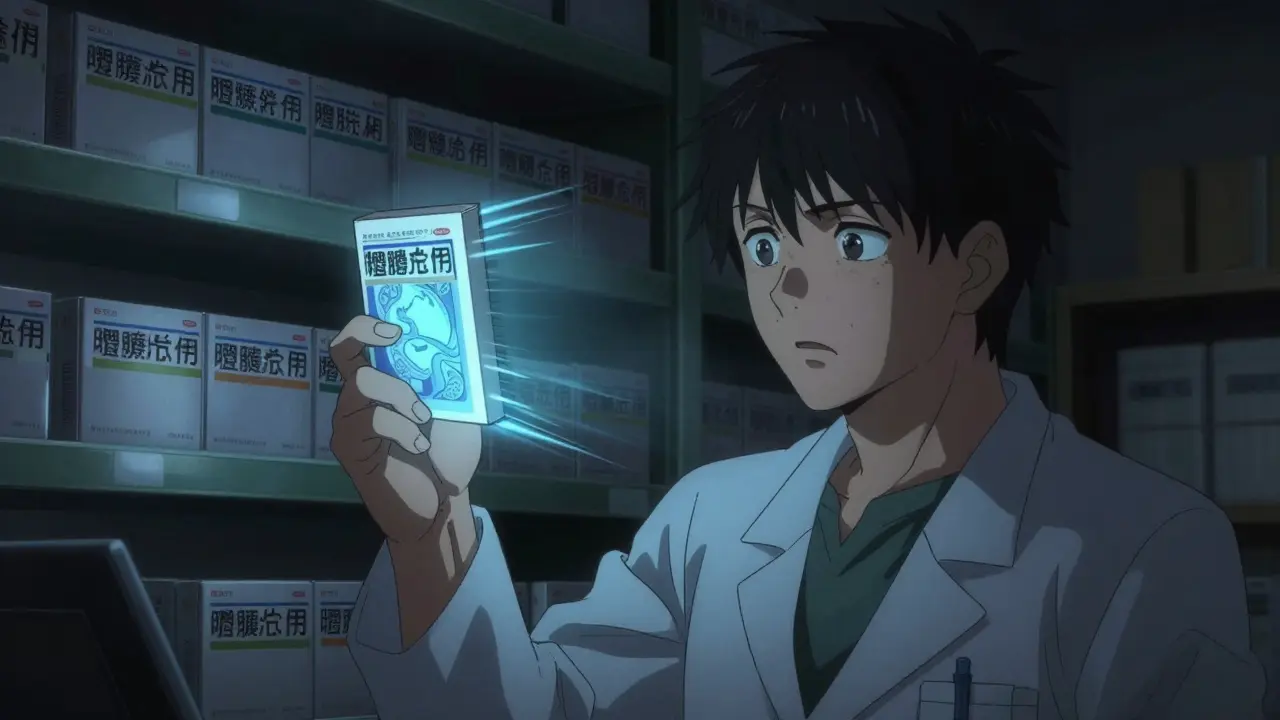
Why generic medicine packaging can’t be trusted
Generic drugs save lives and money. But they’re also the most common target for counterfeiters. In 2023, the WHO estimated that 1 in 10 medicines worldwide are fake - and in some regions, that number jumps to 1 in 3. Most of these fake drugs are generics. Why? Because they’re cheaper, sold in bulk, and often lack the same level of packaging security as brand-name drugs. A fake pill might look identical to the real thing. It might even have the right color, shape, and imprint. But inside? It could be chalk, rat poison, or inactive ingredients. And you won’t know until it’s too late.
What to look for on the packaging
Start with the basics. Hold the box up to the light. Look for color-shifting ink - the kind that changes from green to blue when you tilt it. Pfizer and other major manufacturers use this on their generics. If the color stays flat, it’s fake. Holograms are another clue. Real ones have tiny text you can’t read with the naked eye - usually between 50 and 100 micrometers. Counterfeiters copy the shape, but not the detail. Use a 10x magnifier if you have one.
Check the font. Not the style - the spacing. A real label has consistent letter spacing and alignment. Fake labels often have slightly uneven gaps between letters. One pharmacist in Ohio caught a fake Nexium® generic because the expiration date font was 0.2 mm too wide. It took three tries to spot it. That’s how subtle it gets.
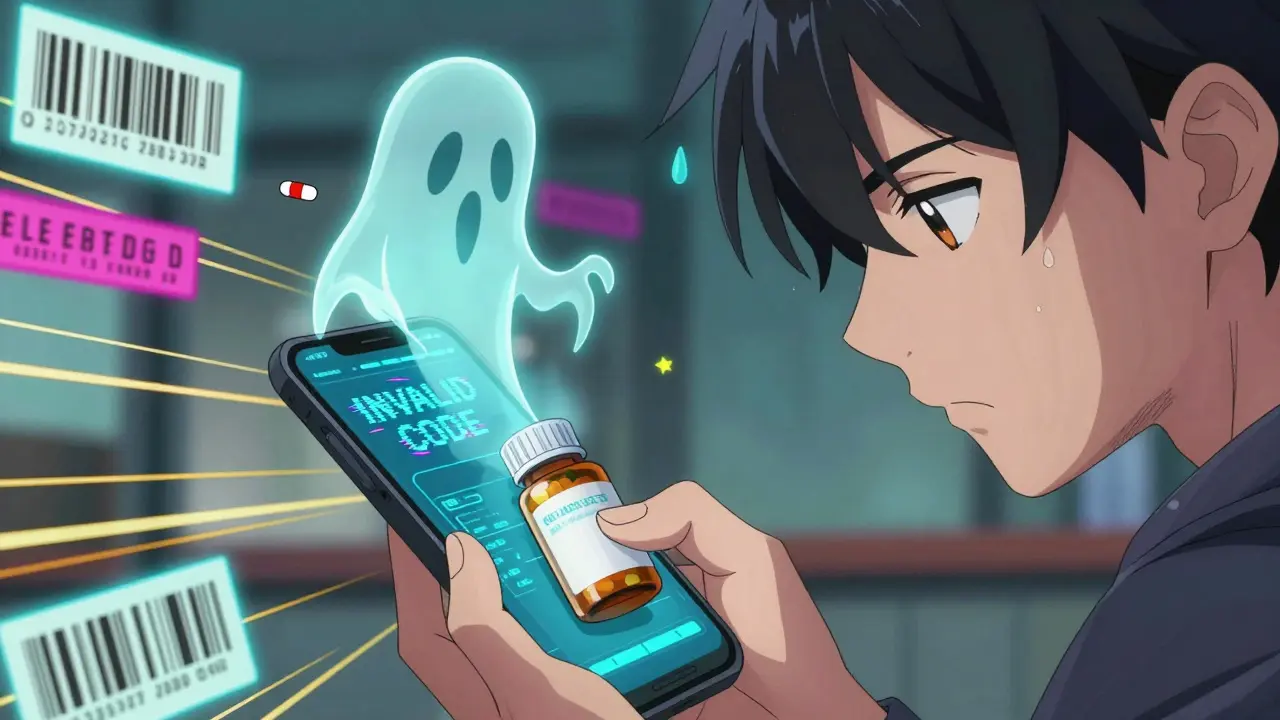
Look for a 2D barcode or data matrix code. Since 2019, the European Union has required all prescription medicines to carry these. In the U.S., the DSCSA law requires them by 2023. The code should link to a unique serial number. Scan it with your phone. If the app says “invalid” or “not found,” walk away. But don’t trust apps blindly - many fail with generics because manufacturers don’t always follow serialization rules. A 2022 survey found 40-50% of generic barcodes don’t verify properly.
Covert features you can’t see - but can test
Many genuine generics have hidden features. UV ink is one of the most common. Shine a $15 UV light (365nm wavelength) on the packaging. Real ones glow faintly in blue or green. Fake ones stay dark. Johnson & Johnson has used this on Tylenol generics since 2015. If you’re a pharmacist or work in a clinic, this is your first line of defense.
Some manufacturers embed RFID tags or chemical taggants. These aren’t visible, but they respond to specific scanners. Lumilink® UV markers, for example, can be detected with a handheld reader costing $200-$500. These aren’t common on every box, but if you’re ordering in bulk or work in a hospital, ask your supplier if the product includes them.
When your eyes aren’t enough: spectroscopy
Here’s the hard truth: the best counterfeiters now replicate packaging with 95% accuracy. That’s what Dr. Maria Kresal from the European Directorate for the Quality of Medicines told Pharmaceutical Technology in 2021. If the box looks perfect, the only way to know for sure is to test the medicine inside.
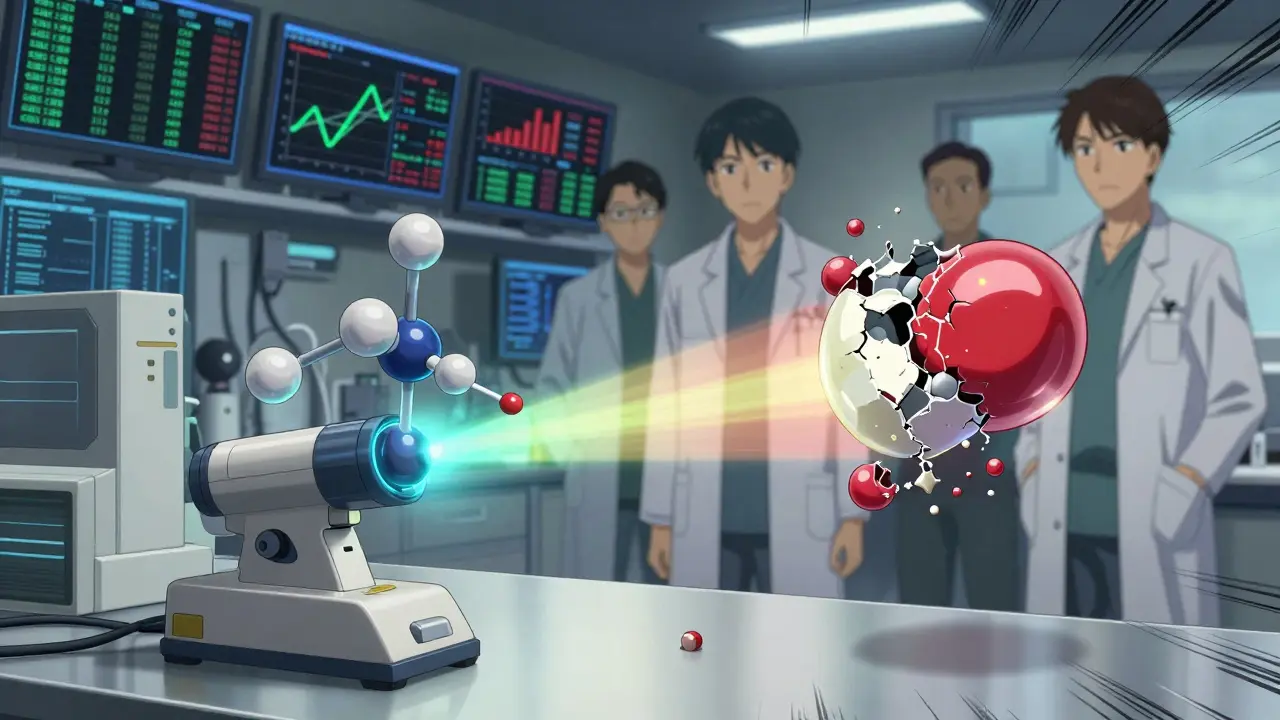
Handheld spectrometers do this. Devices like the Thermo Fisher TruScan® RM or B&W Tek NanoRam® use infrared or Raman light to analyze the chemical makeup of a pill. They don’t need to crush it - just hold the device to the tablet. In 10-30 seconds, they tell you if the active ingredient matches the label. A 2023 Drug Topics survey found pharmacists using these devices reported 94% satisfaction. One case: a fake metformin that looked 100% real. The NanoRam® flagged it because the crystalline structure was off. Saved a patient from kidney damage.
Cost? $15,000-$50,000. That’s a lot for a small pharmacy. But hospitals, large chains, and government labs use them daily. The FDA requires verification systems to be at least 95% accurate - and these devices hit 96-98%.
Why generics are harder to verify than brand-name drugs
Branded drugs have budgets for security. Generic manufacturers? Not so much. They operate on thin margins. The IFPMA says generic makers spend 1.2-1.8% of revenue on anti-counterfeiting. Brand-name companies spend 0.7-1.1%. That’s backwards. You’d think the more expensive drugs would get more protection. But it’s the opposite.
Also, generics pass through 5-7 distribution points before reaching you. Branded drugs? Usually 3-4. More hands mean more chances for tampering. A 2023 IQVIA report confirmed this. And here’s the kicker: 35-45% of generic medicines don’t even have consistent serialization. That means no unique code. No traceability. Just a box with a barcode that might not work.
What pharmacies and patients can do
If you’re a patient: always buy from licensed pharmacies. If you’re buying online, check if the site requires a prescription and has a verifiable physical address. Look for the VIPPS seal (Verified Internet Pharmacy Practice Sites) in the U.S. or equivalent in your country.
If you’re a pharmacist or health worker: start with simple tools. A UV light, a magnifier, and a ruler to check font spacing. Train your staff for one hour. Use the FDA’s free “Recognizing Substandard and Falsified Medicines” guide - it scored 4.2/5 in usability tests. Keep reference samples of authentic packages. If you suspect a fake, report it to your local health authority. Don’t just return it.
For larger clinics: consider investing in a handheld spectrometer. The cost pays for itself in one saved patient. And if you’re in a low-resource area, partner with regional verification centers. Twenty-two U.S. states now have them. They test samples for free and share results across clinics.
The future: AI, blockchain, and global standards
The FDA is testing blockchain for generic drug tracking. In a 2023 pilot, 12 manufacturers and 500 pharmacies tracked drugs across four distribution layers with 99.2% accuracy. The EU will require cryptographic 2D codes on all generics by January 2025. That’s a big step.
But the real game-changer? AI. Gartner predicts that by 2028, 70% of verification will use AI to combine visual, spectral, and blockchain data. Right now, it’s 25%. That means in five years, your phone might scan a pill and tell you not just if it’s real - but if it’s from the right batch, shipped on time, and stored correctly.
Still, no system is perfect. INTERPOL’s 2023 Operation Pangea found counterfeiters are now copying even the newest security features with 90-95% accuracy. The only solution? Layering. Don’t rely on one thing. Use packaging, then UV, then spectroscopy if possible. And always trust your gut. If something feels off - it probably is.
What you should do right now
- For patients: Only buy generics from licensed pharmacies. Never from street vendors or unverified websites.
- For pharmacists: Get a UV light and magnifier. Train your team. Keep real packaging samples.
- For clinics: If you handle bulk generics, consider a handheld spectrometer. The cost is worth the safety.
- For everyone: Report suspicious products. Use your country’s reporting system. One report can stop a batch from reaching hundreds.
Counterfeit drugs aren’t a distant threat. They’re in the supply chain right now. But you’re not powerless. With the right tools and awareness, you can spot them - and stop them.

I work in a rural pharmacy and we started using UV lights last year. Honestly, it changed everything. We caught two fake batches of metformin just by shining the light. One had no glow at all. The other glowed wrong color. Simple tool, huge impact. No need to spend $50k on a spectrometer if you’re just starting out.
This is terrifying. I’ve been buying generics online because I can’t afford the brand names. I had no idea how easy it is to fake them. I’m going to the pharmacy tomorrow and buying my meds in person. No more Amazon for pills.
Let’s be real - the whole system is a farce. You think a UV light is going to stop a counterfeit operation that’s funded by organized crime and runs out of a warehouse in Shenzhen? The real problem is that regulators don’t have the budget to enforce anything. And you want patients to scan barcodes? Most people don’t even know what a QR code is. This is performative safety. It makes people feel better while the rot continues.
So let me get this straight - you’re telling me I need to buy a $200 spectrometer to know if my blood pressure pill isn’t just sugar and glitter? Meanwhile, my insurance won’t cover the brand version, so I’m stuck choosing between death and a 10% chance of being poisoned. Thanks for the advice, Dr. House.
I’ve been using the NanoRam at our clinic for 8 months now. The ROI is insane - we caught a fake lisinopril batch that had 0% active ingredient. Saved a diabetic patient from a stroke. The device pays for itself in one use. Also, the FDA’s free guide? Gold. We printed it and laminated it. Staff training took 45 minutes. Zero jargon, maximum clarity.
People who buy meds online deserve what they get. If you’re too cheap to pay for real medicine, you shouldn’t be taking it at all. This isn’t a game. People die because they’re lazy. End of story.
I’m a paramedic and I’ve seen the aftermath of fake meds. One guy thought he was taking his heart med but it was just chalk. He coded in the back of the rig. We got him back, but he’s got brain damage now. I carry a UV pen in my kit. I check every pill I can. It’s not perfect, but it’s something. Don’t wait until it’s too late.
I work in a hospital in rural Alabama and we don’t have access to any of the fancy tech. We rely on comparing packaging to the last batch we received. We keep a binder of authentic samples. We also call the manufacturer’s hotline - they’re surprisingly helpful. One time, we spotted a font mismatch and they confirmed it was counterfeit. They sent us a replacement within 48 hours. The system isn’t perfect, but it’s not broken if you know how to use it.
I am from India and we have a lot of fake medecine here. I use UV light and check the batch number online. Some companies have website where you can verify. I also ask the pharmacist to show me the original invoice. It’s not easy but better than dying. Thanks for sharing this info!
This post gave me chills. 💔 I lost my dad to a fake heart med. He bought it from a ‘discount pharmacy’ online. The box looked perfect. We never knew until the autopsy. Please - if you’re reading this, don’t take chances. Talk to your pharmacist. Ask questions. Don’t be shy. Your life matters more than a few bucks.
I teach pharmacy students and I make them do a ‘fake vs real’ lab. We buy legit generics and counterfeit ones off the dark web (ethically, through law enforcement channels). They’re shocked - the fakes are *so* good. We teach them to look for micro-features: the way the ink sits on the paper, the slight curl of the label edge, the sound the box makes when you tap it. It’s not magic. It’s training. And yes, UV lights are still king.
It’s amusing how people think a $15 UV light is a solution. The real issue is the commodification of healthcare. You don’t fix systemic exploitation with gimmicks. If you’re buying generics because you can’t afford healthcare, the problem isn’t the packaging - it’s capitalism. But sure, go ahead and shine your flashlight. It’s more comforting than demanding policy change.
You say 40-50% of barcodes don’t verify. So why are you telling people to trust them? That’s like saying ‘trust this lock, it’s 50% secure.’ Also, who the hell carries a spectrometer? This feels like a marketing brochure for Thermo Fisher. Real solution? Ban all generics. Make everyone pay for brands. Then maybe the system won’t be so broken.
I just scanned my amlodipine with my phone and it said ‘invalid.’ I threw it out. Then I bought a new pack from CVS. Used the UV light - it glowed. 😌✅ But then I checked the batch number and it matched the one from the fake one. Turns out the real one was from the same batch as the fake. The system is rigged. 🤡
As a pharmacist in Montreal, I can confirm that the EU’s cryptographic 2D codes are a game-changer. We’ve had zero counterfeit incidents since we switched. The only hiccup? Some older patients struggle with the app. We print QR codes on small cards and keep them at the counter. Simple. Effective. And yes, we still use UV lights. Layering is everything. Thank you for this comprehensive guide - it’s exactly what our community needs.