

Asking questions about your medication shouldn’t mean waiting on hold for 20 minutes or leaving voicemails that never get returned. With secure messaging, you can get clear answers directly from your care team - without risking your privacy. And it’s not just convenient. It’s safer. In fact, secure messaging reduces medication errors by up to 37% compared to phone calls, according to a 2023 study in JAMA Network Open.
Why Secure Messaging Matters for Medications
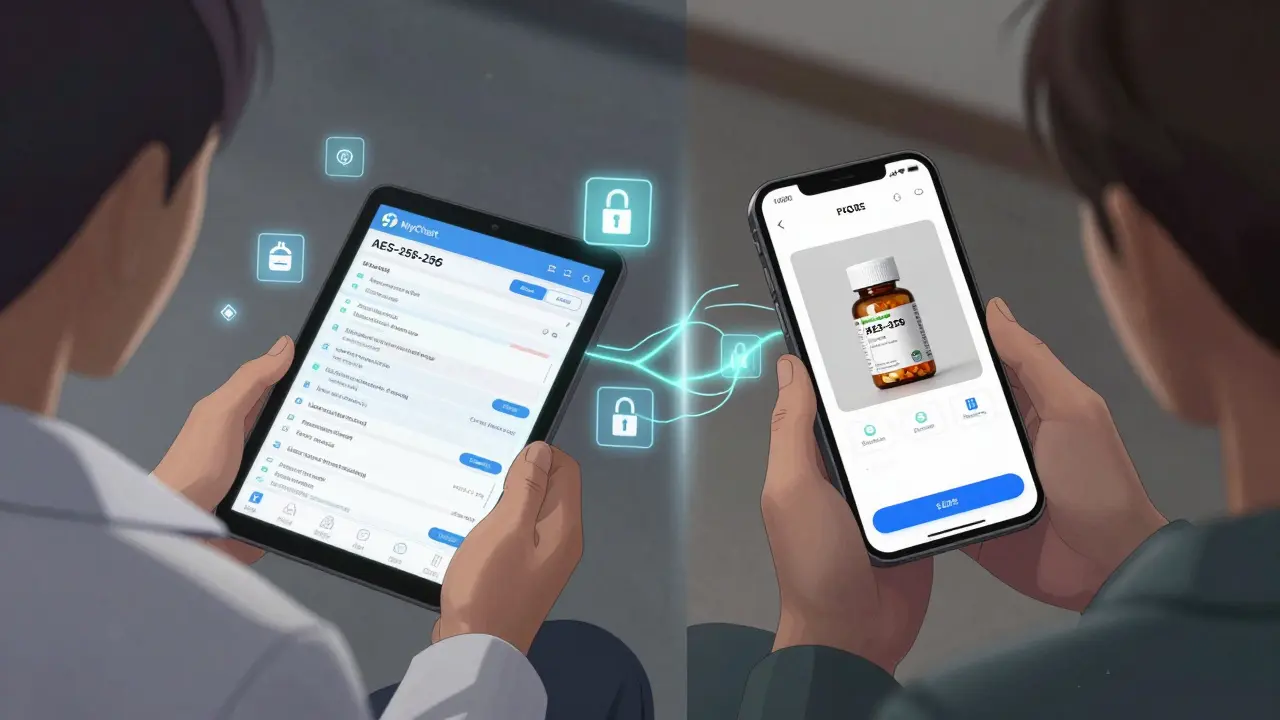
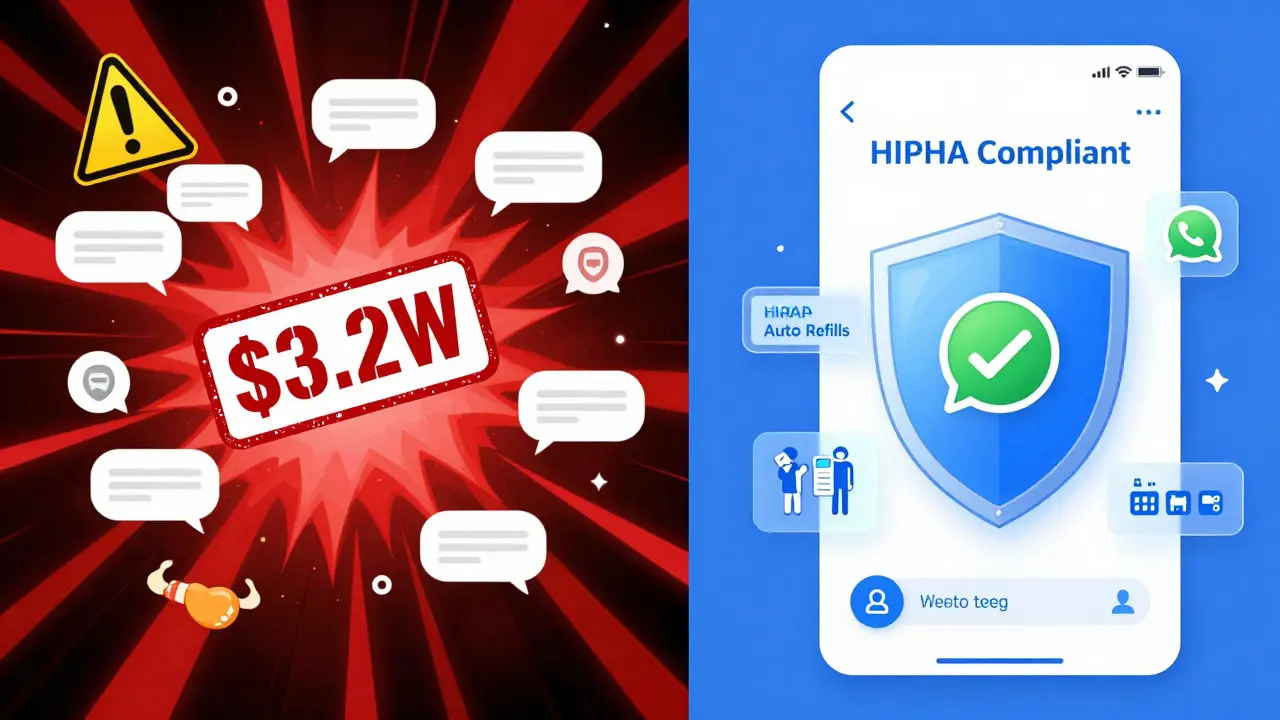
Most people don’t realize that texting your doctor about your pills over regular SMS is a violation of federal law. The Health Insurance Portability and Accountability Act (HIPAA) requires all electronic health information to be encrypted and tracked. Unsecured apps like WhatsApp, iMessage, or regular text messages don’t meet those standards. In 2023, the Office for Civil Rights fined a major health system $3.2 million after staff used WhatsApp to coordinate medication changes. That’s not a small mistake - it’s a serious breach. Secure messaging systems, like Epic’s MyChart or Cerner’s HealtheIntent, are built to protect your data. They use AES-256 encryption, require multi-factor login, and keep full audit logs of every message. These systems aren’t just for doctors - they’re designed for patients too. And when it comes to medications, they’re becoming the default way to ask questions.How to Get Started with Secure Messaging
If you’ve never used secure messaging before, here’s how to begin:- Log into your patient portal. Most hospitals and clinics use platforms like MyChart, Updox, or Medisafe. If you don’t have an account, call your provider’s office - they’ll send you an invitation.
- Add your medications to your health record. Go to the "Medications & Allergies" section and enter every pill, injection, or patch you take - including over-the-counter drugs and supplements. This step alone cuts medication errors by 37%, according to Kenner Army Health Clinic.
- Find the secure messaging tool. Look for a tab labeled "Messages," "Secure Messaging," or "Ask Your Care Team." Don’t use the email feature - it’s often not encrypted.
Most systems require you to complete these steps before you can send a medication-related message. That’s not a bug - it’s a safety feature.
What to Include in Your Message
A vague message like "Help with my blood pressure pill" won’t get you the answer you need. Clinicians get hundreds of messages a day. You need to make theirs easier. Use this simple template:- Medication name: "Lisinopril 10 mg" (not just "BP pill")
- Dosage and frequency: "I take one tablet daily in the morning"
- Your question: "I’ve been dizzy since I started this. Is that normal?"
- Context: "I started this last Monday," or "I skipped it for two days last week."
Dr. David Bates from Brigham and Women’s Hospital says including these four details reduces clinician cognitive load by 32%. That means faster answers. Pro tip: Start your subject line with "MEDICATION QUESTION - NON-URGENT". Veterans Health Administration data shows this reduces misrouting by 44%.
When to Use (and When Not to Use) Secure Messaging
Secure messaging is perfect for:- Asking about side effects
- Requesting refills
- Clarifying dosage instructions
- Reporting mild reactions (like a rash or upset stomach)
- Confirming if a new medication interacts with your current ones
It’s not for:
- Severe allergic reactions (swelling, trouble breathing)
- Chest pain, fainting, or sudden weakness
- Missed doses of insulin or heart medications
- Any situation where you’d call 911
97% of healthcare systems block secure messaging for urgent issues. If you’re in danger, call 911 or go to the ER. Don’t wait for a reply.
How to Speed Up Your Response Time
The average response time for a medication question is 24 to 72 hours. That’s slower than a phone call - but better documented. If you want to cut the wait:- Attach a photo of your pill bottle. 85% of platforms let you upload images. A clear photo of the label eliminates guesswork.
- Include your pharmacy’s NABP number. Reddit user u/MedStudent2024 found this cuts refill processing time by 50% in their clinic.
- Use the "Medication Renewal" button. Epic’s MyChart has a one-click renewal option for maintenance drugs. Use it instead of typing a message.
- Check your notifications. Don’t wait for email. Secure messages come as push alerts on your phone. Turn on notifications for your portal app.
Most patients get comfortable after two tries. One study found 89% of users become proficient after their second medication message.
Platform Differences You Should Know
Not all secure messaging systems are the same. Here’s how the big ones compare:| Platform | Market Share (U.S.) | Best For | Key Feature |
|---|---|---|---|
| Epic MyChart | 55% | Large hospitals and health systems | One-click renewal, integrates with pharmacy systems |
| Cerner HealtheIntent | 18% | Integrated EHR users | Strong medication reconciliation tools |
| Updox | 12% | Small clinics | Direct pharmacy integration - 68% of refills auto-approved |
| TigerConnect | 5% | Complex regimens | 92% accuracy on multi-drug questions |
| My HealtheVet | 92% adoption among VA patients | Veterans | Dedicated medication category, 68% less phone tag |
MyChart is the most common, but if you’re on a complex regimen - say, five blood pressure pills plus diabetes meds - TigerConnect handles those better. Updox is great if you just want refills without waiting for a doctor’s approval.
Common Mistakes and How to Avoid Them
Even experienced users mess up. Here are the top errors:- Using personal email. 18% of first-time users accidentally send medication questions via regular email. The system usually catches this and redirects you - but don’t rely on it.
- Mixing urgent and non-urgent. 14.7% of patients use secure messaging for emergencies. That delays real urgent cases. Always double-check: "Would I call 911 for this?" If yes, don’t message.
- Forgetting to update your meds. If your list is outdated, your provider won’t see the full picture. Review it every 3 months.
- Ignoring notifications. Messages disappear from your inbox after 7 years - but you’ll get a push alert first. Don’t turn them off.
What’s Coming Next
By 2026, 75% of medication renewals will be handled by AI that auto-fills your history. The Office of the National Coordinator for Health Information Technology (ONC) is requiring all platforms to use structured templates by December 2025. That means you’ll see dropdown menus for medications, not free-text boxes.Blue Cross Blue Shield and Epic already auto-process 1.2 million refill requests a month through integrated pharmacy systems. The future isn’t just secure messaging - it’s smart, automated, and safe.
Frequently Asked Questions
Is secure messaging really safer than calling my doctor?
Yes. Secure messaging uses encryption, audit trails, and access controls that phone calls don’t. It also creates a written record that both you and your provider can refer back to. A 2023 study showed a 37% drop in medication errors when patients used secure messaging instead of phone calls.
Can I send a photo of my pill bottle?
Yes - and you should. 85% of secure messaging platforms allow photo uploads. A clear picture of your label helps your provider confirm the exact medication, dosage, and manufacturer. This cuts down on mix-ups, especially with similar-looking pills.
Why does my message take so long to get answered?
Secure messaging is meant for non-urgent questions. Most systems route these to pharmacy teams or care coordinators, not your primary doctor. The average response time is 24-72 hours. If you need an answer faster, call the office. But if it’s not an emergency, messaging gives you a documented trail - which is worth the wait.
What if I accidentally send a medication question to the wrong place?
Most portals have built-in safeguards. If you try to send a medication question without adding your meds to your record first, the system will block you and guide you to the right section. If you’re unsure, look for a "Medication" category before sending. Never use the "General" or "Appointment" options for drug questions.
Are there apps I should avoid for medication questions?
Yes. Avoid WhatsApp, iMessage, regular SMS, Gmail, or Facebook Messenger. These aren’t HIPAA-compliant. Even if your provider says it’s "fine," it’s still a violation of federal law. Stick to your health system’s official portal or app. If you’re unsure which app to use, ask your clinic - they’ll give you the exact name and link.
Can I use secure messaging to request a refill?
Yes - and it’s often faster than calling your pharmacy. Platforms like Updox and MyChart let you request refills directly. Some even auto-approve maintenance medications without needing a doctor’s signature. Just make sure your medication list is up to date first.
What if I don’t have a smartphone?
You don’t need a smartphone. Most secure messaging systems work on any modern web browser - Chrome, Firefox, or Edge. You can log in from a computer at the library, a family member’s house, or your workplace. Just make sure you’re on a secure network and log out when done.
Next Steps
If you’re not using secure messaging yet, start today. Log into your patient portal. Add your medications. Send your first question. You’ll be surprised how much easier it is than calling.And if you’re already using it - check your medication list. Is it current? Are you using the right category? Are you attaching photos when needed? Small steps make a big difference.
Secure messaging isn’t just technology. It’s a better way to manage your health - safely, clearly, and without the frustration of phone tag.



Okay but let’s be real - if your doctor’s portal is slower than dial-up and you have to jump through 17 hoops just to ask if your blood pressure pill makes you dizzy, is it really ‘safer’ or just more bureaucratic? I’ve sent 3 messages in 6 months. Got 2 auto-replies and one ‘we’ll call you’ - which I still haven’t gotten. This whole thing feels like a marketing brochure dressed up as patient empowerment.
Y’all need to just DO THIS. Seriously. I was skeptical too - until I sent a pic of my pill bottle with ‘why am I so tired?’ and got a reply from the pharmacist in 4 hours. No hold music. No voicemail. Just clear info. I’ve been using it for my diabetes meds now and my last A1C dropped. It’s not magic, it’s just… smarter. Start today. Your future self will high-five you.
LOL. ‘Secure messaging reduces errors by 37%’ - sure, until the system crashes and your refill request vanishes into the void. And don’t get me started on ‘Updox auto-approves 68% of refills.’ That’s not safety, that’s negligence. My grandma’s blood thinner got auto-renewed for 6 months because the system ‘assumed’ she was still taking it. She wasn’t. She died. This isn’t tech - it’s a liability waiting to happen.
Man, I’ve seen this play out in clinics from Leeds to L.A. - the real win isn’t the encryption or the audit logs. It’s the quiet relief when you don’t have to beg for a simple answer. I once waited 11 days for a phone call about a statin interaction. Sent a message instead? Got a reply with a PDF, a handwritten note from the pharmacist, and a ‘thanks for being so specific’ - yes, they wrote that. That’s the human touch tech can’t fake. Don’t sleep on it.
Dear friends, please take a moment to log in to your patient portal today. It is such a simple, beautiful step toward taking charge of your health. I did it last Tuesday. I added my vitamins. I sent one message. I felt proud. You can too. You are worthy of clear, safe care. Start now. Your body will thank you. 💖
Baseline observation: 90% of patients don’t understand structured data fields, yet you’re pushing them to use templated inputs while ignoring cognitive load. The 32% reduction in clinician burden? That’s just shifting the burden to the patient. HIPAA compliance ≠ usability. You’re optimizing for compliance officers, not the 72-year-old diabetic with arthritis who can’t tap a screen 12 times to upload a photo of a pill bottle. This is techno-solutionism dressed in jargon.
wait so if i dont update my meds every 3 months does that mean my message might get ignored?? like… i kinda forget sometimes? and also i tried uploading a pic of my pill bottle but it kept saying ‘invalid format’ even though it was clear?? idk if i’m just bad at tech or if the system is just broken??
Let me tell you - I used to hate secure messaging. I thought it was slow, pointless, and full of tech nonsense. But then I had my mom on my account - she’s 78, can’t use a smartphone, but she logs in on my laptop every Sunday. She added her meds, took a picture of her bottle, typed out her question like the article said - and guess what? The pharmacist called her back to say, ‘Good job, Mrs. Thompson!’ - and then approved her refill. She cried. I cried. This isn’t just about safety - it’s about dignity. Don’t let fear stop you. Just start. One step. One message. One life saved.
USA only. That’s the only reason this works. In other countries, they don’t have Epic or MyChart. They use WhatsApp. And guess what? It works. We’re not all stuck in some bureaucratic American health dystopia. Stop acting like this is the only way. We don’t need 12-step processes to ask if a pill makes us sleepy. Just call your doctor. Or text them. They’re human - not robots.
It’s amusing how this reads like a corporate whitepaper written by someone who’s never actually talked to a patient. ‘Use the MEDICATION QUESTION - NON-URGENT subject line’? Really? That’s the pinnacle of innovation? We’re being sold a sanitized, algorithmically optimized version of healthcare that feels less like care and more like a customer service ticketing system. I’d rather risk a HIPAA violation than deal with this.