
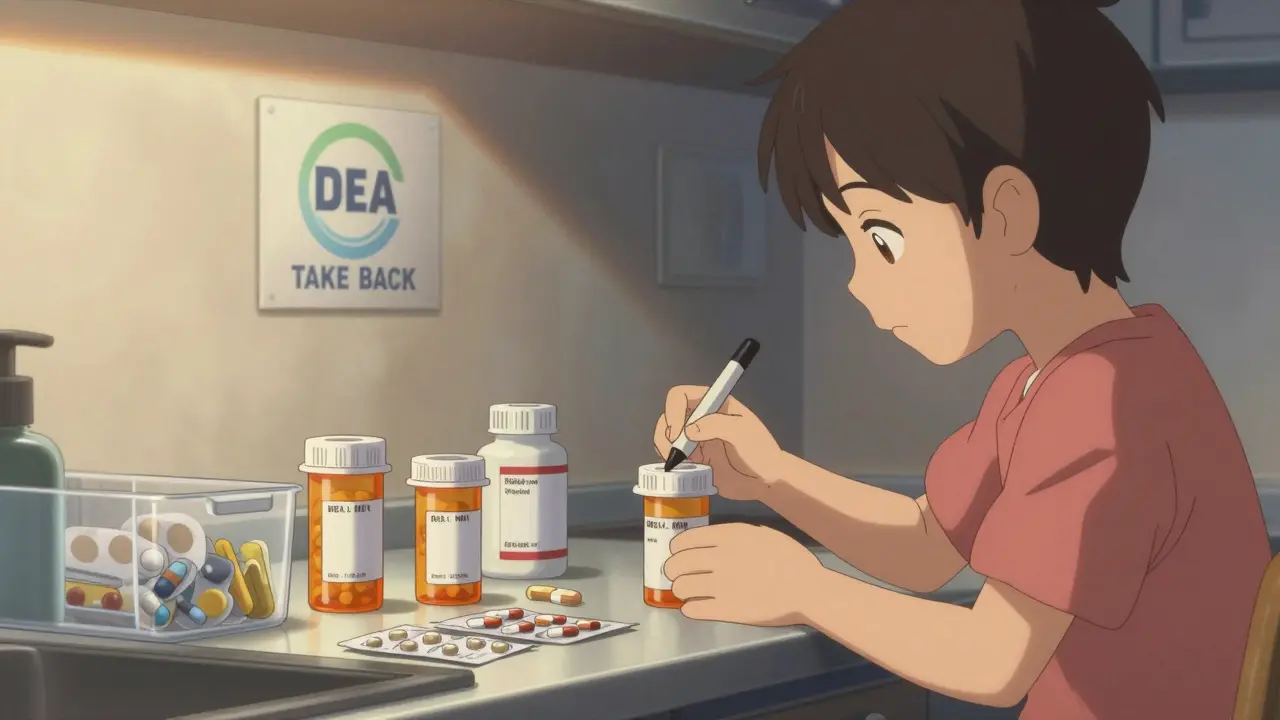
Every year, millions of unused medications sit in medicine cabinets across the U.S., gathering dust-and danger. Outdated antibiotics, leftover painkillers, expired vitamins: they’re not just clutter. They’re a risk. Someone in your home, a visitor, or even a curious kid could find them. Or worse, they could end up in rivers, lakes, and drinking water. That’s why take-back events exist. But showing up with a bag of pills isn’t enough. If you don’t prepare them right, you might get turned away. Here’s how to do it right-no guesswork, no stress.
What Can You Bring?
Not everything in your medicine cabinet belongs at a take-back site. The good news? Most prescription and over-the-counter meds are accepted. You can drop off:- Prescription pills and liquids (even controlled substances like OxyContin or Ritalin)
- Over-the-counter medicines (pain relievers, cold meds, antacids)
- Medication patches (like fentanyl or nicotine patches)
- Vitamins and supplements
- Pet medications
- Topical ointments and creams
What’s not allowed? Anything that could leak, explode, or contaminate the collection process. That means:
- Asthma inhalers or other aerosols
- Hydrogen peroxide
- Iodine-based products (like Betadine)
- Thermometers (especially mercury ones)
- Illicit drugs
- Sharps (needles, syringes)-these need special disposal
If you’re unsure, check the DEA’s Take-Back locator-it lists accepted items for every site. Most sites follow the same national rules now, thanks to the "Every Day is Take Back Day" initiative launched in January 2024.
Remove Personal Information-Every Time
This step isn’t optional. It’s the law. Federal privacy rules under HIPAA require that your name, prescription number, and pharmacy details be removed before disposal. Why? Because someone could use that info to fake a prescription or steal your identity.Here’s how to do it:
- Use a permanent marker (like a Sharpie) to black out your name, address, prescription number, and dosage instructions.
- If the label is too faded, cut it off with scissors and throw it in the trash separately.
- For liquid bottles, cover the label completely-don’t just scribble over part of it.
Don’t rely on peeling off the label. Most labels are sticky and leave residue. Plus, staff need to see that the info was removed, not just covered with tape. A 2023 Stericycle report found that 41% of rejected submissions were due to incomplete redaction. One scribble isn’t enough. Cover it all.
Keep Medications in Original Containers
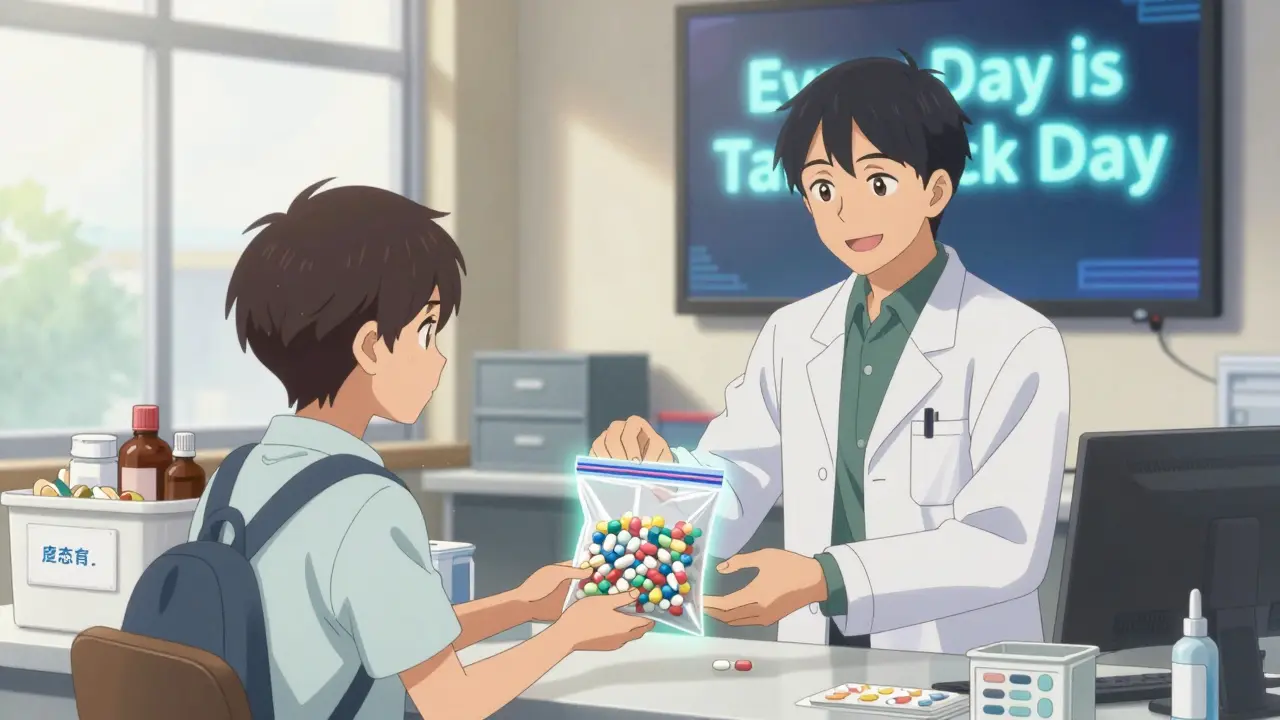
Most collection sites-over 92% of them-require you to keep pills and liquids in their original bottles. Why? It helps staff identify what’s being dropped off. If you bring a bag of unlabeled pills, they can’t tell if it’s insulin, morphine, or vitamin D. That’s a safety risk.If the original bottle is missing, cracked, or too big:
- Use a small, sealed plastic container-like a pill organizer case or a clean, empty water bottle.
- Or, put the meds in a zip-lock bag. Seal it tight.
- Make sure the bag isn’t see-through. Use a freezer bag or double-bag it if needed.
Important: Don’t mix different medications in one container. Even if they’re all yours, separate them. One pill bottle per drug type. This isn’t about neatness-it’s about safety. Mixing can cause chemical reactions or make it impossible to identify what was taken.
Special Cases: Liquids, Patches, and Insulin Pens
Some medications need extra care.Liquids: Keep them in their original bottles. If the bottle is leaking, place it inside a second sealed container-like a plastic bag or another bottle. Don’t pour liquids into other containers. Staff need to see the original label (even if redacted) to confirm what it is.
Transdermal patches: Fold them in half, adhesive side in. This prevents accidental skin contact. Tape them shut if needed. Most sites won’t accept them if they’re flat and exposed.
Insulin pens: These are tricky. Only about 89% of hospital sites accept them. Most retail pharmacies don’t. Call ahead. If you’re at a VA hospital or clinic, they almost always take them. Bring them separately from other meds.
What to Expect at the Collection Site
You won’t be alone. In 2024, over 16,500 sites across the U.S. accepted unused medications-from pharmacies like Walgreens and CVS, to police stations, hospitals, and community centers. Most are permanent, so you don’t have to wait for a special day.When you arrive:
- Staff will check that your personal info is removed.
- They’ll confirm everything is in an approved container.
- They’ll separate liquids, patches, and pills.
- They’ll give you a receipt or just say thanks.
Some sites offer disposal pouches for future use. Take one. They’re free and make the next time even easier.
Don’t be surprised if staff ask questions. They’re trained to spot fake prescriptions or signs of misuse. It’s not personal-it’s protection.
Why This Matters More Than You Think
It’s easy to think, "It’s just one bottle of pills." But here’s the real impact:- In 2022, 18.4 million Americans misused prescription drugs-most from home medicine cabinets.
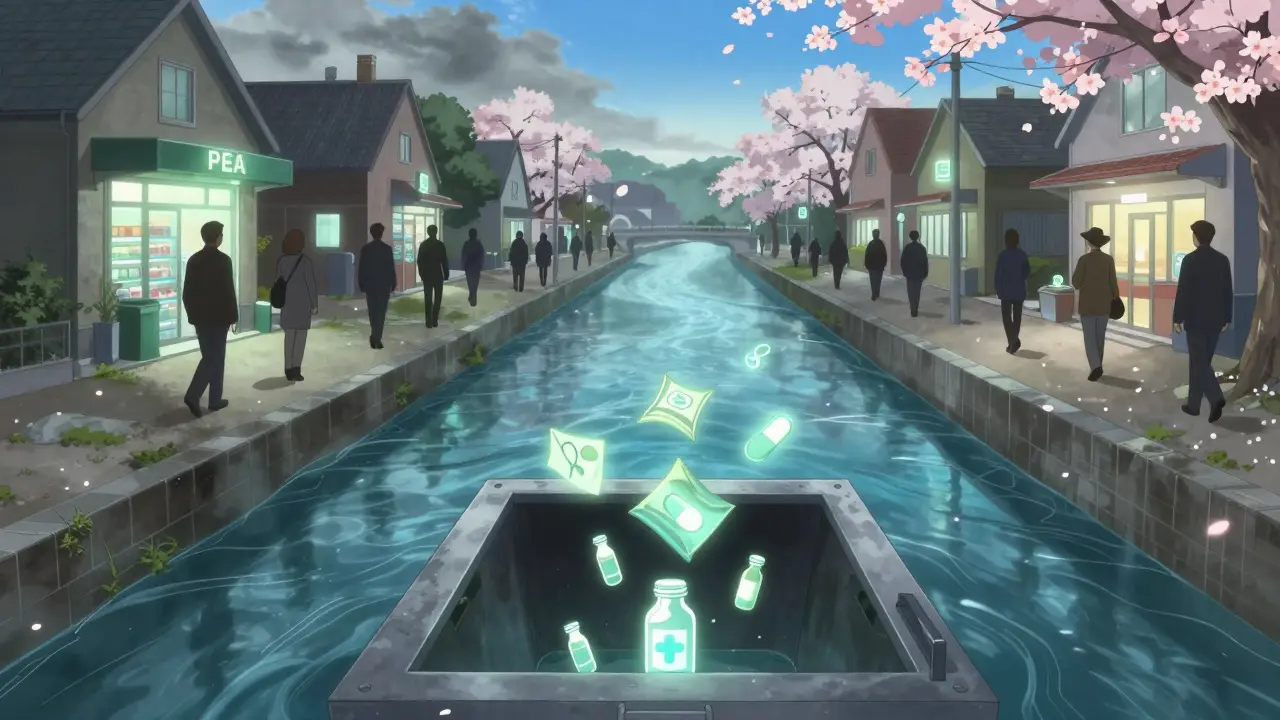
- 80% of U.S. streams contain traces of pharmaceuticals, according to the USGS.
- Only 15% of unused meds are properly disposed of. The rest sit in cabinets, get flushed, or end up in landfills.
When you prepare your meds correctly, you’re not just cleaning out your cabinet. You’re helping prevent addiction, stop pollution, and keep dangerous drugs out of the hands of people who shouldn’t have them.
And it’s getting easier. The FDA is spending $8.7 million in 2024-2027 to simplify these rules nationwide. By 2025, most states will allow you to drop off meds in a sealed bag-with no original container needed. But for now, follow the rules. They’re clear. They’re safe. And they work.
What If You Get Turned Away?
Sometimes, even if you did everything right, you might be rejected. Why? Because rules aren’t always applied the same way.If that happens:
- Ask: "What specifically didn’t meet the guidelines?"
- Take a photo of the label and container-this helps if you need to complain later.
- Try another location. Rural sites are more likely to misapply rules-22% higher rejection rates than urban ones.
- Call the site ahead next time. Most have a phone number listed on the DEA locator.
Don’t give up. One person’s mistake doesn’t mean the system doesn’t work. It just means you need to double-check.
Can I flush my old pills if I can’t get to a take-back site?
No. Flushing medications contributes to water pollution. The EPA confirms that 80% of U.S. streams contain traces of pharmaceuticals, mostly from flushing. Only a few specific drugs (like fentanyl patches) are listed as safe to flush-but even those are better taken to a collection site. Always use a take-back program if possible.
Do I need to remove the pills from the bottle before bringing them?
No. Keep the pills inside their original container. Removing them increases the risk of spills, mixing, or loss. Staff need to see the bottle to verify what’s inside. Just remove your personal info with a marker, and bring the whole bottle.
Can I bring expired vitamins and supplements?
Yes. Vitamins, minerals, and herbal supplements are accepted at nearly all take-back sites. They’re not dangerous, but they still belong in secure disposal-not your trash or sink.
What if I have a lot of medication? Can I bring multiple bags?
Yes. There’s no limit on how much you can bring. If you’re cleaning out a medicine cabinet, bring it all. Just separate liquids, patches, and pills into different containers if possible. Staff are used to large drop-offs.
Are take-back sites free to use?
Yes. All DEA-authorized collection sites offer free disposal. No payment, no ID required. You don’t even need to sign anything. Just show up with your prepared meds and hand them over.

So let me get this straight-we’ve turned medication disposal into a fucking obstacle course designed by bureaucrats who think we’re all idiots? You need to black out labels with a Sharpie but can’t use tape? You can’t mix pills but can’t remove them from bottles? And don’t you DARE bring a ziplock unless it’s freezer-grade? This isn’t safety-it’s performance art for people who get off on control.
Meanwhile, the real problem-pharma companies dumping millions of pills into the market with zero accountability-isn’t even on the agenda. We’re here scrubbing labels like good little citizens while CEOs cash in on addiction. Thanks, America.
Also, why does every ‘take-back’ site look like a DMV with a side of DEA interrogation? I’m not a criminal. I’m just trying to not poison my kid’s fish tank.
And yes, I’ve been turned away twice. Twice. Because my label wasn’t ‘sufficiently’ blacked out. I drew a black hole around it. A BLACK HOLE. They still said ‘no.’
ok so i just wanna say… i think the gov is using these take-back events to track who’s hoarding painkillers. like… why do they need to know what’s in the bottle? why not just take the whole bag and be done? they’re not gonna burn it, they’re gonna sell it on the dark web. i saw a vid where some dude said he saw a DEA van pull up to a pharmacy and load up 3 pallets of oxy… labeled ‘for destruction.’ lol. yeah right.
also i heard if you use a sharpie, it leaves a chemical trace that can be scanned. like, microchip stuff. they’re building a database of every person who ever took a pill. next thing you know, your insurance rates go up because you ‘disposed of anxiety meds.’
just saying… be careful. i threw mine in the woods. no one’s gonna find them. except maybe a bear. and if a bear gets high? that’s nature’s way of balancing the scales.
Oh honey, I’m so proud of you for taking this seriously. Seriously. Not everyone has the emotional maturity to think beyond their own convenience.
I remember last year, I spent an entire Saturday organizing my medicine cabinet. I even made color-coded labels for ‘safe to keep,’ ‘expired but harmless,’ and ‘this could kill someone if left unattended.’ I cried. Not because I was sad-because I realized how many people in this country are just… letting their kids play with morphine like it’s candy.
And don’t even get me started on people who flush. I mean, really? You’d rather poison the ocean than do ONE THING right? You think the fish care? No. But I do. And I’m watching. Always.
You’re doing the Lord’s work. Keep going. I’m sending you virtual cookies.
PS: I used a black permanent marker, folded my patches like origami, and brought them in a sealed mason jar. I felt like a superhero.
Original containers. Non-porous bags. No mixing. Redact, don’t peel. These aren’t suggestions. They’re baseline hygiene.
People who think this is overregulation are the same ones who think hand sanitizer is a government plot.
It’s not about control. It’s about preventing a 7-year-old from finding a fentanyl patch and turning their afternoon into a coroner’s report.
And yes, the 41% rejection rate is real. Because most people treat disposal like a game of ‘how little effort can I use?’
Stop being lazy. Your laziness is someone else’s overdose.
Let’s cut through the noise: this isn’t about ‘environmental responsibility.’ It’s about national security.
Controlled substances in unsecured cabinets = easy access for foreign actors, domestic terrorists, and opioid traffickers.
The 2024 ‘Every Day is Take Back Day’ initiative? That’s not charity. That’s a tactical asset. We’re denying adversarial networks the supply chain they need to destabilize communities.
And if you think this is about ‘saving the fish,’ you’re missing the forest for the algae.
Proper disposal = reduced black-market access = fewer overdoses = stronger homeland.
Do your part. Or get out of the way.
Y’all are overthinking this lol 😅
I just took all my old meds-pills, patches, even that weird thyroid thing I forgot I had-and tossed ‘em in a ziplock with a sharpie scribble on it. No bottle, no drama. Took it to my local CVS and they were like ‘cool, thanks!’ and handed me a free lanyard.
It’s not rocket science. Just don’t flush. Don’t dump. Don’t be lazy.
And if you’re worried about the label? Use a whiteout pen. Works better than a Sharpie. Trust me, I’m a pharmacist’s son. 🤓
Do it. Your future self (and your dog) will thank you.
Thank you for writing this with such clarity and compassion. This is exactly the kind of public service information that is too often buried under bureaucratic jargon or left unspoken.
I’ve worked in public health for over two decades, and I can tell you: the emotional weight of this issue is profound. Families lose loved ones not because of addiction alone-but because they didn’t know how to safely dispose of what was once meant to heal.
The steps outlined here are not just practical-they are ethical. They honor the dignity of those who once relied on these medications, and the safety of those who might come after.
Please share this with someone who needs to hear it. One person’s action ripples far beyond their own cabinet.
You are doing good work.
The entire framework is a performative compliance exercise masquerading as public safety.
Let’s examine the data: 80% of pharmaceuticals in waterways originate from industrial discharge-not household disposal. Yet, we’ve engineered an entire cultural ritual around blacking out labels on bottles that cost $0.02 to produce.
The $8.7M federal allocation? That’s 0.0003% of the pharmaceutical industry’s annual lobbying budget. This isn’t policy. It’s distraction.
And the ‘original container’ rule? It’s a logistical artifact from pre-digital pharmacy systems. We have QR codes now. We have blockchain inventory tracking. We don’t need 1980s-era bottle-based verification.
What’s being sold here as ‘safety’ is, in fact, a relic of institutional inertia.
Do it if you want. But don’t mistake ritual for reform.
You Americans think you’re so smart with your Sharpies and ziplocks. Here in Australia, we just drop them in the bin. No fuss. No forms. No trauma.
And guess what? Our waterways are cleaner than yours. Why? Because we don’t turn every household chore into a cult ritual.
You’re not protecting the environment-you’re performing virtue. You’re not preventing overdoses-you’re creating anxiety. You’re not helping your kids-you’re teaching them to fear their own medicine cabinet.
Take your 92% compliance rate and shove it.
Real solutions don’t require a 12-step process to throw away expired Tylenol.