

Have you ever opened your pill bottle and thought, "This doesn’t look right"? You’re not alone. Every year, millions of people in the U.S. and Australia receive the same medication - but it looks completely different. One month, it’s a small white oval. The next, it’s a large blue capsule. The active ingredient? Exactly the same. But the change in appearance can trigger confusion, fear, and even dangerous mistakes.
Why Do Generic Pills Look Different?
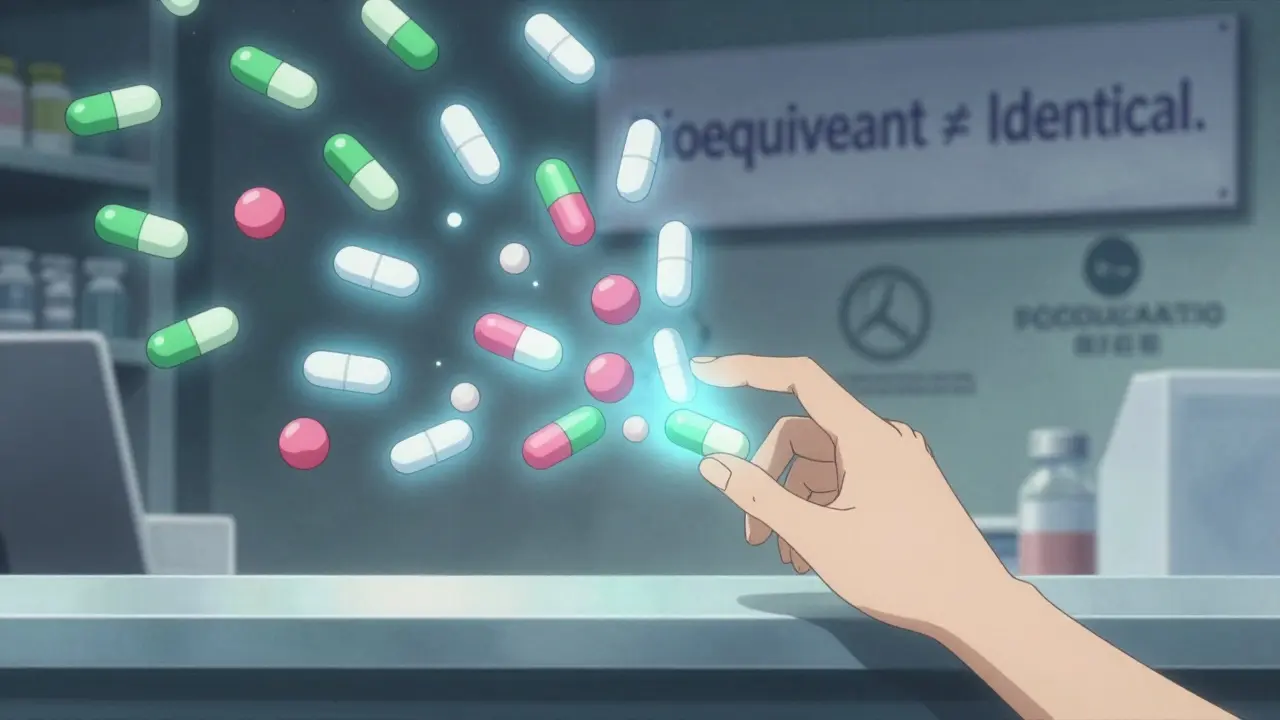
Generic drugs are not copycats. They’re legally required to be bioequivalent - meaning they deliver the same amount of active ingredient into your bloodstream at the same rate as the brand-name version. That’s the law. But here’s the twist: U.S. trademark laws forbid generic manufacturers from making pills that look identical to the original brand. So, while your blood pressure pill has the same active ingredient whether it’s made by Pfizer, Teva, or Mylan, each company picks its own color, shape, and markings.
This isn’t an accident. It’s a loophole. Brand-name drug companies hold trademarks on their pill designs - the color, the logo stamped on it, even the shape. To avoid infringing on those trademarks, generic makers must create distinct looks. The result? A patient taking lisinopril might get a white round tablet one month, a peach oblong the next, and a green capsule the month after. All contain the exact same medicine. All work the same. But they look nothing alike.
What’s the Real Risk?
The biggest danger isn’t that the medicine is weaker. It’s that you stop taking it.
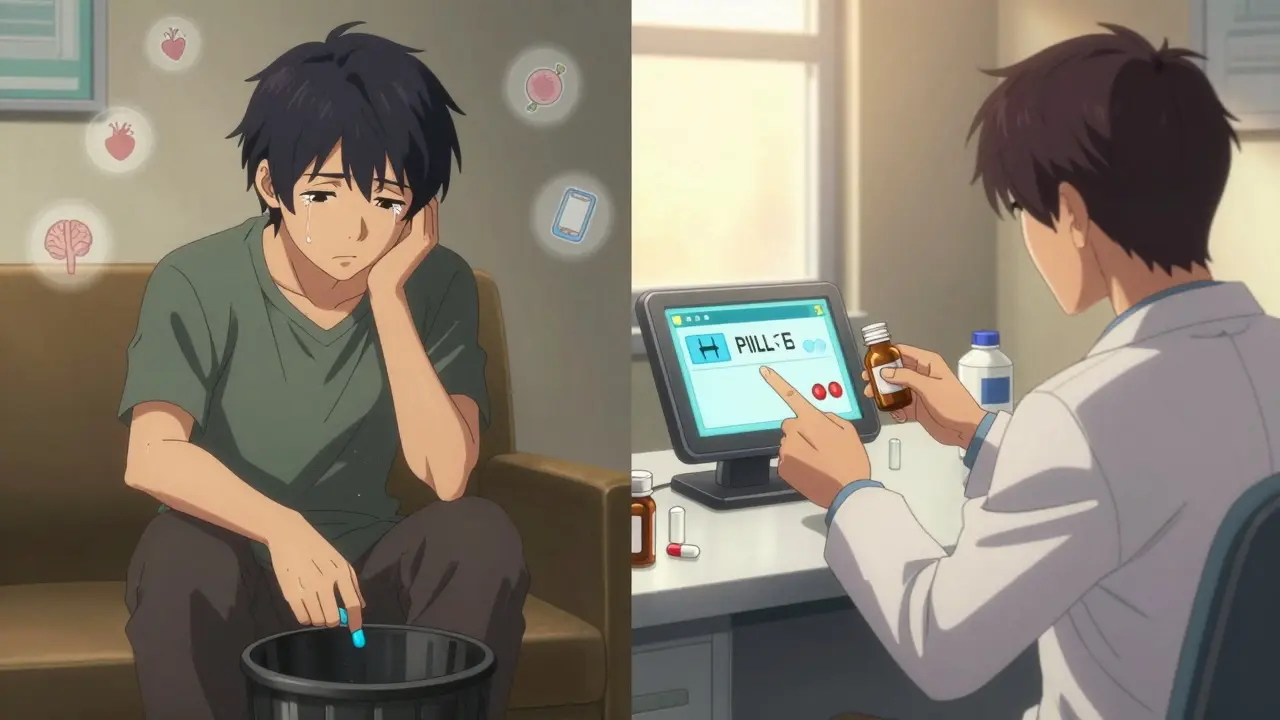
A study published in the Annals of Internal Medicine found that 34% of patients stopped taking their medication after just a color change. That number jumped to 66% when the shape changed. Think about that: two out of three people quit their treatment because the pill looked different - not because it stopped working, not because they had side effects, but because it looked unfamiliar.
One patient in Los Angeles reported her potassium pills changed appearance nine times over 15 years. Another stopped taking blood pressure medication because the pills went from white to pink. She thought she’d been given the wrong drug. She didn’t call her pharmacist. She didn’t check the label. She just stopped.
Why does this happen? Because people associate color with effect. A blue pill feels like "the one that works." A white one feels like "a placebo." A round pill feels like "my heart medicine." A capsule feels like "something stronger." These aren’t logical. But they’re deeply human.
Is It Legal? Is It Safe?
Yes, it’s legal. And yes, it’s safe - if you know what you’re taking.
The FDA requires generics to meet strict standards: same active ingredient, same strength, same dosage form, same route of administration, same bioavailability. They must be manufactured under the same quality controls as brand-name drugs. The FDA doesn’t care if it’s green or orange, round or oval - as long as it works the same way inside your body.
But legality doesn’t mean it’s ideal. The FDA itself has acknowledged the problem. In a 2014 letter published in ACP Journals, experts wrote that "bioequivalent generic drugs that look like their brand-name counterparts enhance patient acceptance." In plain terms: if generics looked like the originals, people would take them more consistently.
There’s no law forcing generics to match brand-name looks. And until trademark laws change, this will keep happening. Even if a patient’s doctor says, "It’s the same medicine," fear doesn’t care about science.
Which Medications Are Most Affected?
It’s not just one drug. It’s dozens - and they’re the ones people take every day.
- Sertraline (Zoloft): Can be blue, green, or white. Shape varies from oval to capsule.
- Metformin: White, pink, round, or oblong. Often changes between manufacturers.
- Lisinopril: White, pink, or peach. Shape shifts frequently.
- Gabapentin: One of the most variable. Can be round, oval, capsule, or even scored differently.
- Levothyroxine: Even thyroid meds - a drug where tiny dose changes matter - can shift color and size.
These aren’t rare cases. A 2022 survey by the American Pharmacists Association found that 42% of patients experienced at least one appearance change in their regular meds over a 12-month period. Nearly 3 in 10 said they were worried about it.
What Should You Do?
You can’t stop the changes. But you can protect yourself.
- Keep a written list of every medication you take - including the name, dose, and what it looks like. Write down color, shape, size, and any letter or number stamped on it. Update it every time you get a refill.
- Bring the bottle to every doctor or pharmacist visit. Don’t rely on memory. Show them the actual pill.
- Ask your pharmacist when you pick up a refill: "Is this the same as last time?" They’re trained to spot changes and can explain what’s different.
- Use online tools. Sites like Medscape Pill Identifier let you search by color, shape, and imprint to confirm what you have.
- Don’t guess. If it looks different, don’t assume it’s wrong. Don’t assume it’s fake. Don’t assume it’s weaker. Ask.
Pharmacists are now required to include appearance change notices with refill labels in 78% of pharmacies - up from 45% in 2018. Independent pharmacies have set up pill identification programs to help patients. But you still need to be the one to notice and speak up.
What’s Changing? What’s Next?
The system is slowly waking up. The MODERN Labeling Act of 2020 lets the FDA update generic drug labels faster when new safety data emerges. In September 2025, the FDA began enforcing new rules requiring manufacturers to update labeling based on emerging safety information - even if it’s about patient confusion.
Experts are pushing for change. If generics could match brand-name looks without breaking trademark law, adherence would improve dramatically. But that would require Congress to rewrite decades-old rules. Until then, the burden falls on you - the patient.
The system works. The medicine works. But the design? It’s broken. And it’s costing lives.
Are generic pills with different appearances less effective?
No. Generic pills with different colors, shapes, or sizes contain the exact same active ingredient and amount as the brand-name version. The FDA requires them to be bioequivalent - meaning they work the same way in your body. The differences are only in inactive ingredients like dyes and fillers, which don’t affect how the medicine works.
Why do pharmacies switch generic manufacturers?
Pharmacies choose the lowest-cost option approved by the FDA. Generic manufacturers compete on price, so your pharmacy may switch from one company to another to save money - even if it means your pill looks different. This can happen every time you refill, especially if your insurance plan changes its preferred supplier.
Can a pill change look like a different drug entirely?
Yes. Some generic versions of the same drug can look very similar to other medications. For example, a white oval metformin tablet might look like a white oval aspirin. This is why it’s critical to always check the label and use a pill identifier tool. Never rely on appearance alone.
What should I do if I think I got the wrong pill?
Don’t take it. Call your pharmacist immediately. Show them the pill and ask for confirmation. Most pharmacies have tools to identify pills by color, shape, and imprint. If you’re unsure, bring the pill bottle to your doctor. Never assume it’s safe just because it’s the same name.
Is it safe to take a generic pill if it looks different from last time?
Yes - if you’ve confirmed it’s the same medication. The FDA approves all generic versions for safety and effectiveness. But appearance changes are common and can cause confusion. Always check the label, ask your pharmacist, and use a pill identifier tool to be sure. Don’t rely on how it looks.
Final Thought
Medicine is supposed to heal. But when a pill looks wrong, it can make you feel like you’re being lied to. You’re not. The system is just outdated. The law doesn’t require consistency. The science says it doesn’t matter. But your brain? It cares. And that’s what matters most.
Know your pills. Track them. Ask questions. Don’t let a color change stop you from getting better.


Man, I’ve had my blood pressure meds switch from green ovals to pink capsules like 5 times. I just stare at them like they’re aliens. Then I remember: same chemical, same effect. Still weird as hell. 🤷♂️
It’s not just pills-it’s the whole illusion of control we cling to. We need color, shape, texture to feel safe. But medicine? It doesn’t care about our aesthetics. It just wants to work. And yet… we’re emotional creatures. A blue pill is hope. A white one? Doubt. We’ve turned pharmacology into astrology. 🌈💊
Simple fix: standardize pill appearance across generics. No trademark nonsense. Patients win. Pharma loses a bit of branding. Fair trade.
This is what happens when you let lawyers run healthcare. Trademark law was never meant to dictate how your heart medication looks. The FDA knows this. But Congress? Too busy lobbying for Big Pharma to fix a system that’s literally killing people by confusion. Pathetic.
I’m so glad this got written. My mom stopped her thyroid med because it went from white to yellow. She thought she was being poisoned. Took three calls to the pharmacy to convince her it was the same thing. We need more awareness. You’re not alone if you freak out. Just… call someone. You got this. 💪❤️
In India, we don’t have this problem. Our generics are made by honest manufacturers who don’t care about American trademark nonsense. You people overcomplicate everything. A pill is a pill. Take it. Don’t stare at it like it’s a magic spell.
The real tragedy isn’t the pill color. It’s that we’ve outsourced trust. We don’t trust doctors. We don’t trust pharmacists. We don’t trust the FDA. So we trust the *look*. And when the look changes? We panic. We’re not being irrational. We’re being trained to be irrational by a broken system.
You think this is bad? Wait till you see the Indian generic manufacturers. They make 70% of the world’s meds. And yes, sometimes the pills look different because they’re made in different factories with different dyes. But they’re 100% bioequivalent. You Americans are obsessed with aesthetics. In India, we care about results. The pill works? Then it’s fine. End of story.
Let’s be brutally honest: this isn’t a healthcare issue. It’s a psychological one. You’re not afraid of the pill. You’re afraid of change. You’re afraid of losing control. You’re afraid of not knowing. And so you cling to the color. The shape. The imprint. As if those things mean anything. They don’t. Your brain is the problem. Not the FDA.
I commend this article for its clarity and compassion. Patients deserve consistency. The system should prioritize adherence over corporate trademark protection. Pharmacists are on the front lines-let’s empower them with standardized labeling and patient education tools. Small changes, big impact.
The science is clear. The law is outdated. The human factor? Unavoidable. We need a cultural shift-not just policy. Pills aren’t candy. They’re lifelines. And we treat them like lottery tickets. Maybe if we stopped calling them ‘brand-name’ and ‘generic,’ and started calling them ‘prescribed’ and ‘not prescribed,’ we’d stop attaching meaning to color.
The pill is not the medicine. The medicine is the act of taking it. Consistently. Regardless of hue. We have turned pharmaceuticals into sacred icons. But biology does not bow to aesthetics. The body does not care if it’s pink or white. Only if it’s taken.
I work in a pharmacy. I’ve seen people cry because their pill changed color. One woman said, ‘My husband took this exact pill for ten years. It was white. Now it’s pink. He’s dead because of this.’ She was wrong. But her grief? Real. We need more than facts. We need empathy.