
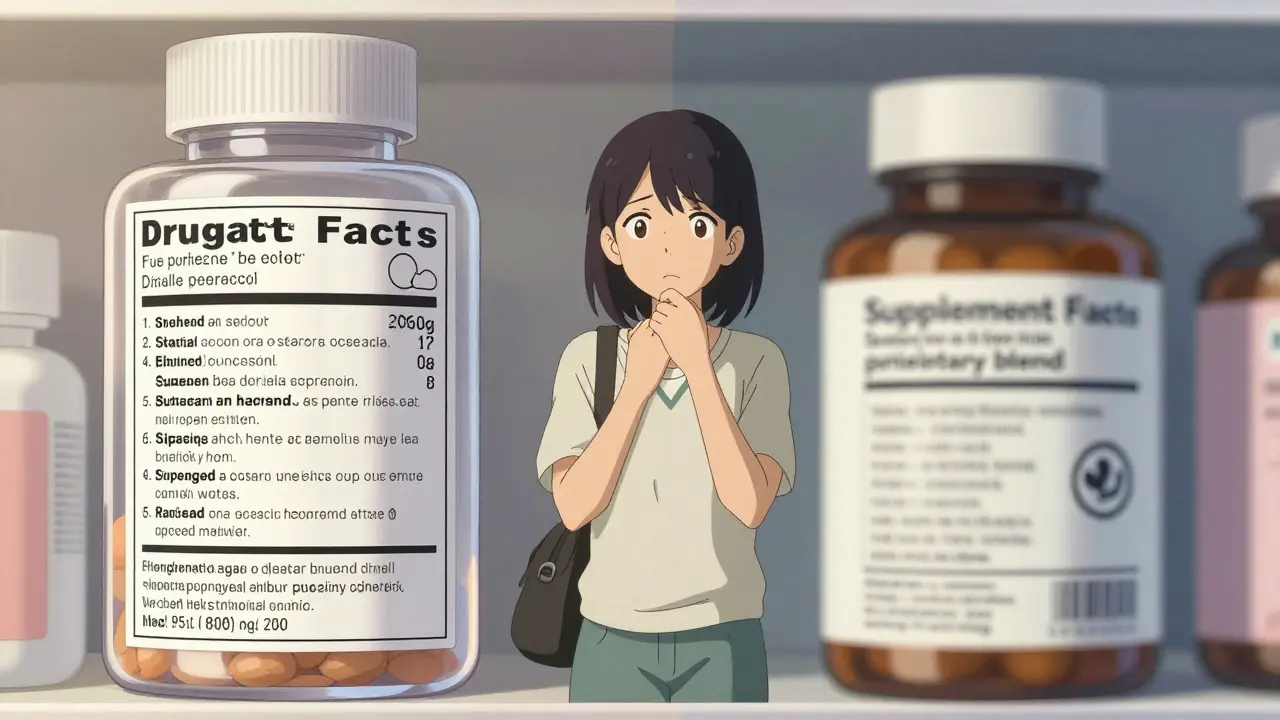
You might assume that any product sold in the pharmacy has undergone rigorous safety checks. But that's not true for vitamins and supplements. While OTC medications have clear Drug Facts label detailing ingredients, risks, and usage, supplements operate under completely different rules. This gap in labeling can lead to serious health risks, and most consumers don't even realize it. A 2022 study found 72% of people incorrectly believe supplements undergo the same FDA safety review as medications. The truth is, supplements are regulated as food, not drugs. This means they don't need FDA approval before hitting the shelves. Let's break down what's missing from supplement labels compared to medications.
Regulatory Split: Medications vs Supplements
The Dietary Supplement Health and Education Act (DSHEA) of 1994 classifies supplements as food products, not drugs. This means they aren't required to prove safety or effectiveness before sale. In contrast, OTC medications must undergo rigorous FDA review. The Drug Facts label for medications includes nine mandatory elements: active ingredients with exact measurements, uses for specific symptoms, detailed warnings, inactive ingredients, dosage directions, storage info, expiration dates, and manufacturer details. But supplements only need a Supplement Facts panel with basic ingredient lists and serving sizes. The FDA doesn't review supplements for safety before they're sold—manufacturers are responsible for ensuring safety, but there's no pre-market approval process.
Missing Safety Warnings on Supplement Labels
One of the biggest gaps is the lack of specific safety warnings. For example, OTC medications containing ingredients like ibuprofen must list potential drug interactions clearly. But a 2021 study found only 17% of supplement labels warn about interactions with prescription drugs. Consider vitamin A: high doses can cause birth defects, yet supplement labels often don't specify the exact form (retinol vs beta-carotene) or provide clear pregnancy warnings. The FDA requires OTC medications with teratogenic risks to have prominent pregnancy warnings, but vitamin A supplements with 10,000 IU per serving—levels linked to birth defects—only have generic warnings that may be buried in fine print. The American Medical Association documented cases where prenatal vitamins contained excessive vitamin A, yet only 22% of these products had pregnancy warnings comparable to OTC medications.

Ingredient Disclosure Gaps
Supplement labels often hide ingredient quantities using proprietary blends. A 2022 NSF International analysis found 41% of protein supplements and 63% of weight loss supplements use blends that obscure individual ingredient amounts. This makes it impossible for consumers to know exactly what they're taking. OTC medications must list exact milligram amounts for active ingredients, but supplements don't. Sodium content is another issue: OTC medications must disclose sodium per serving, which matters for people with hypertension, but supplements don't. For example, a salt-sensitive person might unknowingly consume high-sodium supplements because the label doesn't list it. Additionally, expiration dates aren't required for supplements, leading to potential degradation of potency or safety.
How Consumers Are Misled
Consumer confusion is widespread. A 2022 Consumer Reports survey showed 68% of supplement users incorrectly believe the FDA reviews supplements for safety before sale, compared to 92% who correctly understand this for OTC medications. Amazon reviews of top-selling multivitamins show 32% of 1-star reviews cite confusion about dosage safety or lack of warnings. On Reddit, a thread titled "Why don't vitamin labels warn about interactions like medications do?" had over 1,200 upvotes and hundreds of comments from users sharing adverse reactions. Walgreens pharmacists documented 14,327 inquiries in Q1 2023 about why vitamin labels lack medication-style warnings. A University of North Carolina study found only 28% of participants could correctly interpret supplement labels, versus 89% for OTC medication labels. This gap in understanding creates real risks for consumers who assume supplements are as rigorously regulated as medications.
What You Can Do to Protect Yourself
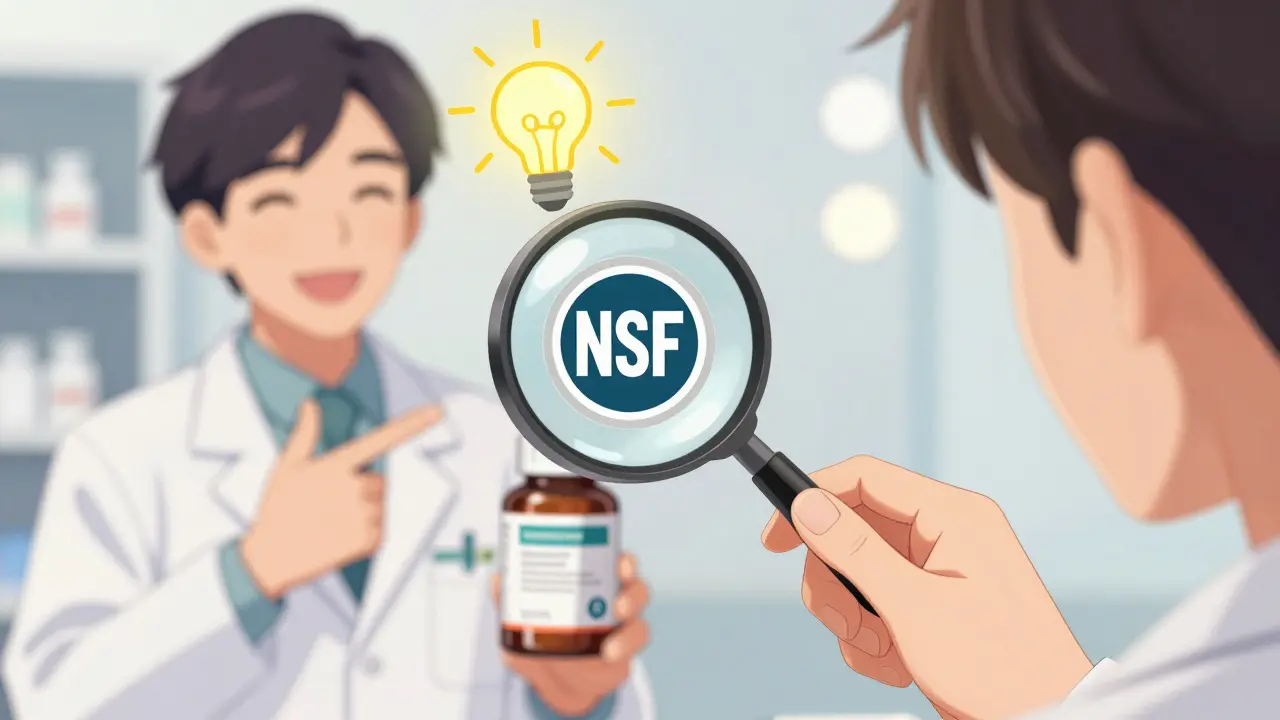
Don't rely solely on supplement labels. Look for third-party certifications like NSF International or USP Verified Mark. These organizations test for quality, purity, and accurate labeling. Between 2008 and 2020, the FDA found 776 dietary supplements containing undeclared pharmaceutical ingredients. Independent labs like ConsumerLab.com test products and publish results. Websites like Examine.com also provide detailed ingredient analyses. If a supplement uses a "proprietary blend," it's harder to verify individual ingredients—opt for products that list exact amounts of each component. Always consult a healthcare provider before starting new supplements, especially if you're on medications or have health conditions. Pharmacists can help identify potential interactions. For pregnant individuals, discuss vitamin A intake with a doctor—many prenatal vitamins exceed the safe limit. Remember, supplements aren't a substitute for a balanced diet. Prioritize whole foods and use supplements only when necessary under professional guidance.
Frequently Asked Questions
Why don't supplement labels have the same warnings as OTC medications?
Supplements are regulated as food under the Dietary Supplement Health and Education Act (DSHEA), not as drugs. This means they don't require FDA pre-market approval and aren't subject to Drug Facts labeling requirements. OTC medications must list detailed warnings for interactions, pregnancy risks, and side effects, but supplements only need to provide basic ingredient information. A 2021 study found only 17% of supplement labels mention drug interactions, compared to 100% of OTC medication labels. The FDA doesn't mandate these warnings for supplements, creating significant safety gaps.
How can I check if a supplement contains hidden ingredients?
Look for third-party certifications like NSF International or USP Verified Mark. These organizations test products for contaminants and ensure ingredients match the label. Between 2008 and 2020, the FDA found 776 dietary supplements containing undeclared pharmaceutical ingredients. Independent labs like ConsumerLab.com test products and publish results. Websites like Examine.com also provide detailed ingredient analyses. If a supplement uses a "proprietary blend," it's harder to verify individual ingredients—opt for products that list exact amounts of each component.
Are there supplements with better labeling?
Yes, some brands voluntarily adopt stricter labeling standards. Look for products with NSF or USP certification—they must meet higher transparency requirements. The FDA's Supplement Label Database, launched in January 2023, includes standardized ingredient information for 65,000 products, though participation is voluntary. In June 2023, the FDA proposed enhanced labeling for vitamin A supplements, requiring amounts in mcg RAE instead of IU and prominent pregnancy warnings. While these changes aren't mandatory yet, some manufacturers have already updated their labels in response.
What should I do if I experience side effects from a supplement?
Stop taking the supplement immediately and contact your healthcare provider. Report the reaction to the FDA's MedWatch system, which tracks adverse events. Unlike medications, supplements don't have mandatory adverse event reporting, so your report helps the FDA identify dangerous products. Between 2008 and 2020, the FDA identified 776 supplements with undeclared drugs, but they rely on consumer reports to detect these issues. Keep the product packaging to help with the investigation. If you're unsure whether a reaction is related to a supplement, consult a pharmacist—they can check for potential interactions or contaminants.
Is there any effort to change supplement labeling regulations?
Yes, there's growing pressure for reform. In June 2023, the FDA issued draft guidance proposing enhanced labeling for vitamin A supplements, including clearer pregnancy warnings. The Dietary Supplement Listing Act of 2022 (H.R. 5851) requires manufacturers to list products with the FDA but doesn't standardize warnings. Industry groups like the Natural Products Association support voluntary improvements, while consumer advocates push for mandatory changes. FDA Commissioner Robert Califf acknowledged in 2023 that current labeling doesn't provide the same safety info as OTC medications, suggesting potential rule changes by mid-2024. However, the supplement industry lobbies against stricter regulations, spending $8.2 million on federal lobbying in 2022.


Supplements need stricter rules. Period.
The 'regulate supplements like meds' crowd is hilarious. Next thing you know, they'll demand FDA approval for kombucha. 'This batch may contain trace amounts of existential dread. Not FDA-approved!'
Honestly, I don't get why people are so surprised. The supplement industry is basically the Wild West. You can't even trust the labels. I've seen some products with 'proprietary blend' that's just a way to hide how much of each ingredient they're using. It's like they don't want you to know what you're taking. And don't even get me started on the lack of warnings about interactions. Like, take this pill with your blood pressure meds? Sure thing, no problem. Yeah, right.
I find it alarming that supplements aren't regulated like meds. But hey, maybe we need more educaton on this. Also, some brands do have certifications like USP, which is better. But the FDA should step up. It's a safety issue.
It's utterly ridiculous how these companies can sell dangerous products without any oversight. People are getting hurt because of this. They need to be held accountable. The FDA is asleep at the wheel.
The current regulatory framework under DSHEA is fundamentally flawed. It fails to address pharmacokinetic interactions and bioavailability metrics. A paradigm shift towards mandatory pre-market safety assessments is necessary to mitigate public health risks. Without proper oversight, consumers are unknowingly exposed to dangerous combinations and contaminants. The lack of standardized testing protocols is a glaring oversight. We need to move beyond this archaic system.
Hey, I think you're spot on about the need for better oversight.
But also, for everyday users, checking for third-party certifications like NSF or USP is a good start.
Just make sure you're not taking too much of certain vitamins, like vitamin A.
It's easy to overdo it.
And always consult your doctor before starting anything new.
We're all in this together, ya know?
I've seen so many people just grab a multivitamin without a second thought, but it's not always safe.
Some supplements have hidden ingredients, like the ones that contain undeclared drugs.
The FDA found over 700 supplements with illegal ingredients in the past decade.
It's scary how many people don't know this.
I remember a friend who had a bad reaction because her supplement had a stimulant she didn't know about.
So yeah, do your homework.
Look for the USP mark, check Examine.com for info, and talk to your doctor.
It's not hard to be informed, but it takes a bit of effort.
But your health is worth it.
Don't just assume it's safe because it's on the shelf.
Take the time to learn.
It's a small step but could save you from a big problem.
In my country, supplements are regulated differently. But here in the US, it's a total free-for-all. I think we need to learn from other countries' approaches. Maybe some global standards would help.
It's high time the FDA regulates supplements properly. People's health is at stake, and this lax approach is unacceptable. We need strict laws now.