
Every year, millions of people reach for an OTC medication without thinking twice. A headache. A stuffy nose. Heartburn after dinner. It’s quick, it’s easy, and it’s right there on the shelf. But here’s the thing: just because you don’t need a prescription doesn’t mean these pills are harmless. In fact, acetaminophen alone sends about 56,000 people to the emergency room every year in the U.S. because someone took too much-or mixed it with something else.
OTC medications aren’t candy. They’re powerful chemicals designed to change how your body works. And if you don’t know what you’re taking, or why, or how much, you’re playing Russian roulette with your liver, your stomach, or your heart.
What Exactly Counts as an OTC Medication?
Most people think of OTC meds as painkillers or cold tablets. But the list is way bigger. Fluoride toothpaste? That’s an OTC drug. So are antifungal foot creams, dandruff shampoos with selenium sulfide, eye drops for redness, and even some antiseptic ointments you put on cuts. The FDA treats all of these the same way: they must prove they’re safe and effective before they hit store shelves.
In the U.S., there are more than 300,000 OTC products on the market, covering around 80 different health conditions. That’s not just Tylenol and Advil. It’s Pepto-Bismol for upset stomachs, Mucinex for chest congestion, and Zyrtec for allergies. Even the little packets of antacid you grab at the gas station count.
And here’s something most people don’t realize: store brands are often identical to name brands. The active ingredients? The same. The price? Half as much. If you’re paying extra for the logo, you’re not saving money-you’re paying for marketing.
The Big Four: Pain Relievers and What They Really Do
When it comes to pain, two drugs dominate: acetaminophen and NSAIDs like ibuprofen and naproxen. They look similar. They’re both sold as pills. But they work completely differently.
Acetaminophen (Tylenol, Panadol, and store brands) is your go-to for headaches, fever, and general aches. It doesn’t reduce swelling. That’s its limitation. But it’s also its strength: if you have a sensitive stomach or high blood pressure, acetaminophen is usually safer than NSAIDs. The catch? Your liver can only handle so much. The maximum daily dose for adults is 3,000 mg-six extra-strength pills. Go over that, and you risk serious liver damage. And here’s the trap: many cold and flu medicines also contain acetaminophen. Taking Tylenol on top of NyQuil? That’s how people end up in the ER.
NSAIDs (ibuprofen, naproxen, aspirin) fight pain by reducing inflammation. That makes them better for muscle strains, arthritis, or menstrual cramps. But they’re harder on your body. They can cause stomach ulcers, raise blood pressure, and increase your risk of heart attack or stroke, especially if you take them long-term or at high doses. The FDA now requires all NSAID labels to warn about these risks. If you have asthma, kidney disease, or take blood thinners, talk to a pharmacist before using them. About 8.3% of Americans with asthma can have dangerous reactions to NSAIDs.
Naproxen (Aleve) lasts longer than ibuprofen, so you take it less often. But it’s also stronger on your stomach. Ibuprofen (Advil, Motrin) is fine for short-term use, but don’t go over 1,200 mg a day unless a doctor says so. Aspirin? It’s an NSAID too-but it’s not for daily pain relief unless your doctor told you to take it for your heart.
Reading the Drug Facts Label (It’s Not Optional)
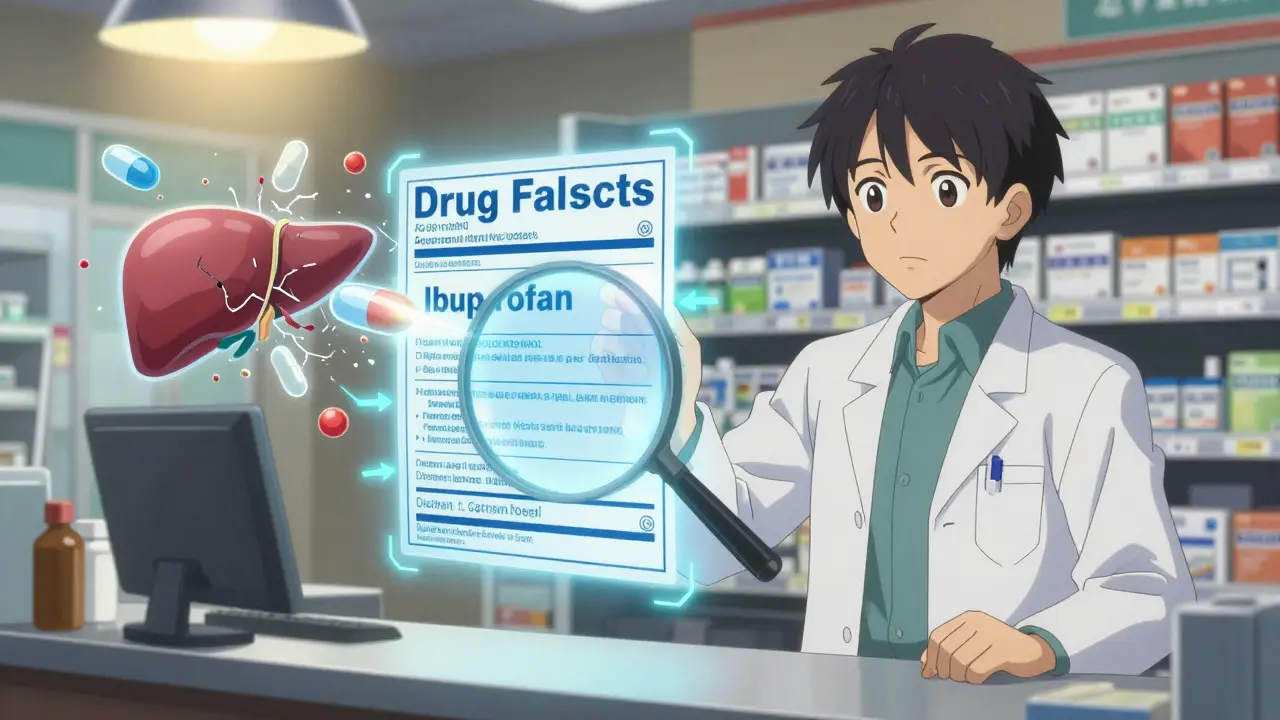
Every OTC medicine sold in the U.S. has to follow a strict label format called the Drug Facts label. It’s not a suggestion. It’s the law. And if you don’t read it, you’re flying blind.
Here’s what you need to look for:
- Active ingredients: This is the medicine itself. Know what’s in it. If you see “acetaminophen” in two different products, you’re doubling your dose.
- Purpose: What’s it supposed to do? Pain relief? Allergy control? Cough suppression?
- Uses: What symptoms does it treat? Don’t guess. Match your symptoms exactly.
- Warnings: Who shouldn’t take it? What side effects to watch for? What other meds to avoid?
- Directions: How much? How often? For how long? Never exceed the max daily dose.
- Inactive ingredients: These are fillers, dyes, flavors. But if you’re allergic to something like lactose or red dye #40, this matters.
Only 22% of people read the entire label. That’s a problem. A 2022 survey found that 23.1% of adults misread instructions like “do not exceed 6 tablets in 24 hours.” They thought it meant 6 tablets total-not 6 per day. That’s how overdoses happen.
When OTC Medications Are Dangerous (And When to Call a Doctor)
OTC meds are great for short-term, mild issues. But they’re not for everything.
Stop using them and see a doctor if:
- Your pain lasts more than 10 days
- Your fever goes above 102°F (39°C) or lasts more than 3 days
- You have chest pain, trouble breathing, or sudden swelling
- You notice black, tarry stools or vomit that looks like coffee grounds (signs of internal bleeding)
- You’re taking five or more prescription drugs already
Polypharmacy-taking multiple meds-is a silent killer. One in four adults over 65 takes five or more prescription drugs. Add OTC meds on top of that, and the risk of dangerous interactions skyrockets. A pharmacist can check your whole list in minutes. And they’re free to consult with.
Also, don’t assume “natural” means safe. Many herbal supplements-like St. John’s Wort or echinacea-are sold alongside OTC drugs, but they’re not regulated the same way. They can interfere with blood thinners, antidepressants, even birth control.
How to Use OTC Medications Without Risk
Safe self-care isn’t about avoiding OTC meds. It’s about using them wisely. Here’s how:
- Start with one active ingredient. Multi-symptom cold pills might seem convenient, but they often contain unnecessary drugs. If you only have a headache, take acetaminophen alone. Not a decongestant. Not an antihistamine. Just what you need.
- Check your other meds. Before taking anything new, ask: “Is there acetaminophen, ibuprofen, or diphenhydramine in something else I’m taking?” Use a free app or write it down. Most pharmacies have digital tools to scan your meds.
- Know your limits. Don’t take OTC meds longer than the label says. Most pain relievers shouldn’t be used for more than 10 days. If symptoms don’t improve, it’s not working-and you need a different solution.
- Store them right. Keep them in a cool, dry place, away from bathrooms and windows. Heat and moisture ruin pills. Don’t leave them in your car. Check expiration dates. Expired meds don’t just lose strength-they can break down into harmful substances.
- Ask your pharmacist. They’re trained for this. 78% of pharmacists give OTC advice every year. Ask: “Is this safe with my other meds?” “Is there a cheaper generic?” “What’s the lowest dose I can start with?”
Who’s Behind the Products You Buy?
The OTC market is dominated by four big companies: Johnson & Johnson (Tylenol, Band-Aid), Bayer (Aspirin), GlaxoSmithKline (Zantac, Pepto-Bismol), and Procter & Gamble (Advil, Claritin). But store brands (like CVS Health, Walgreens Balance, or Target Up & Up) are just as effective. They use the same active ingredients, same factories, same FDA standards. The only difference? Price. Store brands make up nearly a quarter of the market-and they’re often half the cost.
Also, watch out for “new and improved” labels. Sometimes it’s just a new color or a different shape. The active ingredient? Same as before.
What’s Changing in 2025 and Beyond?
The FDA is overhauling how OTC drugs are approved. Under the CARES Act of 2020, the agency now has a faster process to update safety rules. By 2025, they plan to review hundreds of old OTC ingredients. Some products may be pulled if they can’t prove they work or are safe.
Also, more states are letting pharmacists prescribe certain OTC meds-like emergency contraception or nicotine patches-without a doctor’s note. Digital tools are growing too. Apps now scan your meds, warn you about interactions, and even remind you when to take your pills.
But the biggest change? Awareness. More people are starting to understand: OTC doesn’t mean risk-free. It means responsible.
Final Thought: You’re the Gatekeeper
No one is going to stop you from taking too much ibuprofen. No one will knock on your door if you mix NyQuil with your blood pressure pill. You have to be the one who reads the label. You have to be the one who asks the pharmacist. You have to be the one who says, “This isn’t getting better-I need help.”
OTC medications are a gift. They give you control. But control comes with responsibility. Use them right, and they’ll help you feel better. Use them carelessly, and they could end up hurting you-or worse.
Can I take OTC pain relievers every day?
No. Most OTC pain relievers are meant for short-term use only. Acetaminophen should not exceed 3,000 mg per day, and NSAIDs like ibuprofen should not be used for more than 10 days without medical advice. Daily use increases your risk of liver damage, stomach bleeding, kidney problems, and high blood pressure. If you need daily pain relief, see a doctor to find the root cause.
Is it safe to give OTC meds to children?
Only if you use the right product and the right dose. Never give adult medications to kids. Always check the label for age and weight-based dosing. Liquid forms are common for children, but measuring spoons aren’t accurate-use the dosing cup or syringe that comes with the bottle. Never guess. A 2022 study showed children’s liquid acetaminophen overdoses rose 7.1% that year, mostly because parents used kitchen spoons or misread the label.
Can OTC meds interact with alcohol?
Yes, and it’s dangerous. Mixing alcohol with acetaminophen increases your risk of liver damage-even at normal doses. Alcohol also worsens stomach irritation from NSAIDs like ibuprofen, raising your chance of ulcers and bleeding. If you drink regularly, avoid OTC pain relievers unless your doctor says it’s safe.
Why do some OTC meds require a photo ID to buy?
Products containing pseudoephedrine (like Sudafed) are kept behind the counter because they can be used to make illegal methamphetamine. The Combat Methamphetamine Epidemic Act of 2005 requires pharmacies to log purchases and ask for photo ID. You can still buy them, but you’ll need to show ID and sign a log. There are daily and monthly limits on how much you can purchase.
What’s the difference between generic and brand-name OTC meds?
There’s no difference in the active ingredient, strength, or effectiveness. Generic OTC meds must meet the same FDA standards as brand names. The only differences are the inactive ingredients (like dyes or fillers), packaging, and price. Generics are often 50-80% cheaper. Always check the Drug Facts label to confirm the active ingredient matches.
Are natural or herbal OTC products safer?
Not necessarily. Herbal supplements aren’t regulated like OTC drugs. They don’t have to prove they work or are safe before selling. Some can interfere with prescription meds-St. John’s Wort, for example, can make birth control, antidepressants, or blood thinners less effective. “Natural” doesn’t mean harmless. Always check with a pharmacist before using herbal products alongside other medications.
How do I know if my OTC medicine has expired?
Look for the expiration date printed on the box or bottle. Most OTC meds are good for 2-3 years after manufacture. After that, they may lose potency or break down into harmful substances. Don’t use expired meds, especially for serious symptoms. If the pills are cracked, discolored, or smell strange, throw them away-even if the date hasn’t passed.
What to Do Next
Start by cleaning out your medicine cabinet. Toss anything expired, discolored, or unlabeled. Write down every OTC and prescription med you take-name, dose, frequency. Then, walk into your local pharmacy and ask a pharmacist to review it. Most offer this for free. It takes 10 minutes. It could save your life.
Next time you reach for a bottle, pause. Read the label. Ask yourself: Do I really need this? Is this the right dose? Could this interact with something else? You’re not just buying a pill. You’re making a health decision. Make it count.


Acetaminophen hepatotoxicity is a well-documented pharmacokinetic nightmare-first-pass metabolism via CYP2E1 generates NAPQI, and glutathione depletion is the critical tipping point. Most laypersons don’t realize the therapeutic index is razor-thin, especially with concurrent alcohol use or CYP inducers. The 3,000 mg cap? Arbitrary. Individual metabolic variance demands personalized dosing, yet regulatory frameworks remain blunt instruments. We’re treating a complex biochemical cascade like a light switch.
Just read the Drug Facts label. Seriously. I used to grab NyQuil for a cold and then take Tylenol because ‘it’s just for the fever.’ Turns out I was hitting 4,000 mg of acetaminophen by 8 PM. Never again. Now I write everything down. Pharmacists are gold.
There’s a quiet revolution happening in community pharmacies. More than 78% of pharmacists routinely screen for OTC-drug interactions, yet most patients never ask. I’ve seen people take ibuprofen daily for years because ‘it helps with the back pain’-no one ever told them about the GI bleeding risk or renal impairment. The real failure isn’t the meds, it’s the lack of accessible clinical guidance. Your local pharmacist isn’t just a pill dispenser-they’re your last line of defense against iatrogenic harm. Walk in. Ask. Don’t wait until you’re in the ER.
OTC = Ownership Transfer of Culpability 🤔 We outsource our bodily autonomy to corporations and then blame the pill when things go sideways. The FDA approves, the label warns, the pharmacy shelves it-and we, the consumers, become passive recipients of chemical determinism. We’ve turned healing into a transaction. The real question isn’t ‘Is this safe?’-it’s ‘Why did we stop trusting our bodies to heal without a label?’ 🌿💊
Let’s be real-this whole ‘OTC is dangerous’ narrative is just corporate fearmongering wrapped in a lab coat. People have been taking aspirin since 1897. Acetaminophen? Introduced in 1950. We’re still here. The 56,000 ER visits? Probably half of them are from people who didn’t read the label, drank alcohol, and then cried foul when their liver gave up. It’s not the drug’s fault-it’s the fact that half the population can’t count to six. Meanwhile, real problems like opioid overprescribing get ignored because it’s easier to scare people about Tylenol than to fix broken healthcare systems. Also, ‘store brands are the same’? Yeah, and so are Walmart’s ‘organic’ bananas and Whole Foods’. Marketing is marketing. Don’t be a sucker.
Guys, I used to be the guy who took three Advil with every meal because ‘it helped me feel better.’ Then I got a stomach ulcer. Not fun. Not glamorous. Just painful. I started reading labels, writing down everything I took, and asking my pharmacist if anything overlapped. I didn’t need to change my life-I just needed to be a little more intentional. Now I feel better than I have in 10 years. It’s not rocket science. It’s just respect. Respect for your body, respect for the science, respect for the people who made these labels so you don’t have to guess. You got this. One pill at a time.
So let me get this straight-we’ve got a country where you can buy a gun with zero background check, but you need a photo ID to get Sudafed? 🤡 And we’re all supposed to be terrified of a $3 bottle of ibuprofen? The real crisis isn’t OTC meds-it’s that we’ve outsourced critical thinking to pharmaceutical marketing departments. We’re conditioned to believe ‘new and improved’ means ‘better,’ when it’s just a different shade of blue. Meanwhile, the same people who panic over acetaminophen doses are perfectly fine swallowing three energy drinks and a protein shake with 400mg of caffeine. Priorities, people. Priorities.
As a veteran, I’ve seen too many young civilians treat OTC meds like candy because ‘it’s not a prescription.’ Newsflash: the VA doesn’t hand out Tylenol like Skittles because they know the damage. You think your liver doesn’t care if you’re American or not? It doesn’t. It just metabolizes. Stop being lazy. Stop trusting the label like it’s a gospel. Check interactions. Know your limits. If you’re taking more than one OTC med, you’re already playing Russian roulette with your organs. This isn’t ‘self-care’-it’s self-sabotage dressed in athleisure. And if you think generics are ‘inferior’? You’re paying for the logo, not the medicine. Get a grip.