Most people don’t realize how quietly type 2 diabetes creeps into your life. You might feel tired more often. You’re drinking more water than usual. You’re peeing through the night. You’ve lost a few pounds without trying. But you brush it off as stress, aging, or just being busy. By the time you get tested, your blood sugar has been high for years-and so has your risk for heart disease, nerve damage, or kidney problems.
What Actually Happens in Type 2 Diabetes?
Type 2 diabetes isn’t just about eating too much sugar. It’s about your body’s cells stopping their response to insulin, the hormone that lets glucose (sugar) enter your cells to be used for energy. At first, your pancreas tries to make up for it by pumping out more insulin. But over time, it gets worn out. By the time most people are diagnosed, they’ve already lost about half their insulin-producing cells.
This isn’t something that happens overnight. It builds over years. And it’s not just about weight-even though being overweight is the biggest risk factor. Some people with normal weight develop it because of genetics, inactivity, or long-term stress. The key problem? Your muscles, fat, and liver cells stop listening to insulin. So glucose stays in your blood, and your body starts breaking down muscle and fat for energy instead. That’s why you might lose weight even if you’re eating more.
Common Symptoms (That People Ignore)
The symptoms of type 2 diabetes are subtle at first. Many people don’t notice them until complications show up. Here’s what actually happens in real life:
- Constant thirst and frequent urination: High blood sugar pulls water from your tissues. Your kidneys work overtime to filter it out, so you pee more-and get dehydrated, which makes you drink more. About 78% of newly diagnosed people report this.
- Unexplained fatigue: If your cells can’t get glucose for energy, you’re running on empty. Around 83% of people feel exhausted before diagnosis.
- Blurred vision: High sugar levels swell the lenses in your eyes. Vision gets fuzzy, especially when reading or driving. It often clears up once blood sugar is controlled.
- Slow-healing cuts or infections: Sugar in the blood damages small blood vessels and weakens your immune system. A small scrape takes weeks to heal. Skin infections, yeast infections, or UTIs happen more often.
- Tingling or numbness in hands or feet: This is nerve damage from high blood sugar. It starts as a pins-and-needles feeling, then can turn into pain or complete numbness.
- Dark patches on skin: Acanthosis nigricans looks like dirty, velvety skin on your neck, armpits, or groin. It’s a visible sign of insulin resistance and shows up in up to half of people with prediabetes.
And here’s the scary part: 1 in 5 people with type 2 diabetes have no symptoms at all. They find out during a routine blood test-or after a heart attack.
Why You Got It (It’s Not Just Your Fault)
People often blame themselves for getting type 2 diabetes. But it’s not about willpower. It’s biology, environment, and genetics working together.
- Obesity is the #1 driver: If your BMI is over 30, you’re 80 times more likely to get type 2 diabetes than someone with a BMI under 22. Fat tissue, especially around the belly, releases chemicals that block insulin.
- Genetics matter more than you think: If a parent or sibling has it, your risk jumps by 40%. Over 400 genes have been linked to type 2 diabetes. Some people are just born with a weaker insulin response.
- Age and ethnicity play roles: Risk goes up after 45. But now, kids and teens are getting it too-over 287,000 Americans under 20 have been diagnosed. Certain groups are hit harder: Native Americans (14.5%), African Americans (12.1%), Hispanic/Latino Americans (11.8%), and Asian Americans (9.5%) all have higher rates than non-Hispanic White Americans (7.4%).
- Physical inactivity: Sitting for long hours makes your muscles less sensitive to insulin. Globally, lack of movement contributes to nearly 3 in 10 cases.
- Stress and sleep: Chronic stress raises cortisol, which increases blood sugar. Poor sleep messes with hunger hormones and insulin sensitivity.
It’s not a single cause. It’s a mix. And even if you’re eating healthy and exercising, you might still develop it because of your genes or other factors beyond your control.

What Happens If You Don’t Manage It
Uncontrolled type 2 diabetes doesn’t just mean high numbers on a meter. It silently damages your body over time.
- Heart disease: People with type 2 diabetes are 2 to 4 times more likely to have a heart attack or stroke. About 70% of deaths in people with diabetes are from cardiovascular problems.
- Nerve damage (neuropathy): After 10 years, 60-70% of people have some nerve damage. This leads to foot ulcers-and 1 in 5 of those ulcers end in amputation.
- Kidney failure: Diabetes causes 44% of all new cases of kidney failure requiring dialysis. Your kidneys filter waste, but high sugar damages their tiny filters.
- Eye damage (retinopathy): Blood vessels in the retina leak or grow abnormally. This causes 17,000 new cases of blindness each year in the U.S. alone.
- Brain health: There’s growing evidence linking type 2 diabetes to Alzheimer’s disease. Some researchers now call it “type 3 diabetes” because insulin resistance in the brain may play a role.
- Mental health: Depression is twice as common in people with diabetes. And having depression makes it harder to manage blood sugar, creating a vicious cycle.
These aren’t rare outcomes. They’re the default path if blood sugar stays high for years.
How to Manage It-For Real
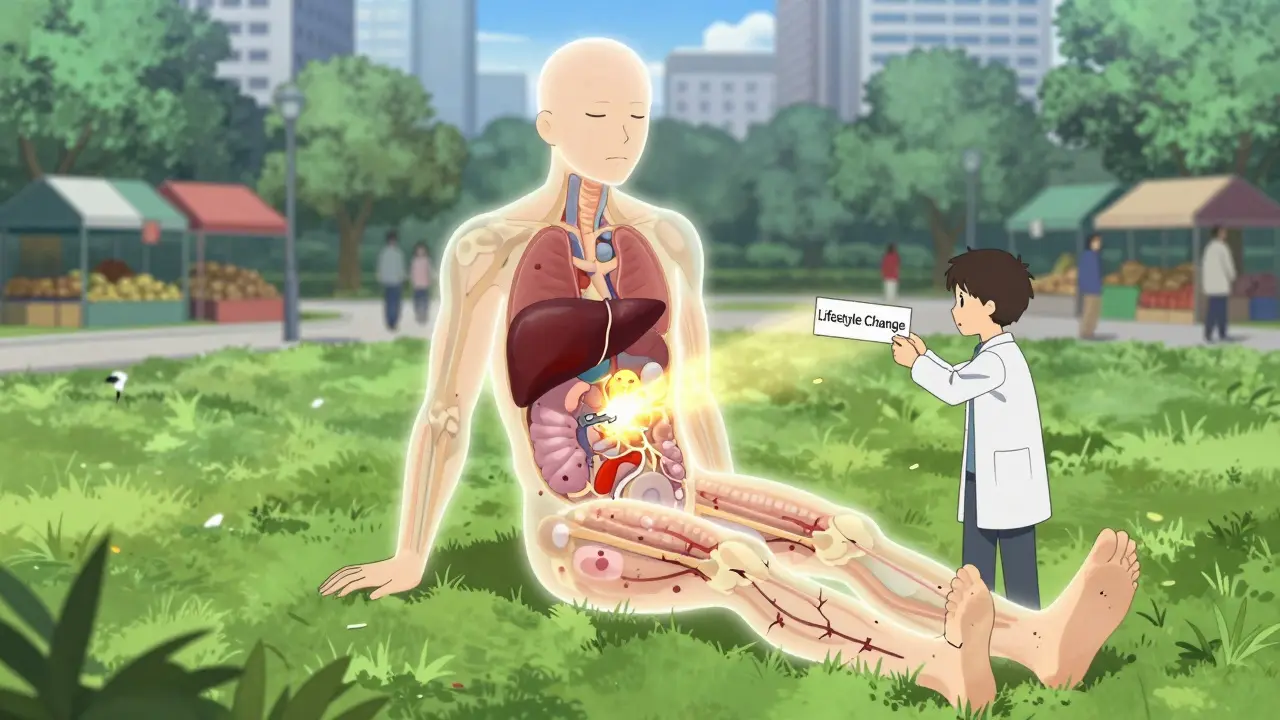
Managing type 2 diabetes isn’t about perfection. It’s about consistency. And the good news? You can reverse or significantly improve it-even if you’ve had it for years.
1. Start with Lifestyle (It’s the Most Powerful Tool)
The CDC’s National Diabetes Prevention Program proved that losing just 7% of your body weight through diet and 150 minutes of walking per week cuts your risk of developing diabetes by 58%. That’s more effective than any drug.
- Focus on real food: Cut out sugary drinks, refined carbs (white bread, pastries), and processed snacks. Eat more vegetables, beans, lentils, whole grains, lean proteins, and healthy fats like nuts and olive oil.
- Move daily: You don’t need to run a marathon. A 30-minute walk after dinner lowers blood sugar better than any pill. Strength training twice a week helps your muscles use glucose more efficiently.
- Sleep and stress matter: Aim for 7-8 hours of sleep. Practice deep breathing, meditation, or yoga. Chronic stress keeps your blood sugar high.
2. Medications-When and Why
Lifestyle is first. But most people eventually need help. Here’s how doctors think about it:
- Metformin: This is the first drug most doctors prescribe. It lowers blood sugar by reducing liver glucose production and improving insulin sensitivity. It’s cheap, safe, and helps with weight loss. Most people take 500-2000 mg daily.
- GLP-1 agonists (like semaglutide or tirzepatide): These newer drugs help your body make more insulin when needed, slow digestion, and reduce appetite. They lower HbA1c by 1-2% and help you lose 3-15 kg. Tirzepatide (Mounjaro) is now approved for type 2 diabetes and has shown the strongest results.
- SGLT2 inhibitors (like empagliflozin): These make your kidneys flush out extra sugar through urine. They lower blood sugar, reduce heart failure risk, and protect your kidneys. Weight loss of 2-3 kg is common.
Doctors now prioritize drugs that help your heart and kidneys-not just lower blood sugar. That’s a big shift from 10 years ago.
3. Monitoring Your Blood Sugar
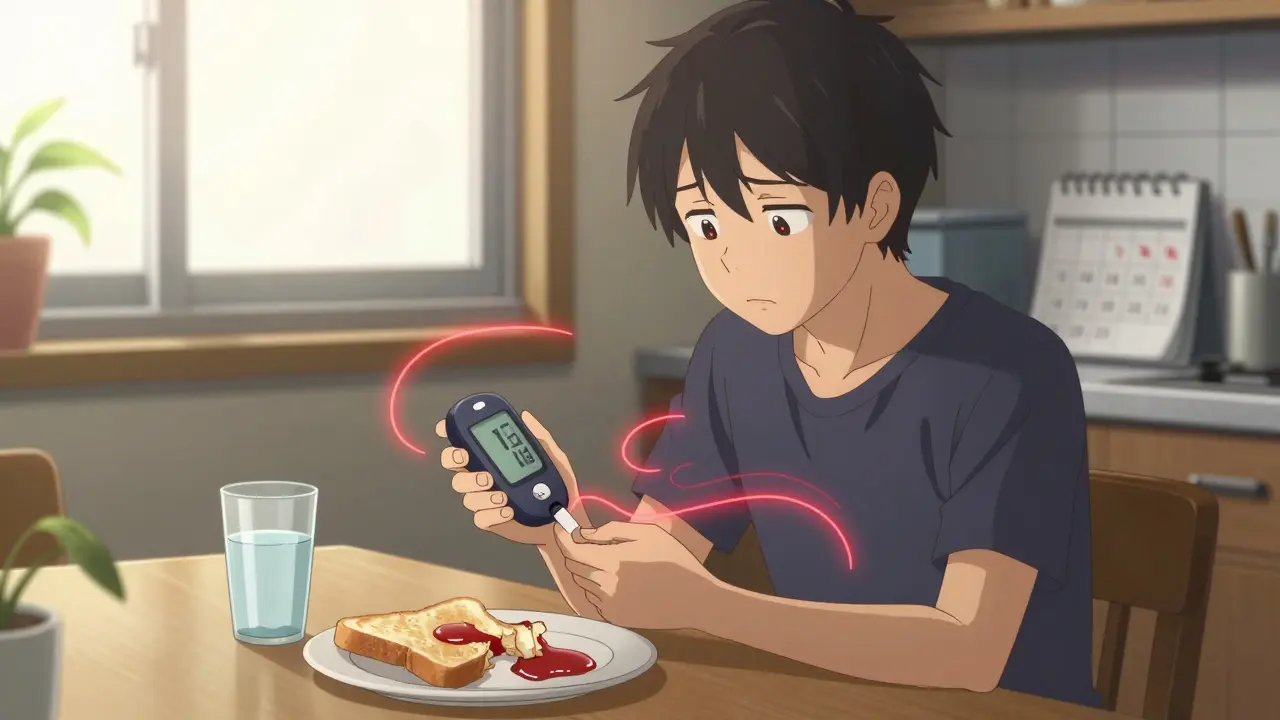
You don’t need to check your blood sugar every day if you’re not on insulin. But knowing your trends matters.
- HbA1c: This test shows your average blood sugar over 3 months. Most people aim for under 7%. If you’re young and healthy, your doctor might target 6.5%. If you’re older or have other health issues, 7-8% might be safer to avoid low blood sugar.
- Continuous Glucose Monitors (CGMs): These tiny sensors track your sugar 24/7. Usage among Medicare patients jumped from 1.2% in 2017 to 12.7% in 2022. They’re not just for insulin users anymore. If you’re trying to understand how food affects your levels, a CGM can be eye-opening.
Can You Reverse It?
Yes. And it’s not a myth.
The DIALECT trial showed that 46% of people with type 2 diabetes for less than 6 years went into remission after a year of a very low-calorie diet (825-853 kcal/day for 3-5 months), followed by gradual food reintroduction. Their HbA1c dropped below 6.5%-without any medication.
Remission doesn’t mean cured. It means your blood sugar is normal without drugs. But you still need to stay on a healthy lifestyle. If you gain weight back, the diabetes usually returns.
Early intervention is key. The longer you’ve had high blood sugar, the harder it is to reverse. But even people with 10+ years of diabetes can improve their health, reduce meds, and lower their risk of complications.
What’s Next for Type 2 Diabetes?
Science is moving fast. Hybrid closed-loop systems (like the MiniMed 780G) now work for type 2 diabetes, automatically adjusting insulin based on real-time glucose readings. AI tools are being trained to predict blood sugar spikes based on meals, sleep, and activity. Genetic testing may soon help doctors pick the best drug for your body type.
But the biggest challenge isn’t technology-it’s access. In Australia, the U.S., and many other countries, healthy food, safe places to walk, and affordable care aren’t equally available. People in low-income neighborhoods have higher diabetes rates not because they make bad choices, but because the system doesn’t support healthy ones.
The future of type 2 diabetes isn’t just about better drugs. It’s about better food systems, better housing, better jobs, and better mental health support.
What Should You Do Today?
If you think you might have type 2 diabetes:
- Get your HbA1c tested. It’s a simple blood test.
- If you’re overweight, aim to lose 5-7% of your body weight. Even 5 kg makes a difference.
- Start walking 30 minutes a day, 5 days a week.
- Swap soda for water. Swap white rice for brown rice or quinoa.
- Don’t wait for symptoms to get worse. Early action changes everything.
If you already have it:
- Don’t blame yourself. This isn’t a moral failure.
- Work with your doctor to find the right mix of lifestyle and medication.
- Use a CGM if you can-it helps you see what’s really going on.
- Focus on progress, not perfection. One healthy meal, one walk, one good night’s sleep-it all adds up.
Type 2 diabetes is serious. But it’s not a death sentence. It’s a signal. And you have more power to change it than you think.
Can type 2 diabetes be cured?
Type 2 diabetes can go into remission-meaning blood sugar returns to normal without medication-but it’s not a permanent cure. Remission usually happens after significant weight loss and lifestyle changes. If weight is regained, blood sugar typically rises again. So while you can stop taking meds, you still need to maintain healthy habits.
Is type 2 diabetes hereditary?
Yes, genetics play a big role. If a parent or sibling has type 2 diabetes, your risk increases by about 40%. Over 400 genes have been linked to the condition, affecting how your body stores fat, responds to insulin, and regulates blood sugar. But having the genes doesn’t mean you’ll get it-lifestyle choices still determine whether it turns on.
Do I need to take medication forever?
Not necessarily. Many people reduce or stop meds after losing weight and improving their diet and activity levels. Some people with early-stage diabetes can manage without drugs for years. But others, especially those with long-standing disease or beta-cell damage, will need medication long-term. It depends on your body, how long you’ve had diabetes, and how well you stick to lifestyle changes.
Can I eat carbs if I have type 2 diabetes?
Yes-but the type and amount matter. Avoid refined carbs like white bread, pastries, and sugary cereals. Choose whole grains, legumes, vegetables, and fruits in moderation. Pair carbs with protein or fat to slow sugar absorption. Most people do better with 30-45 grams of carbs per meal, but this varies by individual. A dietitian can help you find your personal balance.
How often should I check my blood sugar?
If you’re not on insulin, you may only need to check once a week or during doctor visits. HbA1c tests every 3-6 months give the big picture. But if you’re trying to understand how food affects you, checking before and after meals for a few days can be very helpful. Continuous glucose monitors (CGMs) are becoming more common and offer real-time insights without finger pricks.
Does stress affect blood sugar?
Absolutely. When you’re stressed, your body releases cortisol and adrenaline, which raise blood sugar-even if you haven’t eaten anything. Chronic stress makes insulin less effective. Managing stress through sleep, exercise, breathing, or therapy can have a direct, positive impact on your glucose levels.
Can type 2 diabetes lead to amputation?
Yes, but it’s preventable. High blood sugar damages nerves and blood flow in the feet. Small cuts or blisters can turn into ulcers that don’t heal. If infection spreads and can’t be controlled, amputation may be needed. But checking your feet daily, wearing proper shoes, controlling blood sugar, and seeing a podiatrist regularly can prevent almost all of these cases.
Is it safe to drink alcohol with type 2 diabetes?
Moderate alcohol can be okay-like one drink per day for women, two for men. But alcohol can cause low blood sugar, especially if you’re on insulin or certain pills like sulfonylureas. Never drink on an empty stomach. Choose dry wine, light beer, or spirits with soda water instead of sugary mixers. Always monitor your levels if you drink.