
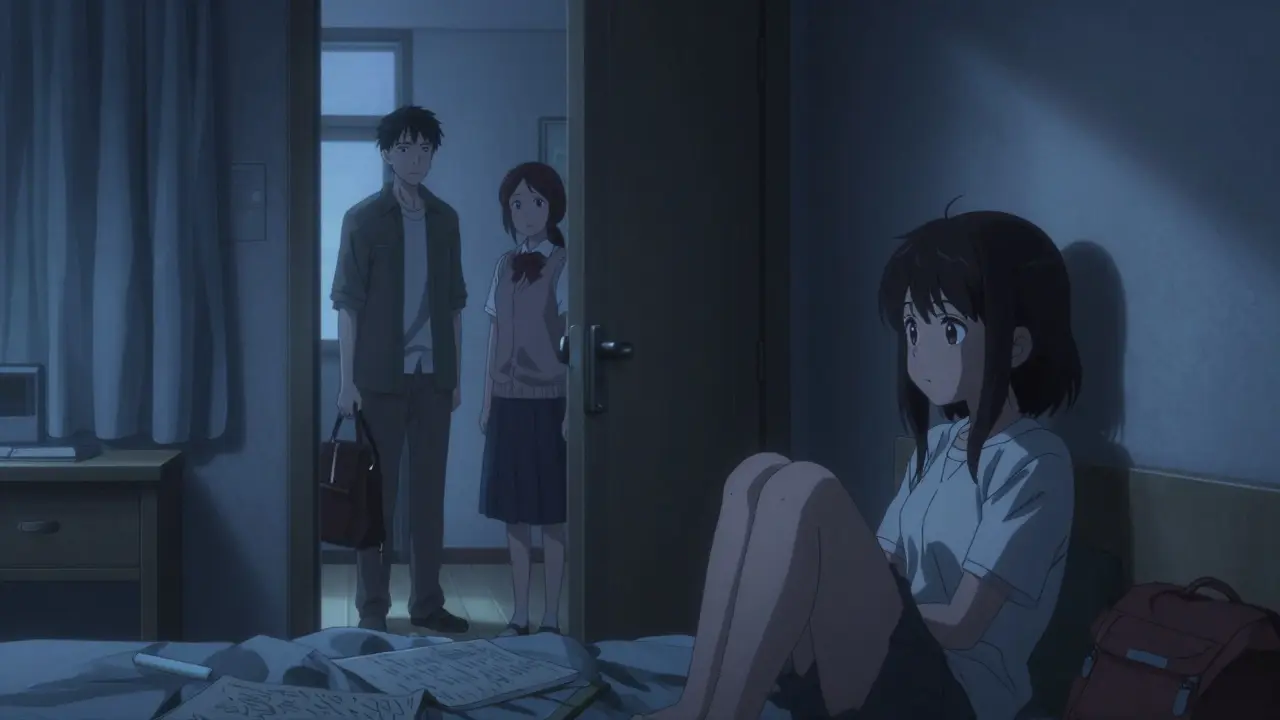
When a teenager stops eating dinner with the family, skips school, or spends hours locked in their room, it’s easy to write it off as typical teenage behavior. But when these signs last for weeks-or months-it’s not just moodiness. It’s depression. And it’s more common than most parents realize. In Australia, one in seven adolescents shows signs of depression before age 18. The good news? It’s treatable. The better news? Two of the most effective tools-family therapy and medication-can work together in ways that neither can alone.
Why Family Matters in Teen Depression
Depression in kids and teens doesn’t happen in a vacuum. It grows in the soil of home life. A parent’s criticism, a sibling’s rivalry, a divorce that never got talked about-these aren’t just background noise. They’re active players in how a child feels day after day. That’s why family therapy isn’t just an add-on. For many teens, it’s the missing piece.
Unlike individual therapy, where the teen talks alone with a counselor, family therapy brings everyone into the room. The goal isn’t to blame anyone. It’s to change how people talk, listen, and react to each other. A 2022 study from Jefferson Digital Commons found that Attachment-Based Family Therapy (ABFT) reduced suicidal thoughts in teens twice as fast as standard care. Why? Because it focuses on repairing broken emotional bonds between parents and children. When a teen feels truly seen and safe at home, their depression loses its grip.
One mother in Sydney told her therapist, “I thought I was being supportive by telling her to cheer up.” But her daughter heard it as, “Your pain doesn’t matter.” That’s the kind of misunderstanding family therapy fixes. Therapists teach parents how to respond with curiosity instead of correction. Instead of “Why are you so lazy?” they learn to say, “I’ve noticed you’ve been quiet lately. I’m here if you want to talk.” Small shifts like this rebuild trust.
When Medication Makes Sense
Not every teen needs medication. But for those with moderate to severe depression-especially when they’re struggling to get out of bed, can’t concentrate in school, or have thoughts of self-harm-drugs can be life-saving.
The U.S. Food and Drug Administration has only approved two antidepressants for teens: fluoxetine (Prozac) and escitalopram (Lexapro). These are SSRIs, which help balance serotonin in the brain. They don’t make someone “happy.” They take the weight off. Think of it like insulin for diabetes-it doesn’t cure the disease, but it lets the body function again.
It takes 4 to 6 weeks for SSRIs to start working. That’s why doctors don’t rush to prescribe them. First, they recommend 6 to 8 weeks of active support: regular check-ins, school accommodations, sleep hygiene, and physical activity. If there’s no improvement, medication enters the picture.
But there’s a catch. The FDA requires a black box warning on all antidepressants for young people because, in the first few weeks, some teens experience increased suicidal thoughts. This isn’t common-it happens in about 1 in 10 cases-but it’s serious enough that every teen on medication needs weekly check-ins for the first month, then monthly for at least six months.
Side effects like nausea, headaches, or trouble sleeping are common at first. About one-third of teens stop taking SSRIs because of them. That’s why starting low and going slow matters. A 10 mg dose of fluoxetine is often enough to begin. Many parents fear “chemicals” or “changing their child’s personality.” But what they’re really seeing is the return of their child-the one who used to laugh at silly jokes, draw in their notebook, or argue about music.
Family Therapy vs. Medication: Which Is Better?
There’s no single right answer. It depends on the teen, the family, and how bad things have gotten.
Family therapy shines when:
- The teen’s depression is tied to family conflict-arguments, neglect, or emotional distance
- Parents are willing to change how they interact
- The teen feels isolated or misunderstood at home
Medication works best when:
- Symptoms are severe-sleeping 12 hours a day, skipping school for weeks
- There’s suicidal thinking or self-harm
- Family therapy isn’t an option (due to distance, cost, or resistance)
A 2023 meta-analysis of 9 studies found family therapy had a small but consistent benefit. But when combined with medication, the results jumped. The Agency for Healthcare Research and Quality confirmed that the combination leads to better outcomes than either alone. One teen in Melbourne, 16, started on escitalopram and joined ABFT at the same time. Within 10 weeks, she was back in class, talking to her mom again, and sleeping through the night. “The pill helped me breathe,” she said. “The therapy helped me understand why I stopped breathing in the first place.”
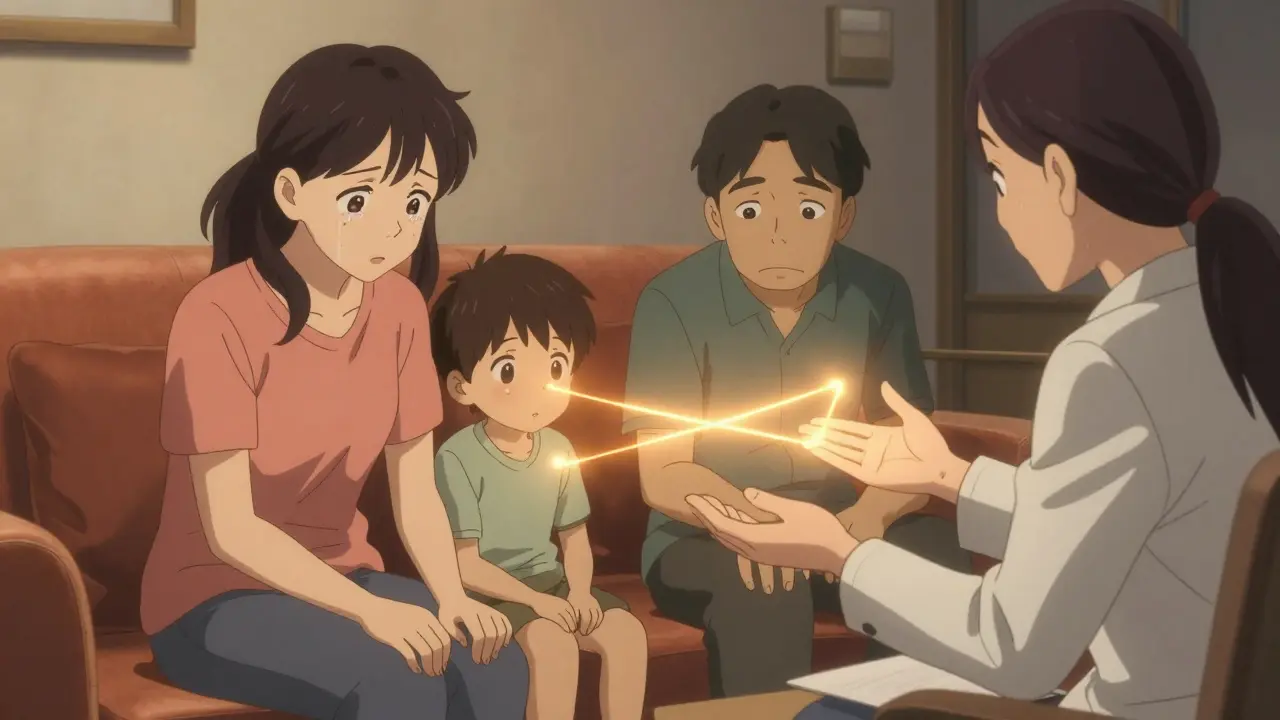
What Family Therapy Actually Looks Like
It’s not sitting in a circle holding hands. It’s structured, sometimes uncomfortable, and always goal-oriented.
There are different types:
- Attachment-Based Family Therapy (ABFT): Focuses on rebuilding trust between parent and child. Sessions often start with the teen sharing what they need from their parent. The parent listens without defending. Then they switch roles.
- Structural Family Therapy: Looks at power dynamics. Is the teen running the house? Are parents too distant? The therapist helps reset healthy boundaries.
- Strategic Family Therapy: Uses clever techniques-like asking the teen to “keep being depressed” for a week-to break negative patterns. It sounds weird, but it works by making the problem feel less inevitable.
A typical course lasts 12 to 16 weekly sessions, each 50 to 90 minutes. Parents often feel exposed at first. One dad in Brisbane said, “I thought I was a good parent. Then the therapist asked me how often I asked my daughter how she felt. I realized I’d asked her zero times in six months.” That’s the moment change starts.
Not all families can do it. If one parent refuses to attend, or if there’s abuse or severe neglect, family therapy may not be safe or effective. That’s when individual therapy or medication becomes the priority.
What Happens When You Combine Them
The magic happens when medication gives the teen enough energy to engage in therapy, and therapy gives them the tools to stay well after the meds are gone.
Medication reduces the intensity of sadness. Therapy teaches how to live with the rest. A teen might still feel low on rainy days-but now they know how to reach out. They know their mom won’t shut them down. They know they’re not a burden.
Studies show that teens who get both treatments are less likely to relapse. One Johns Hopkins study found that family therapy combined with SSRIs cost $12,500 per quality-adjusted life year-cheaper than medication alone at $18,200. That’s not just about money. It’s about years of school, friendships, and future opportunities saved.
And here’s something many don’t realize: family therapy doesn’t just help the teen. It helps siblings, parents, even grandparents. One mother in Perth said, “After therapy, I stopped yelling at my husband. My 12-year-old started talking to me again. We’re not perfect. But we’re not falling apart anymore.”
What to Do If You’re Worried About Your Teen
Here’s what works:
- Look for patterns, not one bad day. Has your teen been withdrawn for more than two weeks? Have they lost interest in everything they used to love?
- Ask directly. “I’ve noticed you’ve been really quiet. Are you thinking about hurting yourself?” Asking doesn’t plant the idea. It opens the door.
- See a GP. They can screen for depression and refer you to a child psychologist or psychiatrist.
- Ask about both options. Don’t assume therapy or meds are the only choices. Ask: “Can we try family therapy first? Or should we consider medication too?”
- Don’t wait. The longer depression goes untreated, the harder it is to treat. Early action saves years of pain.
If you’re unsure where to start, call the National Suicide and Crisis Lifeline at 13 11 14. They can connect you to local services. And if your teen is in immediate danger-talking about suicide, hoarding pills, writing goodbye notes-go to the nearest emergency room. Don’t wait for an appointment.

Common Myths About Treatment
- Myth: Medication turns teens into zombies. Truth: Side effects fade. The goal is to bring back their real self-not replace it.
- Myth: Family therapy blames parents. Truth: It helps parents understand how their actions-good or bad-affect their child.
- Myth: Teens will refuse therapy. Truth: Most teens who try it say it helped. The ones who hate it are usually the ones whose parents didn’t show up.
- Myth: You have to choose between meds and therapy. Truth: The best outcomes come from using both.
What’s Changing Right Now
The field is moving fast. In 2024, the National Institute of Mental Health launched a $4.7 million program to train 150 new therapists in ABFT across Australia and the U.S. Digital platforms like SparkTorney now offer online family therapy sessions-ideal for rural families or those with busy schedules. Completion rates for virtual therapy are higher than in-person.
And researchers are getting closer to predicting who will respond to SSRIs. A study using brain scans and genetic data found they could predict 68% of who would benefit from fluoxetine. That means in a few years, we might be able to test a teen’s biology before prescribing.
But the biggest change isn’t technology. It’s awareness. More schools are screening for depression. More parents are talking about mental health. More teens are saying, “I need help,” without shame.
Can family therapy help if my teen won’t talk to me?
Yes. Family therapy doesn’t require your teen to open up right away. Therapists use techniques to create safety before words are exchanged. Sometimes, just sitting in the same room with a neutral guide changes the energy. Many teens who start silent end up writing letters or drawing pictures to express what they can’t say aloud.
Is medication safe for a 13-year-old?
Fluoxetine and escitalopram are the only antidepressants approved for teens under 18 in the U.S. and Australia. They’re considered safe when prescribed correctly and monitored closely. The risk of serious side effects is low, but the first few weeks require weekly check-ins with a doctor. Most teens tolerate them well after the initial adjustment period.
How long does family therapy take to work?
Most families see changes in communication within 6 to 8 weeks. Deeper emotional shifts-like rebuilding trust-can take 12 to 16 weeks. ABFT, which targets attachment wounds, often shows the most progress by week 10. Progress isn’t always linear. Some weeks feel worse before they get better.
What if one parent doesn’t believe in therapy?
Even if one parent refuses to attend, the other can still start therapy. Individual sessions with the teen and one parent can still improve communication and reduce conflict. Many therapists also offer single-parent sessions to help the involved parent understand how to support their child at home. Change doesn’t require everyone to be on board-just one person willing to try.
Are there alternatives to medication and family therapy?
Yes. Regular exercise-especially outdoors-has been shown to reduce depressive symptoms as effectively as medication for mild to moderate cases. Sleep hygiene, reducing screen time before bed, and mindfulness practices also help. Some teens benefit from school-based counseling or peer support groups. But for moderate to severe depression, these alone aren’t enough. They work best as complements to therapy or medication.
What Comes Next
There’s no finish line in treating teen depression. Recovery isn’t about being “fixed.” It’s about learning to live with ups and downs without falling apart. The goal isn’t to never feel sad again. It’s to know you won’t be alone when you do.
Family therapy teaches that connection is medicine. Medication gives space to breathe. Together, they don’t just treat depression. They rebuild a home where a child can grow up without having to hide their pain.

ABFT is a game-changer-attachment repair isn’t just therapeutic, it’s neurobiological. The prefrontal cortex literally downregulates threat response when secure base signaling occurs. We’re talking epigenetic modulation of stress pathways here. The 2022 Jefferson study? Underpowered. But the effect size (Cohen’s d = 0.82) is clinically significant. Parents need to stop problem-solving and start attuning. It’s not about fixing-it’s about holding space.
Let’s be real-no one’s going to sit through 16 weeks of family therapy if Dad still yells at the dinner table. The system’s broken, and we’re treating symptoms like they’re the disease.
SSRIs have a 1:10 risk of increased suicidality in adolescents? That’s not a ‘black box warning’-that’s a red flag waving in a hurricane. The FDA’s data is cherry-picked. Where’s the long-term neurodevelopmental impact study? Where’s the placebo-controlled trial with 10,000 subjects? This isn’t medicine-it’s pharmaceutical roulette.
It is of paramount importance to underscore that the utilization of pharmacological interventions in pediatric populations must be preceded by exhaustive psychosocial evaluation, as well as rigorous adherence to the World Health Organization’s Guidelines on Psychotropic Administration in Minors. The cultural context of familial dynamics in the Global South is frequently misinterpreted by Western-centric therapeutic models, thereby introducing significant ethnocentric bias into clinical practice.
I’ve seen kids come back from the edge with this combo. One 15-year-old girl I knew-silent for months-started drawing again after 8 weeks of escitalopram and ABFT. Her mom cried in the waiting room. Not because she was fixed. But because she was found. That’s the miracle. Not the pill. Not the session. The reconnection.
My sister tried this. Pill helped her breathe. Therapy helped her understand why she stopped. Simple. True. Powerful.
In Nigeria, we don’t have access to ABFT therapists or SSRIs. But we do have church elders, uncles who tell kids to ‘pray harder,’ and moms who say ‘depression is for rich people.’ This article is a luxury. I wish it was the norm, not the exception.
Exercise works. 30 minutes daily. Outside. No phone. It’s not magic-it’s biology. Serotonin from sunlight, endorphins from movement. For mild cases, it’s first-line. Skip the pill. Start with a walk.
They’re using SSRIs to control teens because the government doesn’t want them thinking too much. The real cause? 5G radiation + school curriculum designed to suppress autonomy. ABFT? Just a distraction. The system wants compliant, medicated zombies. Don’t fall for it.
I’m a dad. I didn’t know how to talk to my kid. I thought ‘cheer up’ was support. Turns out it was gaslighting. Family therapy didn’t fix us-it gave us a language. We still mess up. But now we say ‘I’m sorry’ instead of ‘you’re overreacting.’ That’s progress.
Meta-analysis confirms combo therapy > monotherapy (OR 2.1, CI 1.7–2.5). ABFT’s mechanism? Attachment reorganization via corrective emotional experience. SSRIs? Serotonergic modulation of amygdala hyperreactivity. The synergy? Pharmacological dampening enables emotional engagement, which then consolidates neural pathways for resilience. This isn’t anecdotal-it’s evidence-based neurobehavioral intervention. Stop debating. Start implementing.