
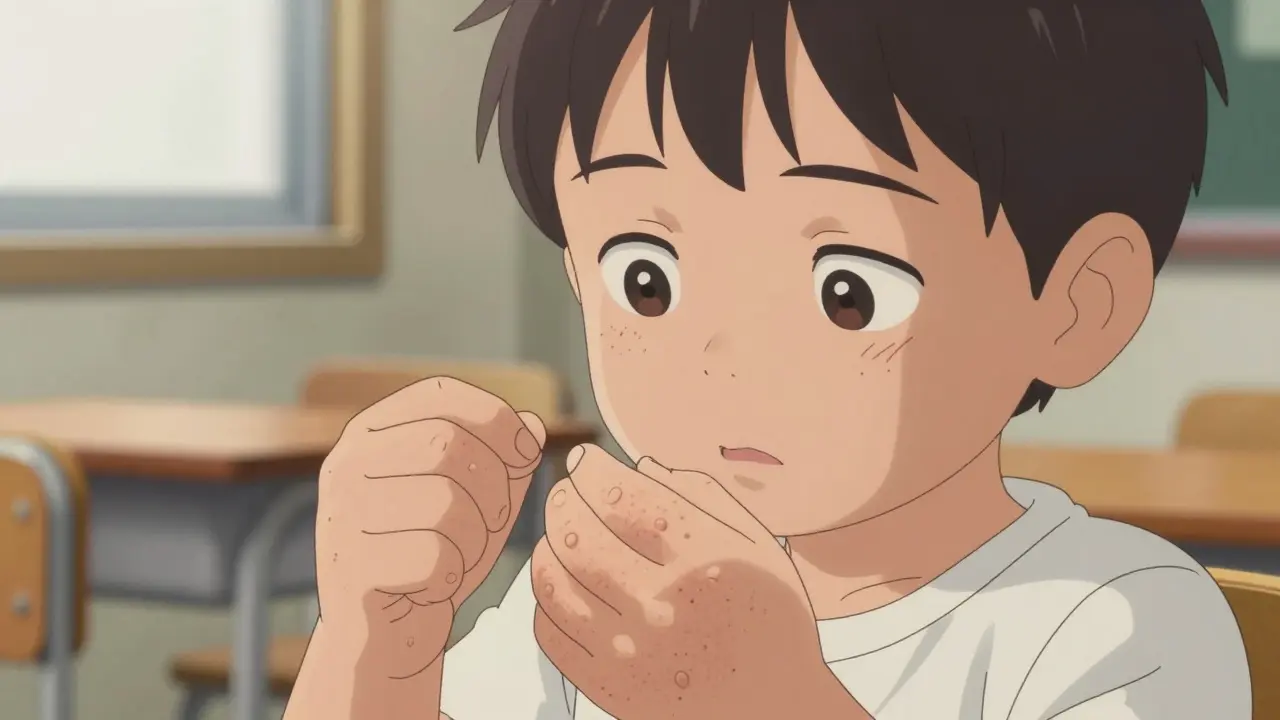
Viral warts are benign skin growths caused by human papillomavirus (HPV) infection. These common skin issues affect up to 24% of children and 5% of adults in Australia, according to the Royal Australian College of General Practitioners (RACGP) 2022 review. Unlike acne or eczema, viral warts are directly linked to specific HPV strains - and many people don’t realize they’re dealing with a viral infection.
What Causes Viral Warts?
HPV is a family of over 100 viruses, but only certain types cause skin warts. For example:
- HPV types 1, 2, and 4 cause common warts (verruca vulgaris), often found on hands and fingers.
- HPV types 3 and 10 create flat warts (verruca plana), which are smoother and typically appear on the face or legs.
- HPV types 1, 2, 4, 60, and 63 lead to plantar warts (verruca plantaris), which grow on the soles of feet and can be painful.
Transmission happens through direct skin-to-skin contact or touching surfaces contaminated with the virus. Public showers, swimming pools, and shared towels are common sources. The virus enters through tiny cuts or abrasions, which is why keeping skin intact is crucial for prevention.
Why Do People Seek Treatment?
While 60-70% of viral warts clear naturally within two years without intervention, most people want them removed sooner. Common reasons include:
- Discomfort: Plantar warts can feel like stepping on a pebble, making walking painful.
- Cosmetic concerns: Warts on visible areas like hands or face can cause embarrassment.
- Spreading risk: Untreated warts can multiply or spread to others through shared items like towels or razors.
Dr. William Warren Kwan, a dermatologist featured in the RACGP review, emphasizes: "To stop transmission, hygiene practices must go hand-in-hand with treatment. Never pick at warts, and avoid sharing personal items."
Topical Treatments: Salicylic Acid and Beyond
Salicylic acid is the most widely used over-the-counter treatment. Available in 17-40% concentrations, it works by breaking down the keratin in warts. A landmark 1976 British Journal of Dermatology study by Bunney et al. found an 84% cure rate for plantar warts after consistent use.
How to use it:
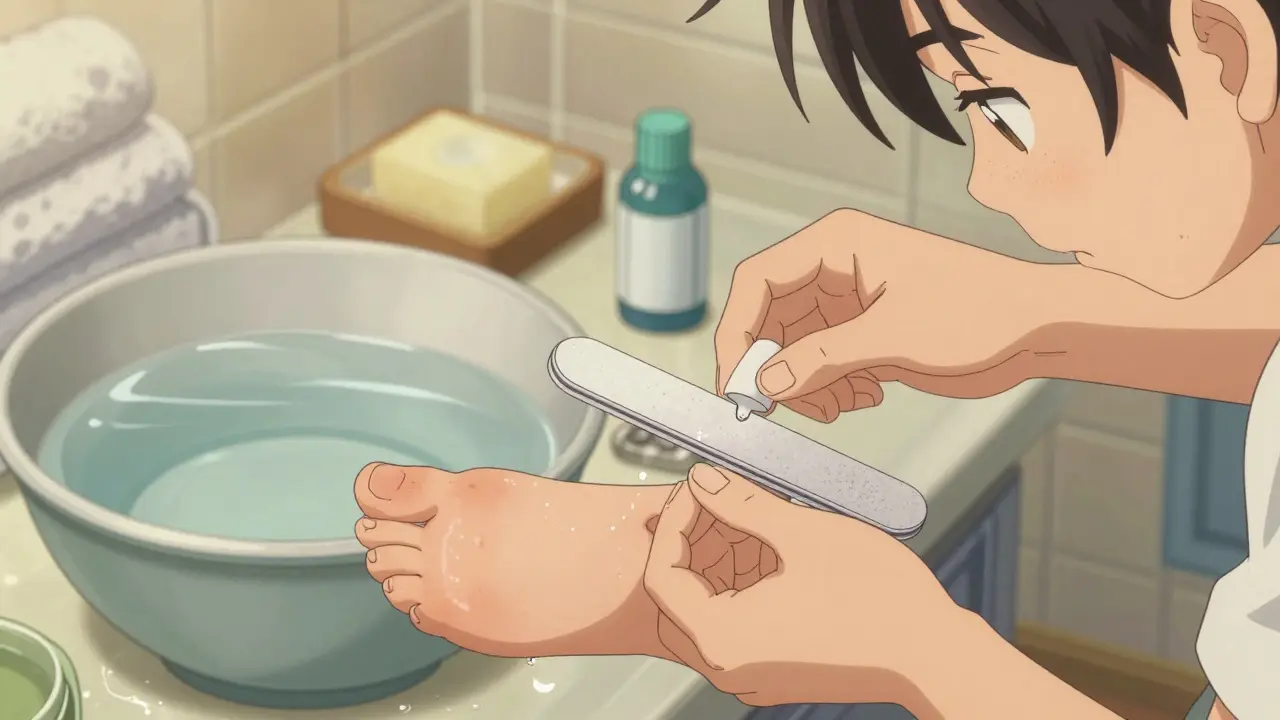
- Soak the wart in warm water for 5 minutes to soften it.
- Gently file the surface with an emery board or pumice stone.
- Apply the salicylic acid directly to the wart (avoiding healthy skin).
- Cover with a bandage and repeat daily for 6-12 weeks.
For stubborn warts, dermatologists may prescribe trichloroacetic acid (TCA) (marketed as Tri-Chlor). This stronger acid is applied in-office after scraping the wart. It works by coagulating proteins in the wart tissue but can cause burning or hyperpigmentation. Studies show it’s particularly effective for palms and soles.
Physical Removal Methods
Cryotherapy - freezing warts with liquid nitrogen - is one of the most common in-office treatments. A 2023 review in the Journal of Skin Appendage Disorders analyzed seven studies and found cryotherapy and salicylic acid had comparable success rates for common warts at 12 weeks. However, timing matters: the Bunney study revealed that treatment intervals of 2-3 weeks yield far better results than 4-week intervals. Most patients need 3-6 sessions.
For larger or resistant warts, doctors may use:
- Electrosurgery: Burning the wart with an electric needle. Often used for recalcitrant cases but can leave scars.
- Laser treatment: Pulse dye lasers (like VBeam) target blood vessels in the wart. The wart turns purple or black within hours and sloughs off in 1-2 weeks.
Important note: Surgical excision is rarely recommended. Monadermatology’s 2023 clinical review warns that cutting out warts often leads to high recurrence rates at the edges.
Immunotherapy: Boosting Your Body’s Defenses
When other treatments fail, imiquimod cream (Aldara) is a powerful option. This immunomodulator stimulates the immune system to recognize and destroy HPV-infected cells. Dermatologists at the American Academy of Dermatology (AAD) document cases where imiquimod cleared warts that resisted cryotherapy or salicylic acid.
How it works:
- Applied three times per week for up to 16 weeks.
- Causes local inflammation - a sign it’s working.
- Most effective for genital warts but also used for common warts on hands.
Side effects include redness, itching, and flaking. The AAD’s 2025 clinical guidelines stress that immunotherapy requires patience; results often take months.
Preventing Spread and Recurrence
Even after successful treatment, warts can return. To minimize this:
- Keep feet dry to prevent plantar warts (wear moisture-wicking socks).
- Avoid shaving over warts - this can spread the virus.
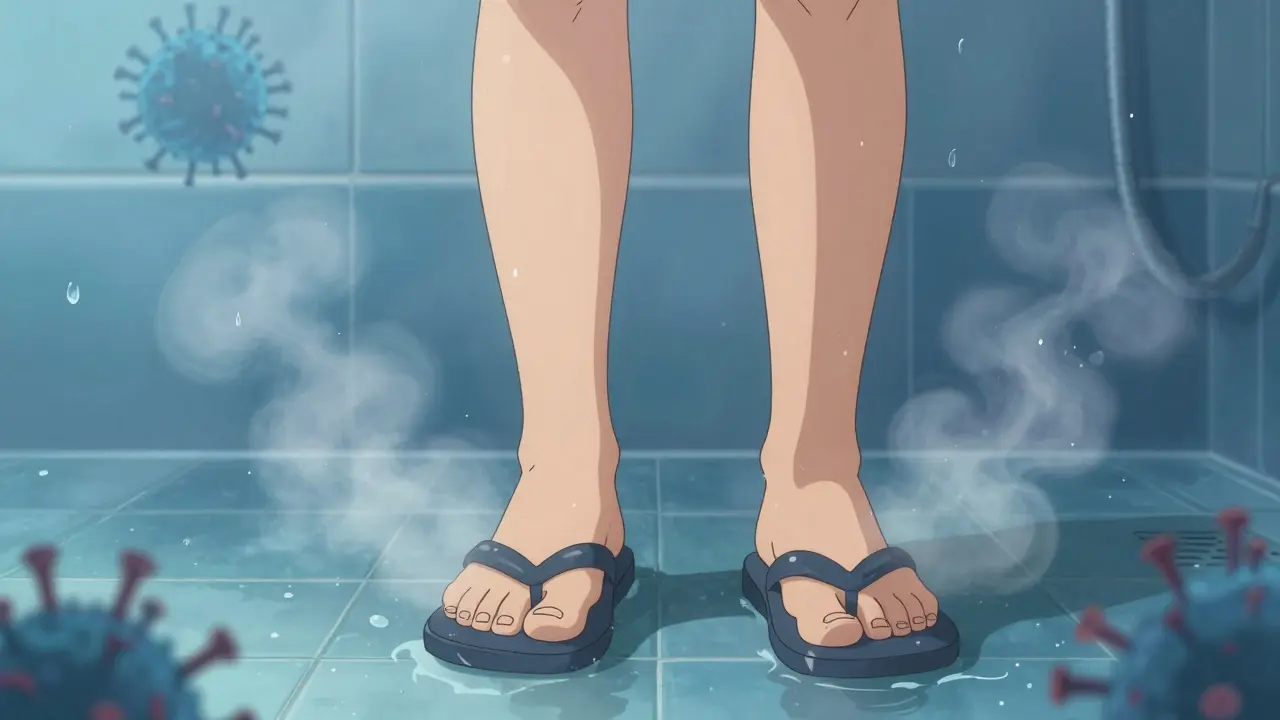
- Wear flip-flops in public showers or locker rooms.
- Don’t share nail clippers, towels, or razors.
Dr. Carrie L. Kovarik, a leading dermatologist cited in the RACGP review, notes: "Many patients don’t realize that touching a wart and then another body part can spread it. Always wash hands after handling warts."
When to See a Doctor
While most warts are harmless, consult a dermatologist if:
- The wart bleeds, changes color, or grows rapidly.
- It’s on the face, genitals, or around nails (these require specialized care).
- Home treatments haven’t worked after 8-12 weeks.
- You have diabetes or a weakened immune system (higher risk of complications).
For genital warts, always see a healthcare provider - they may indicate a different HPV strain requiring specific treatment.
Do viral warts go away on their own?
Yes, about 60-70% of viral warts clear naturally within two years without treatment. However, many people seek treatment due to discomfort, cosmetic concerns, or fear of spreading the virus. Waiting isn’t always practical - especially for plantar warts that make walking painful.
Can I treat warts at home?
Over-the-counter treatments like salicylic acid are safe for most common warts on hands or feet. However, avoid home treatment for warts on the face, genitals, or near nails. If a wart doesn’t improve after 8 weeks of consistent home care, see a dermatologist. Never try to cut or burn warts at home - this can cause infection or scarring.
What’s the difference between common warts and plantar warts?
Common warts (caused by HPV types 1, 2, 4) appear on hands, fingers, or knees. They’re rough, raised, and often have tiny black dots (clotted blood vessels). Plantar warts (caused by HPV types 1, 2, 4, 60, 63) grow on the soles of feet. They’re flat, painful when walking, and often covered by thickened skin. Plantar warts grow inward due to pressure from walking, which makes them harder to treat.
Are warts contagious?
Yes, warts are contagious through direct skin contact or touching contaminated surfaces like shower floors or towels. The virus enters through tiny cuts or abrasions. To prevent spreading: don’t pick at warts, wash hands after touching them, and avoid sharing personal items. Using flip-flops in public pools or gyms also reduces risk.
Why do some warts come back after treatment?
Warts can return for two main reasons: incomplete treatment (not all infected cells were removed) or re-infection from the same source. HPV can linger in the skin even after the visible wart is gone. This is why following hygiene practices - like keeping feet dry and not sharing towels - is crucial. Recurrence is most common with plantar warts due to constant pressure on the feet.


HPV strains vary widely, affecting where warts appear. Common warts on hands (types 1,2,4) vs. plantar warts on feet (types 1,2,4,60,63). Understanding this helps tailor treatment. Prevention is key-avoiding barefoot in public areas reduces risk. The body's immune system often clears warts naturally over time, but patience is needed.
HPV strain prevalence varies significantly by region. In Asia, HPV type 63 is commonly associated with plantar warts, whereas Western studies focus on types 1, 2, and 4. This regional difference necessitates tailored treatment protocols. Ignoring such variations leads to ineffective therapies. Medical professionals must consider local epidemiological data to provide optimal care.
Warts can be annoying but they often go away on their own. Just keep the area clean and dry. I had one for months but it finally cleared up. Don't stress too much. You got this!
Ayurvedic treatments for warts have been effective for centuries. Using neem oil or turmeric paste works better than salicylic acid. Western medicine often overlooks these proven remedies. It's time to recognize indigenous knowledge.
Regional differences are important yes. I've seen cases where local treatments work better. It's good to know about traditional methods. Everyone deserves access to effective care regardless of location. We should share knowledge across cultures.
Oh my gosh this is such important info! 😎 I've been dealing with warts for years and never knew HPV has over 100 different strains. Only specific types cause skin warts. For example, common warts on hands are usually HPV 1, 2, or 4. Flat warts on the face are HPV 3 and 10. Plantar warts on feet involve types 1, 2, 4, 60, and 63. It's fascinating how the same virus can cause different issues based on the strain. Salicylic acid is common for treatment but it takes weeks of consistent use. Cryotherapy works better but needs to be done every 2-3 weeks, not 4 weeks. If you wait too long between sessions it's less effective. Also, wearing flip-flops in public showers is crucial to avoid catching it. Don't share towels, razors, or nail clippers. The virus can hide in the skin even after the wart is gone, so prevention is key. I read a study that said HPV can survive on surfaces for days. That's why hygiene is so important. Also, people with weakened immune systems are more prone to warts. 🤯
Yes, timing is crucial-2-3 weeks between cryotherapy sessions. But let's be honest, who actually does that? Most people just wait until it's unbearable. Still, it's good advice. And flip-flops in showers? Obviously. But sometimes it's hard to remember when you're in a rush. 😊
Warts are caused by poor hygiene. People who get them just don't wash their hands enough. You should be ashamed. Always wash after touching them. No excuses.
I agree hygiene is important but warts can happen to anyone. Even if you wash hands, the virus can enter through tiny cuts. It's not about being ashamed. Let's be supportive.
Simple steps prevent spread.
Yeah, simple but effective. 🌍 In Japan, they use rice bran for skin issues. Maybe there's more to learn from different cultures. But basic hygiene is the foundation. 👌
This is all wrong. HPV doesn't cause warts. It's a myth spread by big pharma. Warts are actually caused by poor diet. Eat more veggies and you'll be fine. The whole medical community is lying to you.
USA has the best treatments.
The article has some errors. For example, it says HPV types 1,2,4 cause common warts but actually type 2 is more for plantar. Also, the cure rate for salicylic acid is lower than claimed. Just saying.
Oh wow, so the article is wrong? I wonder how many other mistakes there are. Maybe someone should fact-check it. But I'm too lazy to do it myself. 😒