
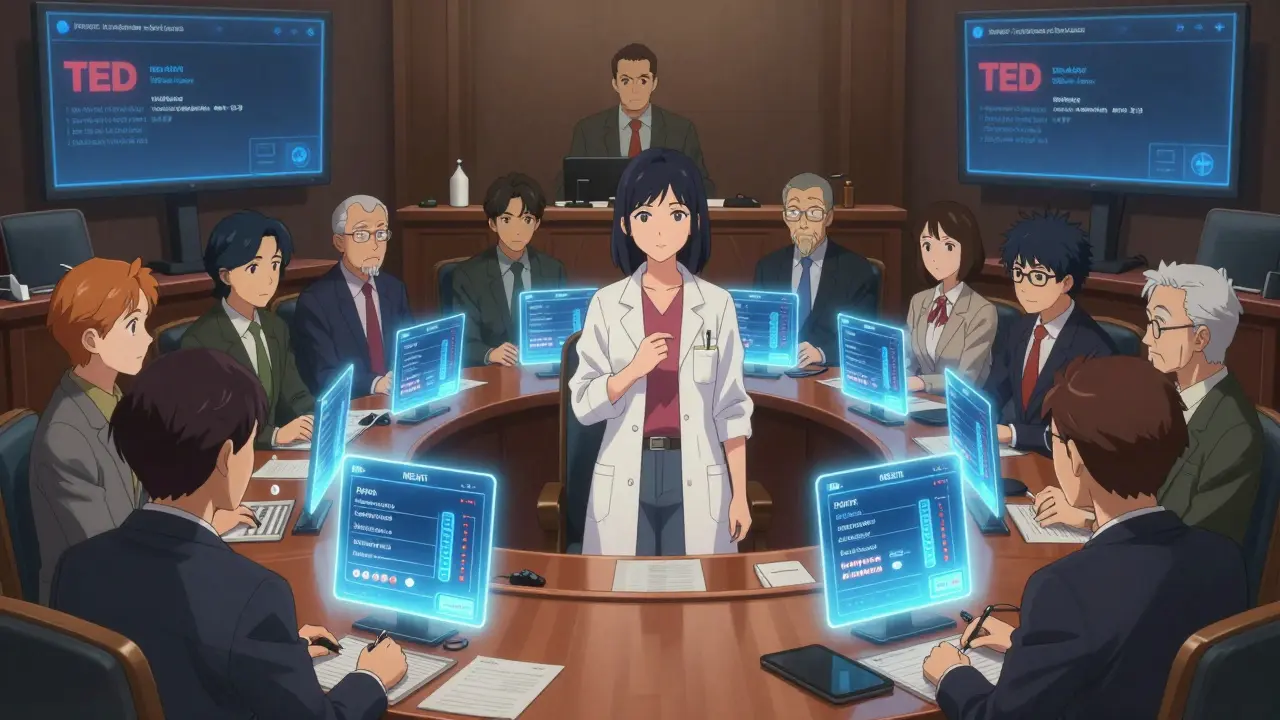
When a hospital in Germany, a pharmacy chain in Spain, or a regional health service in Poland needs to buy generic medicines, they don’t just pick the cheapest option. They go through a complex, highly regulated process called tendering. This isn’t a simple auction. It’s a legal, technical, and strategic game played across 27 countries, with billions of euros at stake. And the rules? They’re designed to make sure public money buys the best value-not just the lowest price.
How Europe Buys Generic Drugs: The Rules
Every public tender in the EU follows the same core rules, laid out in Directive 2014/25/EU. These rules were built to stop favoritism, open markets across borders, and make sure taxpayers get real value. The system applies to any contract over €100,000 for medicines, and it forces buyers to be transparent. Every step-from announcing the need for drugs to awarding the contract-must be published in the Tenders Electronic Daily (TED), the EU’s central public notice board.
The most common method? The Open procedure. Any supplier, anywhere in the EU, can submit a bid. No pre-qualification. Just a full proposal. It’s fair, but it’s messy. A single tender for 10 million tablets of generic metformin might attract 40 bidders from 12 countries. That’s a lot of paperwork.
But there’s another way: the Restricted procedure. Here, buyers first screen suppliers based on things like financial stability, quality certifications, or past performance. Only those who pass get to submit a full bid. It cuts down the noise, but it can shut out smaller companies that haven’t worked with big health systems before.
The Real Game: MEAT, Not Lowest Price
Here’s the big difference between Europe and many other regions: they don’t just pick the cheapest bid. They use MEAT-Most Economically Advantageous Tender. That means price is only part of the score. Quality, reliability, delivery speed, sustainability, and even packaging safety matter too.
For example, a tender for generic insulin might weigh price at 50%, but the other 50% could go to:
- Stability data showing the drug lasts longer in heat (critical for delivery in southern Europe)
- Proof of GMP certification from the European Medicines Agency
- Carbon footprint of the manufacturing process
- Use of recyclable blister packs
- On-time delivery history over the last 3 years
Professor Anna De Lillo from Bocconi University found that when MEAT is used properly, public health systems get 12-18% better outcomes than if they just picked the lowest bid. That doesn’t mean paying more. It means getting more value-for the same price.
And it’s not just theory. In 2022, a Dutch health authority awarded a €15 million contract for generic antibiotics using MEAT. The winning bid wasn’t the cheapest-it was 5% higher. But it came with a 99.8% on-time delivery record, a digital tracking system for batches, and a commitment to reduce plastic packaging by 30%. The result? Fewer stockouts, less waste, and lower long-term costs.
Framework Agreements: The Hidden Backbone
Most generic drug purchases in Europe don’t happen as one-off tenders. They happen through Framework Agreements. Think of it like a pre-approved list of suppliers. A national health service might run one tender to pick five generic drug makers who can supply them over the next four years. Then, when they need more pills, they just run a mini-competition among those five.
Multi-supplier frameworks are the gold standard. They keep prices competitive and prevent one company from dominating. But they’re not perfect. A 2023 survey of 1,200 EU suppliers found that small companies spent an average of 117 hours preparing just to get on one framework. And sometimes, they win a spot-only to get one or two mini-tenders over two years. That’s a huge time investment for little return.
German supplier Markus Weber said: “Getting on Deutsche Bahn’s framework took 87 documents. We got three mini-tenders in 18 months. Was it worth it? Maybe. But I wish they’d told us upfront how often they’d actually buy.”
Why Small Companies Struggle
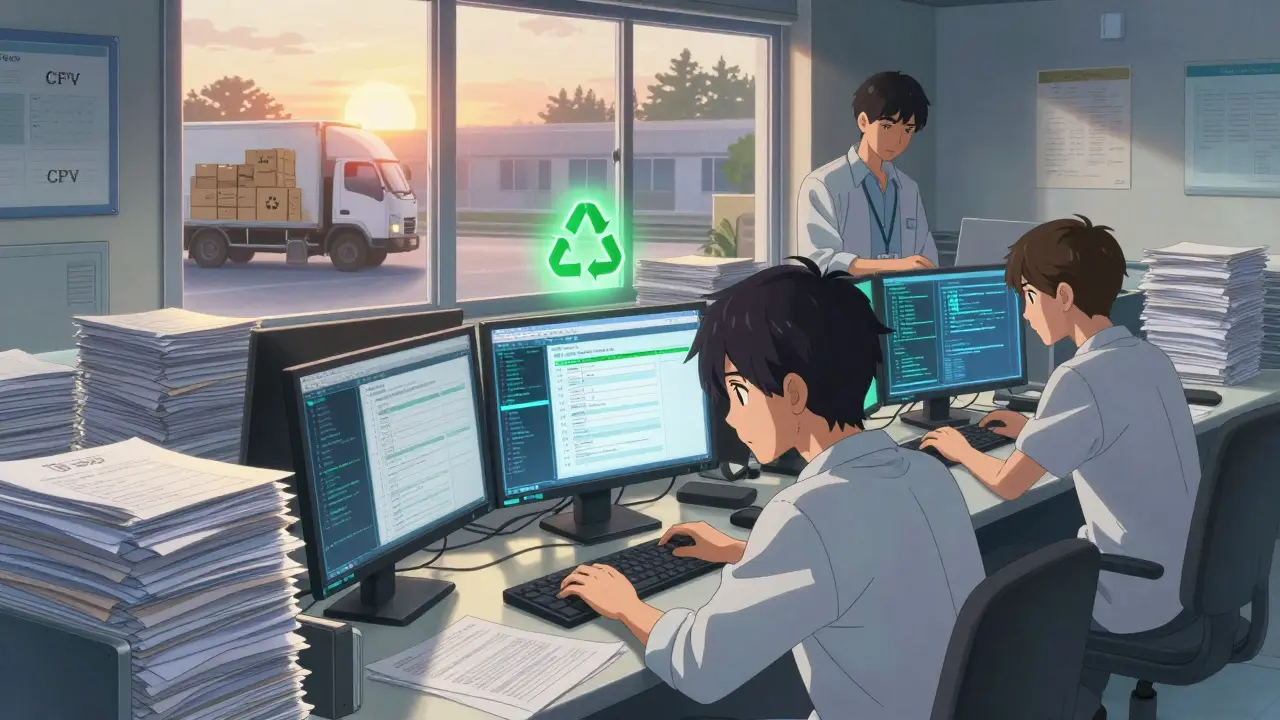
Europe’s system is fair in theory, but it’s stacked against small players. The paperwork is brutal. You need:
- Valid EU-wide quality certifications
- Financial statements audited to EU standards
- Proof of compliance with environmental and labor laws
- Translated documentation in multiple languages
- Understanding of CPV codes-those are the standardized product categories used in all tenders
Twenty-three percent of rejected bids in 2022 were because suppliers misclassified their product using the wrong CPV code. One company bid for “oral tablets” but used the code for “injectables.” Automatic system rejected it. No appeal.
And then there’s the proportionality rule. It says: don’t ask for impossible things. If you’re buying €500,000 worth of generic paracetamol, you can’t require bidders to have €10 million in annual revenue. That’s illegal. But many buyers still do it. A 2022 European Commission audit found 37% of tenders had at least one disproportionate requirement.
Small firms often give up. Forty-one percent of small businesses in the EU say they’ve walked away from a tender because the requirements were too complex. That’s not just a loss for them-it’s a loss for patients. Less competition means less innovation and higher prices over time.
The Digital Shift: Faster, Cleaner, Smarter
Europe is moving fast to fix this. The European Single Procurement Document (ESPD) is a game-changer. Instead of submitting 50 pages of paperwork for every tender, suppliers now fill out one online form. It auto-populates with data from national registries. If you’ve already certified your quality system once, you don’t have to do it again.
Since its launch in 2023, administrative burden has dropped by 40% in countries using it fully. The EU wants 95% of all tenders to be electronic by 2027. Right now, it’s at 76%. Nordic countries are ahead-Finland and Sweden do nearly all their tenders online. Southern Europe lags behind.
And now, AI is stepping in. Pilot programs in France and Finland use algorithms to score bids. They check for consistency, flag missing documents, and even compare price per unit across thousands of bids in seconds. The results? Evaluation time cut by 30%, with 99.2% accuracy compared to human reviewers.
Sustainability Is No Longer Optional
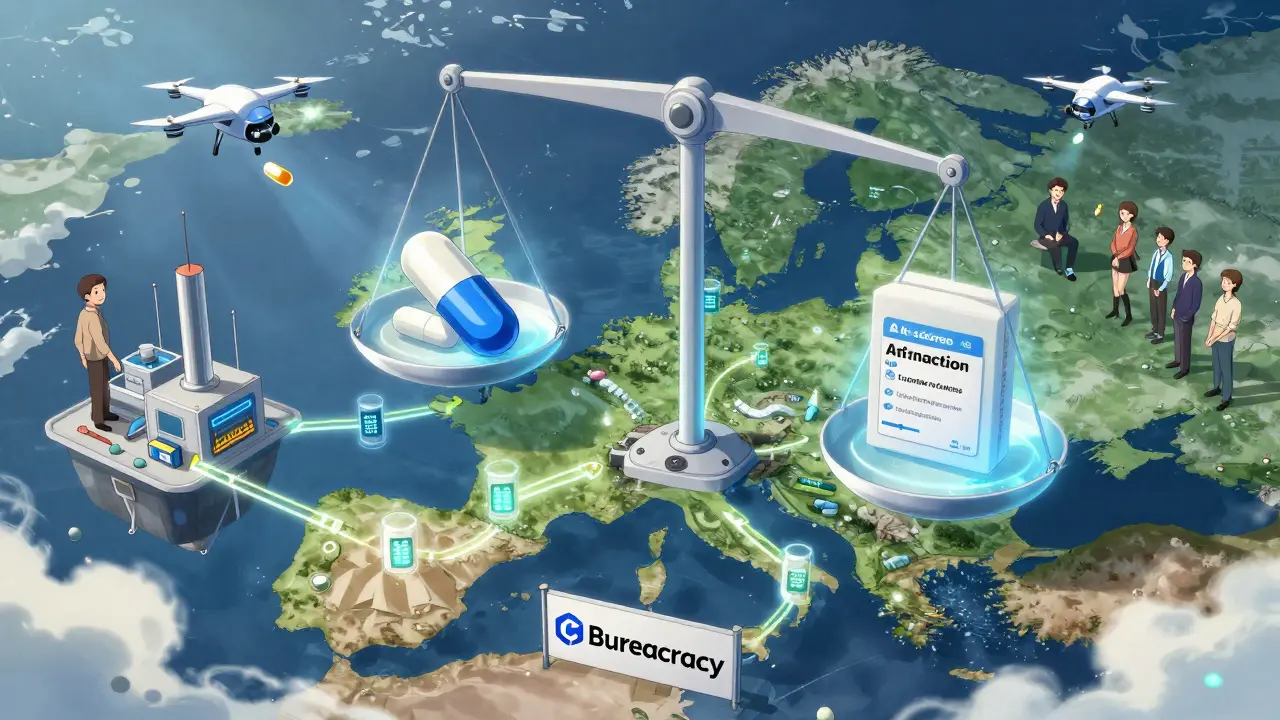
By 2025, 85% of high-value generic drug tenders in Europe will include sustainability criteria. That means:
- Manufacturers must report carbon emissions per batch
- Packaging must be recyclable or reusable
- Supply chains must avoid materials linked to deforestation
- Energy use in production is scored
One Spanish tender for generic asthma inhalers now gives 15% of the score to environmental impact. The winning bid came from a company that switched to aluminum instead of plastic for the casing and uses solar-powered manufacturing. Their price? Higher. Their value? Clearer.
What’s Next? The Future of Generic Purchasing
Europe’s system isn’t perfect. Fragmented rules across countries still cause confusion. Some buyers still don’t understand MEAT. Some small suppliers still get crushed by bureaucracy.
But the direction is clear: smarter, faster, greener, and more inclusive. The EU is pushing for:
- AI-assisted tender evaluation to reduce human error
- Standardized digital platforms across all member states
- Training for public buyers on proportionality and MEAT
- More support for SMEs to navigate the system
The goal? A single market for generic drugs where the best supplier wins-not the biggest, not the loudest, not the one with the best lawyer. Just the one that delivers the most value to patients and taxpayers.
It’s not about lowering prices. It’s about raising quality. And that’s why Europe’s approach to generic purchasing is being watched-and copied-around the world.
What is the MEAT evaluation method in European tendering?
MEAT stands for Most Economically Advantageous Tender. It’s a method used in EU public procurement where bids are scored not just on price, but on a combination of factors like quality, reliability, delivery speed, environmental impact, and innovation. For generic drugs, this might mean giving 50% weight to price and 50% to things like packaging safety, on-time delivery history, or manufacturing sustainability. This approach ensures public money gets the best long-term value, not just the lowest upfront cost.
Why do small generic drug companies struggle in EU tenders?
Small companies face high administrative barriers. They must submit detailed documentation on financial health, quality certifications, environmental compliance, and more-all often in multiple languages. Many lack the staff to handle complex CPV code classifications or navigate inconsistent rules across countries. Even when they qualify for framework agreements, they may receive only one or two mini-tenders over years, making the effort economically unjustifiable. Forty-one percent of small EU businesses have abandoned tender opportunities because the process was too complex.
What are Framework Agreements in European generic drug procurement?
Framework Agreements are pre-negotiated contracts between a public buyer (like a national health service) and a shortlist of qualified suppliers. Once established, the buyer can issue mini-tenders to those suppliers over a set period (usually 2-4 years) without running a full new tender each time. Multi-supplier frameworks are preferred because they maintain competition. But they require heavy upfront effort to qualify, and small suppliers often find the return on investment too low if demand is infrequent.
How does the European Single Procurement Document (ESPD) help suppliers?
The ESPD is a standardized online form that replaces hundreds of pages of paperwork. Suppliers fill it once, and it pulls verified data from national registries-like tax status, quality certifications, or environmental compliance. This cuts administrative time by 40% and reduces errors. It’s mandatory in all EU member states for tenders over €100,000, making it easier for small businesses to compete across borders without resubmitting the same documents repeatedly.
Is sustainability now a factor in generic drug tenders in Europe?
Yes. By 2025, 85% of high-value generic drug tenders in the EU will include sustainability criteria. This includes scoring based on carbon emissions from manufacturing, use of recyclable packaging, energy efficiency, and supply chain ethics. For example, a tender might favor a supplier using solar-powered production or eliminating plastic blister packs. These aren’t optional extras-they’re now key parts of the MEAT evaluation, reflecting the EU’s broader green agenda.

man i had no idea eu drug buying was this complicated. i thought it was just ‘cheapest wins’ like in the us. this meat thing sounds smart tho. also why does everything need 50 pages of paperwork? 🤦♂️
so europe’s just throwing money away on ‘sustainability’ and ‘packaging’ while our generics are saving lives at 1/10th the cost? this is why our system works better. they’re turning medicine into a woke art project.
MEAT makes sense. Price isn’t everything.
This is an exceptionally well-researched and nuanced overview of EU pharmaceutical procurement. The MEAT framework represents a paradigm shift from transactional cost-minimization to value-based public health stewardship. The integration of environmental metrics into tender scoring is not merely symbolic-it reflects a maturation of procurement ethics. The ESPD, while imperfect, is a landmark step toward harmonization. Kudos to the authors for highlighting the systemic barriers faced by SMEs; this is a critical equity issue that must be addressed at the policy level.
you ever wonder if these ‘sustainability’ scores are just a backdoor for Big Pharma to squeeze out smaller competitors? 🤔 the same companies that push ‘green’ packaging are the ones who own the patents on the original drugs. this whole system smells like a monopoly in disguise. also, who’s auditing the auditors? 🕵️♂️
let me get this straight-some dude in Berlin gets to decide if a generic insulin from Bulgaria is ‘environmentally friendly’ enough? and if the blister pack isn’t ‘recyclable’ enough, they get disqualified? bro, it’s a pill. not a tesla. this is bureaucratic theater. i’ve seen more efficiency in a 7-eleven inventory system. the EU is turning healthcare into a TED Talk.
it’s crazy how much effort goes into this-but honestly, it’s worth it. i’ve seen what happens when you only go for cheapest: stockouts, expired meds, bad packaging. this system’s clunky, yeah, but it saves lives in the long run. small companies need support, not just complaints. maybe we can build a guide for them?
isn’t it funny how we call it ‘tendering’ like it’s a romantic proposal? ‘dear health ministry, please accept my bid for your trust, my quality certifications, and my carbon-neutral blister packs’? 😅
but seriously-this system forces us to think beyond the dollar. what’s the cost of a patient missing their dose because the packaging melted in transit? that’s not a line item on a spreadsheet. it’s a human being. europe’s trying to measure the immeasurable. and honestly? i respect that.
in india, we just pick lowest price. no forms. no codes. no carbon score. works fine. why make it hard?
oh please. ‘sustainability’? that’s just a fancy word for ‘we’re bribing green consultants to write reports so our friends in the EU bureaucracy can get bonuses.’ this isn’t about patients-it’s about bureaucrats protecting their turf. and don’t even get me started on CPV codes. those are just a scam to keep small companies out. you think this is about value? it’s about control.
so many people working so hard just to give people medicine… it’s kinda beautiful. 🙏 also, i love that they care about the planet too. win-win?
okay so i read this whole thing and i’m just sitting here thinking-what if we applied this to school supplies? imagine if every pencil purchase had to include a sustainability score, delivery reliability metrics, and a carbon footprint analysis? and what if the pencil company had to submit audited financials in three languages? and what if the school district only bought from five pre-approved pencil makers and then picked one every six months? i mean… we’re already doing this for pencils in my kid’s district. why is this so surprising? also, i cried a little when i read about the insulin packaging. someone thought about heat and stability. that’s… actually really sweet.
The structural integrity of the European Union’s pharmaceutical procurement architecture represents a triumph of multilateral governance over the anarchic free-market paradigms prevalent in Anglo-Saxon jurisdictions. The MEAT methodology, far from being an arbitrary bureaucratic construct, embodies a sophisticated epistemological framework wherein economic rationality is calibrated against sociotechnical utility. The integration of environmental performance indicators into tender evaluation is not merely a policy innovation-it is a hermeneutic reorientation of public value. One cannot help but admire the institutional foresight embedded in the ESPD’s design, which effectively mitigates transactional asymmetries across linguistic and jurisdictional boundaries.
this is actually so inspiring. 🌱 i work in public health and i’ve seen how broken systems can hurt people. the fact that europe is trying to build something fairer, greener, and smarter? that’s hope. small companies need help, yes-but they’re not alone. maybe we can start a mentor program? i’d love to help someone fill out their ESPD. you got this. 💪
just think-someone, somewhere, is trying to get their generic medicine approved. they’re stressed, tired, maybe didn’t sleep. and now they have to learn CPV codes? that’s not fair. but the system’s getting better. espd helps. ai helps. keep going. we’re all in this together.