
Regulatory Approval: What It Really Means for Your Medications
When you pick up a prescription, you’re holding something that passed through a regulatory approval, the official process by which health authorities verify a drug’s safety, effectiveness, and manufacturing quality before it can be sold to the public. Also known as drug authorization, it’s the reason your pill hasn’t been contaminated with fentanyl, your insulin hasn’t lost potency, and your asthma inhaler actually works. This isn’t a formality—it’s a filter. Every drug on your shelf, whether it’s a cheap generic or a $100,000 biologic, had to clear this hurdle.
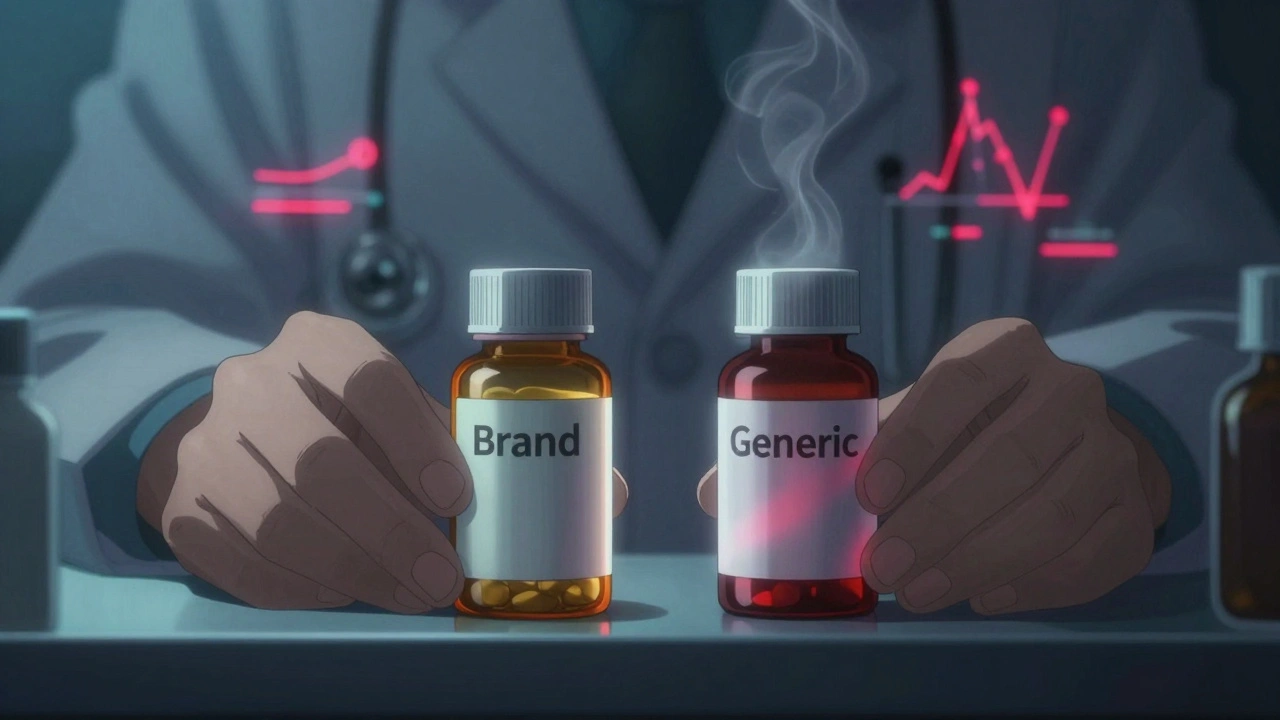
Behind every approved drug is a mountain of data. The FDA approval, the U.S. agency responsible for evaluating drugs for safety and effectiveness before they reach patients doesn’t just read reports—they test them. For a simple pill, they check if the active ingredient dissolves the same way as the brand name. For complex drugs like biologics, large, living-cell-derived medicines like Humira or Omalizumab that target specific parts of the immune system, they need to prove the product is consistent batch after batch, even though it’s made from living tissue. And for generic medications, copies of brand-name drugs that must meet the same strict standards for quality, strength, and purity, they don’t just say they’re the same—they prove it with lab tests, bioequivalence studies, and real-world performance checks.
But approval isn’t the end. It’s the starting line. Many drugs get pulled later because side effects only show up after thousands of people use them. That’s why the FDA keeps watching—through safety alerts, recall notices, and post-market studies. A drug can be approved today and flagged tomorrow if new risks appear. That’s why you see warnings about QT prolongation, liver damage, or rare cancers linked to TNF inhibitors. These aren’t failures of approval—they’re proof the system is working.
What you won’t see in the news is how many drugs never make it. Thousands of candidates get dropped because they’re unsafe, ineffective, or too hard to make consistently. Only about 1 in 5,000 compounds that enter testing ever get approved. That’s why some complex generics—like certain injectables or inhalers—take over a decade to get through the system. It’s not bureaucracy. It’s science.
And here’s what matters to you: regulatory approval means your medication has been held to a standard, not just a guess. It means the pill you took yesterday was made the same way as the one you’ll take tomorrow. It means your pharmacist didn’t just grab any bottle off the shelf—they chose one that passed the test. You don’t need to understand every detail of the process. But you should know this: if it’s on the shelf, someone checked it. And if it’s not, they didn’t let it through.
Below, you’ll find real stories about what happens before, during, and after regulatory approval—from the hidden risks of counterfeit drugs to why some generics take longer to reach you. These aren’t theoretical debates. They’re the practical truths behind every pill you swallow.
Dec
How Different Countries Regulate NTI Generics: A Global Comparison
NTI generics require extreme precision in manufacturing and regulation. This article compares how the FDA, EMA, Canada, and Japan handle bioequivalence, pricing, and substitution rules - and why global harmonization is critical for patient safety.