
Nalbuphine for Itching: How This Opioid Helps with Pruritus and What You Need to Know
When nalbuphine, a synthetic opioid agonist-antagonist used primarily for pain relief is prescribed for itching, it’s not because it’s a typical antihistamine—it’s because it flips a biological switch most people don’t know exists. Nalbuphine works differently than morphine or oxycodone. While those drugs often cause itching as a side effect, nalbuphine can actually stop it. This happens because nalbuphine blocks kappa opioid receptors in the spinal cord and brain, which are directly tied to the itch-sensation pathway. It’s not FDA-approved for this use, but doctors turn to it when standard treatments like antihistamines or steroids fail—especially in patients getting opioid pain meds after surgery or cancer treatment.
Itching from opioids isn’t just annoying—it can be unbearable. Patients on morphine or hydromorphone often describe it as a crawling, burning sensation that keeps them awake and drives them to scratch until their skin bleeds. That’s where nalbuphine, a synthetic opioid agonist-antagonist used primarily for pain relief comes in. Studies show it reduces opioid-induced pruritus in over 70% of cases, often within 15 minutes of an IV dose. It’s also used in postpartum patients who get epidural opioids and develop intense itching, and in people with cholestatic liver disease, where bile buildup triggers chronic itching. Unlike antihistamines, nalbuphine doesn’t cause drowsiness or dry mouth, and unlike naltrexone (another opioid blocker), it doesn’t cancel out pain relief. That’s why it’s a go-to when you need to stop the itch without losing pain control.
But nalbuphine isn’t magic. It doesn’t work for all types of itching. If your itch comes from eczema, allergies, or dry skin, it won’t help. And while it’s safer than pure opioids, it can still cause nausea, dizziness, or, rarely, withdrawal symptoms in people dependent on other opioids. It’s also not something you take at home—it’s given in hospitals or clinics under supervision. Still, for people stuck in a cycle of opioid-induced itching, it’s a game-changer. If you’ve tried everything and the itch won’t quit, ask your doctor if nalbuphine might be an option. Below, you’ll find real-world insights on how it’s used, what alternatives exist, and how to spot when itching is a sign of something deeper.
Nov
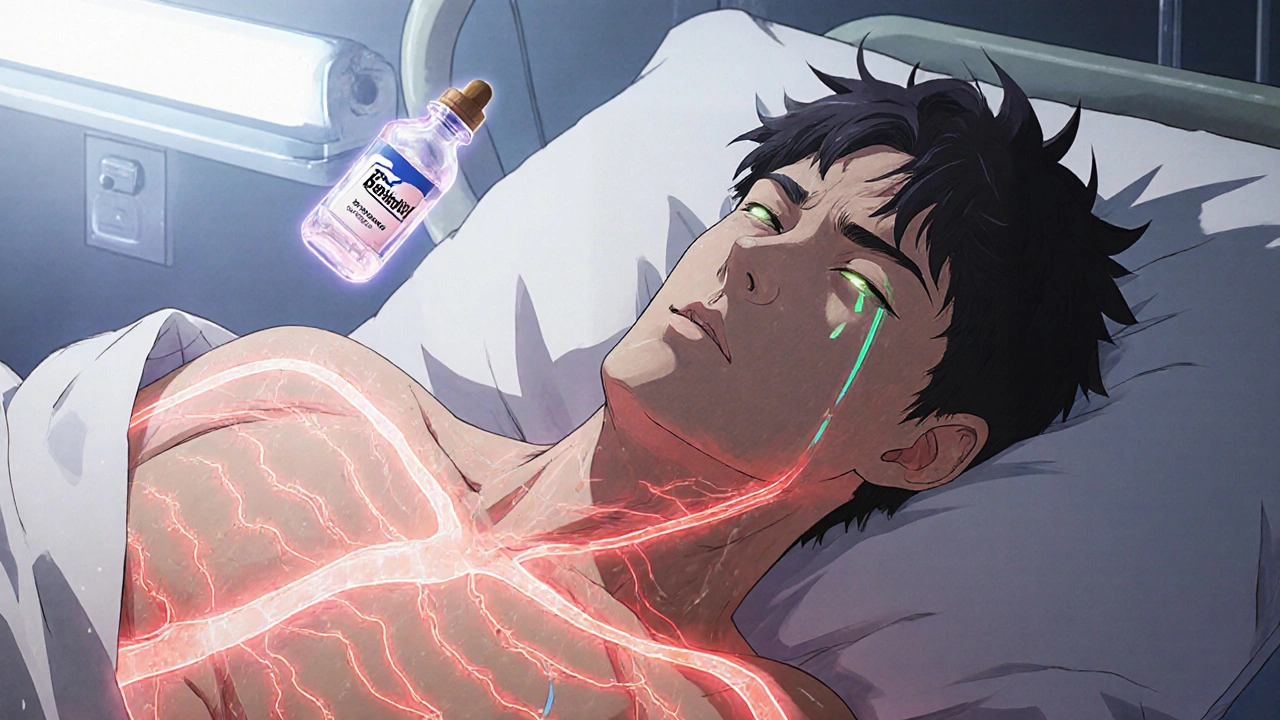
Opioid-Induced Itching: How Histamine and Nerve Pathways Cause It - And What Actually Works
Opioid-induced itching affects up to 100% of patients receiving spinal morphine. Contrary to old beliefs, histamine release isn't the main cause - nerve pathways are. Discover what treatments actually work, why Benadryl often fails, and how nalbuphine is changing the game.