
Opioid Itching Treatment Calculator
Treatment Calculator
Treatment Results
Dose
Onset Time
Expected Efficacy
Key Considerations
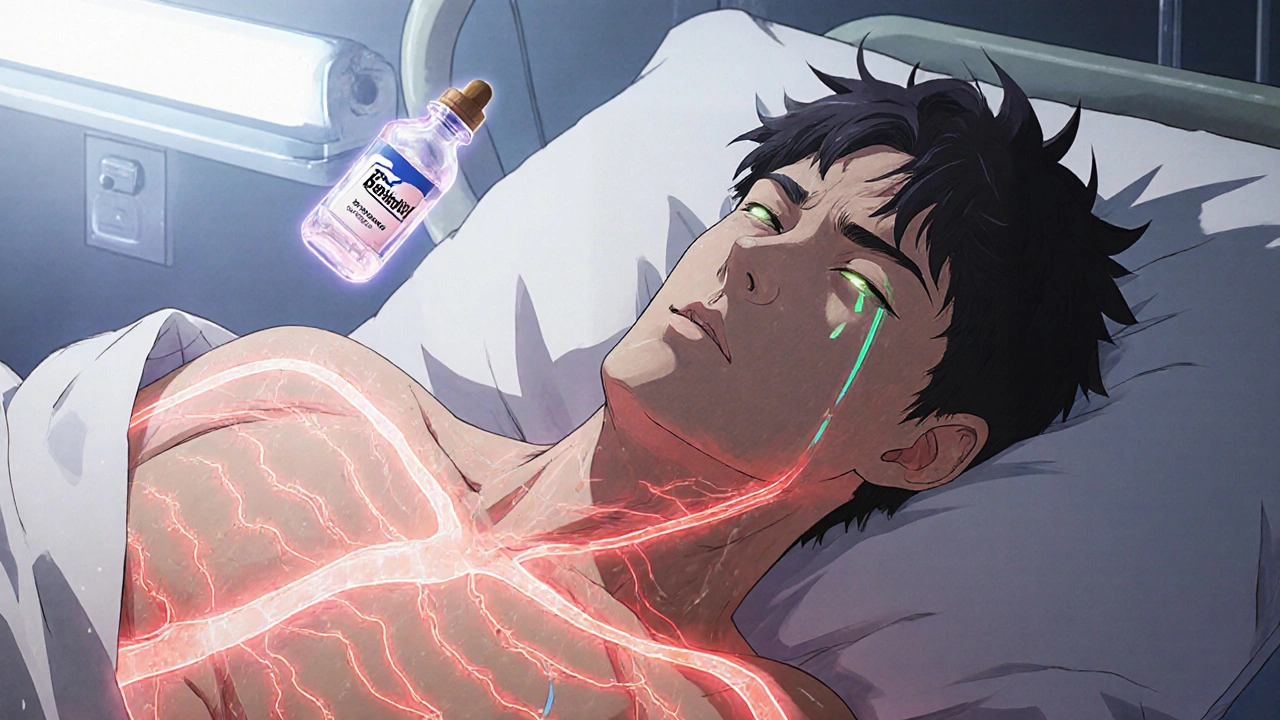
Imagine you’re recovering from surgery, finally starting to feel some relief from the pain - then your skin starts burning. Not a rash. Not a bug bite. Just pure, uncontrollable itching across your face, chest, and arms. You scratch until your skin is raw, but it doesn’t help. You’re not allergic. You’re not hot. You’re just being tortured by an itch that came from the very drug meant to make you feel better. This isn’t rare. It’s common. And it’s not just annoying - it’s enough to make some patients refuse opioids altogether.
Why Do Opioids Make You Itch?
Opioids like morphine, codeine, and fentanyl are powerful painkillers. But they come with a strange side effect: itching. Up to 100% of people who get spinal or epidural morphine experience it. Even IV doses cause it in 30-50% of patients. Oral opioids? About 10-30%. The higher the dose and the closer the injection is to your spinal cord, the worse it gets. For decades, doctors thought this was just histamine release - the same thing that happens when you get hives from a bee sting. And yes, some opioids do trigger mast cells to dump histamine. But here’s the twist: histamine isn’t the main culprit in most cases. New research shows opioid-induced itching works through your nerves, not your skin cells. When opioids bind to mu opioid receptors (MORs) on nerve endings in your spinal cord and skin, they directly turn on itch signals. These signals travel through TRPV1-expressing neurons - the same nerves that react to capsaicin (the heat in chili peppers). That’s why rubbing your skin doesn’t help. You’re not dealing with an allergy. You’re dealing with a misfired pain signal that your brain interprets as itch. This explains why antihistamines like diphenhydramine (Benadryl) often fail. They block histamine, but they don’t touch the nerve pathway causing the itch. In clinical studies, they work in only 20-30% of cases. That’s why so many patients still suffer.What Treatments Actually Work?
If antihistamines don’t cut it, what does? The most effective treatments don’t fight histamine - they fight the opioid itself, but carefully.- Naloxone (0.25 mcg/kg/min IV infusion): This opioid blocker reduces itching by 60-80% without killing your pain. It works because it blocks the mu receptors on nerves - but only in small doses. Too much, and your pain comes roaring back.
- Nalbuphine (5-10 mg IV): This one’s a game-changer. It blocks mu receptors while activating kappa receptors, which naturally suppress itch. Studies show it cuts itching by 85%. Nurses in recovery units swear by it. It kicks in within 5 minutes, and patients stay alert - no drowsiness like Benadryl.
- Butorphanol (1-2 mg IV): Another kappa agonist. In cesarean patients, it dropped itch scores from 8.2 to 2.1 on a 10-point scale.
- Lidocaine (1.5 mg/kg IV): Surprisingly effective. It numbs the nerves carrying the itch signal. Works in about 70% of cases, but needs cardiac monitoring because of its effect on heart rhythm.
Why Do Some Doctors Still Prescribe Benadryl?
Because it’s easy. It’s cheap. It’s in every hospital drawer. But here’s the problem: giving diphenhydramine to someone with opioid-induced itching is like turning on a fan when your house is on fire. It might cool the air a little, but it won’t stop the flames. A 2022 survey of U.S. hospitals found only 37% had formal protocols for managing opioid itching. Most still reach for antihistamines first. That’s partly because the old histamine theory is still taught in med school. And partly because doctors fear giving another opioid (like nalbuphine) to someone already on pain meds. But the data doesn’t lie. Nalbuphine doesn’t worsen pain. In fact, it often improves comfort without reducing analgesia. And it doesn’t make patients sleepy - unlike Benadryl, which can knock people out for hours. In postpartum care, where moms need to bond with their newborns, that matters. One nurse reported mothers on Benadryl were too groggy to hold their babies. Those on nalbuphine were alert, calm, and able to nurse.
Real Stories Behind the Numbers
Behind every statistic is a person who suffered. A Reddit user wrote: "I got morphine after my appendix surgery. Within 20 minutes, I felt like fire ants were crawling under my skin. I scratched until my chest bled. No one believed me until I showed them the red marks. They gave me Benadryl. It did nothing. I cried for an hour." In postpartum forums, 78% of mothers said opioid itching ruined their first hours with their newborn. Sleep deprivation? 65% lost over four hours a night. One woman said, "I didn’t sleep for 36 hours because I was too itchy to rest. I felt like I was losing my mind." And it’s not just acute pain. People on long-term opioids for chronic pain say itching is one of the top reasons they quit. "I’d rather have the pain than feel like I’m being eaten alive," one user wrote on a chronic pain site. That’s not exaggeration. That’s real suffering.What’s Next? New Treatments on the Horizon
The future is looking smarter. A drug called difelikefalin (CR845) - a kappa opioid agonist that doesn’t cross the blood-brain barrier - just finished Phase II trials. It reduced itching by 65% without affecting pain relief or causing dizziness. It’s already approved for kidney disease itch. Now, it’s being tested for opioid-induced pruritus. By 2028, experts predict 75% of major hospitals will use mu-antagonist/kappa-agonist combos as first-line treatment. The old histamine-only model is fading. The new standard? Target the nerve pathway, not the skin. Even the FDA took notice. In 2021, they required all intrathecal morphine labels to include specific pruritus management guidance. That’s huge. It means the medical world is finally acknowledging this isn’t a minor annoyance - it’s a treatment-limiting side effect.
What Should You Do If You’re Facing This?
If you’re scheduled for surgery and will get opioids - especially spinal or epidural - ask these questions:- "Will I be at risk for itching?"
- "What’s your plan if it happens?"
- "Do you use nalbuphine or naloxone for this?"
- "Will Benadryl be my first option?"
Final Thought: It’s Not Just a Side Effect. It’s a Treatment Barrier.
Opioid-induced itching isn’t a glitch. It’s a biological feature of how these drugs work. And ignoring it doesn’t make it go away - it just makes patients suffer more, quit treatment early, or lose trust in their care. The solution isn’t more antihistamines. It’s better science. Better protocols. Better training. And for patients - the courage to ask for what actually works.Itching shouldn’t be the price of pain relief. We know how to fix it. Now we just need to do it.


Man, I had no idea this was so common. Got morphine after my knee surgery and felt like ants were having a rave under my skin. Benadryl did zip. My nurse finally gave me nalbuphine and it was like someone turned off a loudspeaker in my nerves. Why isn’t this standard? It’s not rocket science.
Doctors still treat it like a rash. It’s not. It’s a nerve glitch. Time to update the textbooks.
Oh wow. So we’ve spent decades giving people antihistamines for a condition that’s basically your spinal cord screaming ‘ITCH!’ at you? And the solution is… more opioids? Brilliant. Just brilliant. I’m sure the pharmaceutical companies are thrilled.
Next up: we’ll prescribe cocaine for headaches because it numbs the pain. Same logic. Same logic.
Also, why is Benadryl still in every drawer? Because it’s cheaper than thinking. And lazy medicine is the American way, right?
I’m from India and we don’t have this problem much here. We use tramadol more. Less itching. Maybe it’s the opioid type? Or maybe Western hospitals just don’t know how to manage pain properly. I’ve seen people here get pain meds and just… suffer silently. No one asks. No one checks. It’s sad.
But I’m glad someone’s talking about it. Maybe it’ll change things.
Let me tell you something - this isn’t just a side effect. This is a full-blown betrayal. You’re given a drug to take away the pain, and instead, it turns your body into a living nightmare of relentless, skin-ripping, soul-crushing itch. You can’t sleep. You can’t think. You can’t even hold your newborn baby because you’re too busy clawing at your own chest like a wild animal. And what do they do? They hand you a little blue pill that’s about as useful as a screen door on a submarine.
But then - and I mean this with all my heart - nalbuphine. That’s the hero we didn’t know we needed. It doesn’t just stop the itch - it gives you back your dignity. It lets you breathe again. It lets you be a parent, a partner, a human being instead of a scratching post. And if your hospital doesn’t have it on standby? You’re being failed. Not by medicine. By indifference. And that’s the real tragedy here.
OMG. I’m literally crying. This is so real. I got morphine after c-section and I was like… why is my skin on fire?? Benadryl? LOL. I looked like a zombie for 2 days. My baby cried because I couldn’t hold her right. And the nurses were like ‘oh honey, just scratch a little’. Like, NO. I was screaming into a pillow. This is why I hate American medicine. So outdated. So lazy. So… benadryl. 😭😭😭
Also, who wrote this? You’re a genius. Please write a book. I’ll buy 10 copies.
My sister went through this after her surgery. She didn’t say anything because she didn’t want to bother anyone. We didn’t know what was happening until she showed us her scratched-up arms. She was too shy to ask for help. I wish someone had told her about nalbuphine. It’s not just about the medicine - it’s about listening. People suffer in silence because they think it’s normal. It’s not. We need to teach patients to speak up. And we need to teach doctors to listen.
Thank you for writing this. It’s important.
Imagine your nerves are a DJ playing ‘Itch Remix’ on loop at 120 BPM - and the only thing they hand you is a feather duster. That’s what Benadryl feels like. Meanwhile, nalbuphine? That’s the whole damn sound system shutting down the track. Boom. Silence. Peace. Your skin stops screaming. Your brain stops panicking. And suddenly, you’re not a prisoner in your own body anymore.
This isn’t medicine. This is liberation. And the fact that we’re still using antihistamines like they’re magic beans? That’s not negligence. That’s cultural amnesia. We forgot how to listen to the body. And now, people are scratching their way through recovery like it’s a punishment. Wake up, healthcare.
While the anecdotal evidence presented is compelling, it lacks rigorous statistical validation across diverse populations. The assertion that antihistamines are ineffective is overstated without controlled, double-blind, multi-center trials. Furthermore, the promotion of nalbuphine as a first-line agent ignores potential opioid tolerance interactions, respiratory depression risks, and pharmacoeconomic implications. The FDA’s recent labeling requirement, while commendable, does not constitute clinical consensus. Until longitudinal data confirms safety and efficacy across age, sex, and comorbidity strata, such recommendations remain premature and potentially hazardous. Evidence-based medicine demands more than case reports and Reddit testimonials.
I’ve been in the ICU for over 15 years, and I’ve seen this exact scenario play out a hundred times. A patient, post-op, eyes wide, hands red, scratching like their life depends on it. And the first thing the team reaches for? Benadryl. Always Benadryl. We’ve all been taught it’s the go-to. But here’s the thing - I’ve watched nurses quietly slip nalbuphine in when no one’s looking. Because they know. They’ve seen the difference. It’s not in the textbooks. It’s in the quiet corners of the unit, between shifts, when the patient is finally able to sleep without flinching.
This isn’t about new drugs. It’s about old habits dying hard. And I’ve seen enough. I’ve seen moms who couldn’t hold their babies. I’ve seen veterans who refused pain meds because they’d rather hurt than itch. We’re not failing because we don’t know better. We’re failing because we’re too afraid to change.
But change is coming. Slowly. But it’s coming. And every nurse who gives nalbuphine without being asked? That’s the real revolution. Not the FDA. Not the studies. The people on the ground. They’re the ones who remember that medicine isn’t about protocols. It’s about people.