

If you've ever dealt with that burning feeling in your chest or a sour taste in your mouth, you've likely heard of or used a "heartburn pill." Many of these are Proton Pump Inhibitors (PPIs), a class of medications that shut down the pumps in your stomach lining to drastically reduce acid production. They are incredibly effective-healing over 90% of erosive esophagitis cases-but there is a growing concern about how many of us are taking them for years without a clear medical reason. While they feel like a quick fix, using them long-term can change how your body absorbs nutrients and affects your bone health. The real question isn't whether they work, but whether you still need them and how to get off them without your symptoms coming back with a vengeance.
What Exactly Are PPIs Doing in Your Body?
Unlike simple antacids that just neutralize the acid already in your stomach, PPIs stop the acid from being made in the first place. They target the H+/K+ ATPase enzyme system, essentially locking the "pumps" that release acid. Because of how they work, they aren't instant. You usually need to take them 30 to 60 minutes before a meal to get the best result, and it can take a few days for the full effect to kick in.
You probably recognize them by their brand names. Omeprazole (Prilosec) was the first to hit the market in 1989, followed by others like Esomeprazole (Nexium), Lansoprazole (Prevacid), and Pantoprazole (Protonix). While some are available over-the-counter (OTC), the FDA is very clear: OTC versions are only meant for a 14-day course. Yet, millions of people treat them like daily vitamins, which is where the risk starts to climb.
The Real Risks of Long-Term Use
When you suppress stomach acid for years, you aren't just stopping heartburn; you're changing the environment of your gut. This can lead to several complications that aren't always obvious until they become serious.
Bone Fractures and Bone Density
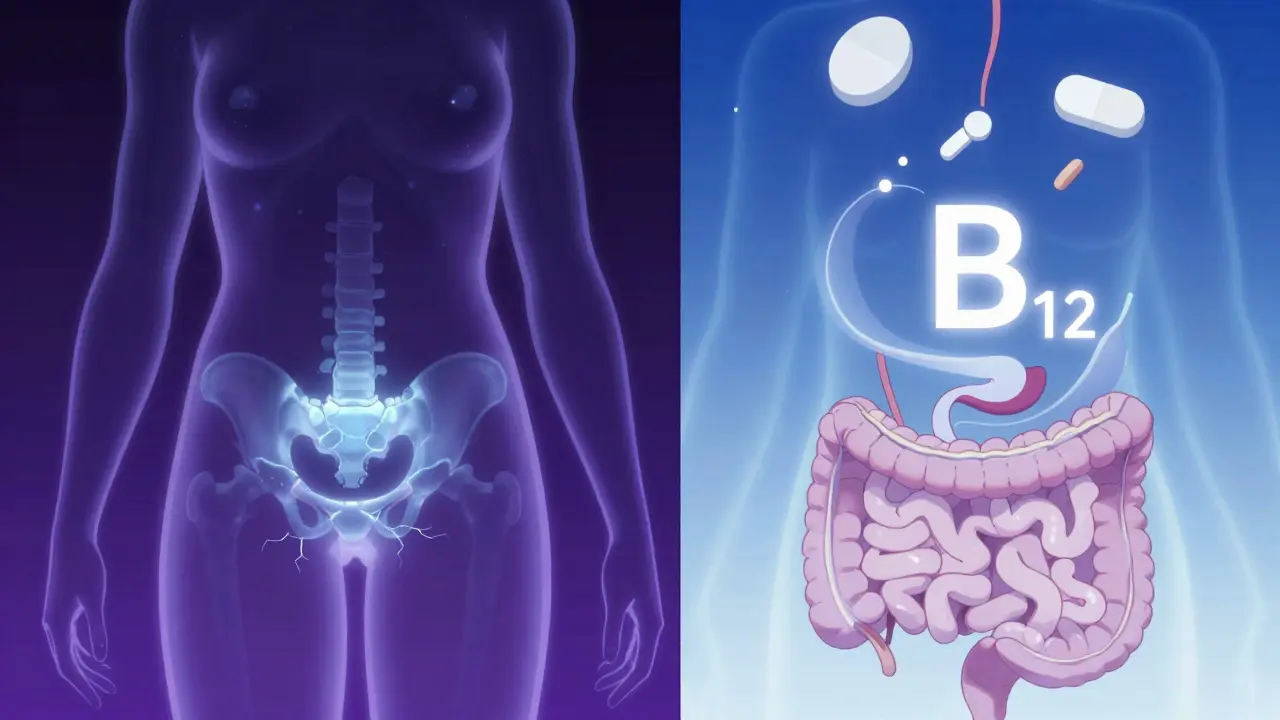
One of the most documented risks is a higher chance of bone fractures, especially in the hip. Research indicates that people using PPIs for 4 to 8 years have a significantly higher risk of fractures compared to non-users. The good news? This risk seems to fade once you stop the medication.
Nutrient Deficiencies
Your stomach needs acid to break down certain vitamins. Without it, you can develop a Vitamin B12 deficiency, which affects roughly 10-15% of long-term users. Even more concerning is hypomagnesemia-a drop in magnesium levels. While rare, it can cause muscle cramps, weakness, and even dangerous heart arrhythmias. This is why the FDA now suggests checking magnesium levels for anyone on PPIs for over a year.
Gut Infections
Stomach acid is your first line of defense against bad bacteria. When that shield is gone, you're more susceptible to C. difficile, a bacterium that causes severe diarrhea and colitis. Hospitalized patients are at a particularly high risk here.
| Risk Factor | Impact/Value | Evidence Strength |
|---|---|---|
| Hip Fractures | 1.42 to 1.55x higher risk (4-8 year use) | Strong |
| Vitamin B12 Deficiency | 10-15% of long-term users affected | Moderate to Strong |
| C. difficile Infection | 1.7 to 2.0 fold increased risk | Strong |
| Hypomagnesemia | 0.5-1% of long-term users | Moderate (Rare but severe) |
| Kidney Issues (AIN) | 20-50% increased risk of acute inflammation | Moderate/Controversial |
The "Rebound" Effect: Why You Can't Just Stop
If you've tried to stop taking your PPIs cold turkey, you might have noticed that your heartburn came back worse than ever. This is called rebound acid hypersecretion. Your stomach has basically been "asleep," and when you suddenly remove the medication, it wakes up by overproducing acid to compensate. This happens to 40-80% of long-term users, which often tricks people into thinking they can never stop the drug.
The key to beating the rebound is a slow taper. Instead of stopping abruptly, doctors recommend cutting your dose by half every week or two. Some people switch to an "on-demand" schedule, taking a pill only when they feel a flare-up, before stopping entirely. This lets your stomach adjust gradually.
When Should You Actually Stay on PPIs?
We shouldn't paint all PPI use as "bad." For some, these drugs are life-saving. If you have severe esophagitis (inflammation of the esophagus) or a high-risk stomach ulcer, a simple antacid won't cut it. In these cases, the benefit of preventing a perforated esophagus far outweighs the long-term risk of a vitamin deficiency.
However, for general indigestion or mild reflux, the guidelines from the American Gastroenterological Association suggest using the lowest effective dose for the shortest time possible. If you've been on a daily dose for more than 8 weeks for uncomplicated GERD, it's time to talk to your doctor about a "drug holiday" or switching to a less potent option.

Alternatives to Long-Term PPI Use
If you're looking to get off PPIs, you have a few options that don't carry the same long-term baggage. H2 Blockers, like famotidine (Pepcid), are a step down in strength. They don't heal the esophagus as quickly as PPIs, but they are generally safer for longer-term maintenance.
Then there are lifestyle shifts. It sounds cliché, but avoiding "trigger foods" (like spicy dishes or heavy fats) and not lying down immediately after eating can significantly reduce the need for medication. Some people also find success with P-CABs (Potassium-Competitive Acid Blockers) like vonoprazan, which are a newer class of drugs designed to be more precise, though we're still gathering long-term data on them.
Can I just switch to over-the-counter PPIs to save money?
You can, but the risks remain the same. Whether it's a prescription or an OTC version, the medication works the same way. The FDA limits OTC labels to 14 days for a reason: long-term use without a doctor's supervision increases the risk of missing side effects like magnesium deficiency or B12 loss.
Will stopping PPIs cause my stomach cancer risk to increase?
Actually, some data suggests the opposite. While the evidence is mixed, chronic acid suppression can sometimes lead to changes in the stomach lining (hyperplasia). Stopping the medication under a doctor's care helps return your stomach to its natural state.
How do I know if I have a B12 deficiency from my meds?
Look for signs like extreme fatigue, tingling in your hands or feet (pins and needles), and a sore, red tongue. Since B12 is absorbed using stomach acid, long-term PPI users should ask their doctor for a blood test every year or two.
Is it safe to take PPIs for a few years if I feel fine?
"Feeling fine" isn't always the best metric, as bone loss and vitamin deficiencies happen silently. Most gastroenterologists recommend a periodic reassessment every 6-12 months to see if you can lower your dose or take a break.
What is the best way to taper off a PPI?
The safest way is to reduce your dose by 50% every 1-2 weeks. For example, if you take 40mg daily, move to 20mg for two weeks, then to 20mg every other day, before stopping. Using an H2 blocker or an antacid during this transition can help manage the rebound acid.
Next Steps for Your Health
If you are currently taking a PPI, don't panic and don't stop your meds tomorrow morning. Instead, do this: first, check your current dosage and how long you've been taking it. Second, schedule a visit with your doctor specifically to discuss "deprescribing." Ask if your current symptoms still warrant a daily PPI or if you're a candidate for a tapering plan.
For those who struggle with rebound acid, keep a food diary for two weeks. Note which foods trigger your symptoms so you can avoid them during the tapering process. This combination of medical guidance and lifestyle adjustment is the most reliable way to reclaim your gut health without returning to a cycle of lifelong medication.


It's fascinating how we prioritize immediate relief over long-term systemic balance. We've reached a point where we treat our bodies like machines to be tuned rather than complex ecosystems. The concept of the 'rebound' is just a manifestation of the body trying to regain a homeostasis that we've artificially suppressed for years.
Stop overcomplicating it. Just eat clean and stop popping pills.
The irony is that we create the disease to sell the cure, then create a new disease from the cure to sell another pill. It's a cycle of absurdity. Most people are just too lazy to actually change their diet, so they prefer the chemical shortcut and then act shocked when their bones turn to chalk.
Absolutely terrifying!!! Why isn't every single pharmacy blasting this on a giant billboard??? I've been on these for three years and suddenly I'm feeling exhausted... the B12 deficiency part is a total wake-up call!!! Seriously!!!
This is just Western medicine failing again 🙄🇮🇳. We have so many natural ways to fix the gut in India that don't involve destroying your kidneys! These big pharma companies just want your money 💰💰
It is really important to remember that everyone's body reacts differently. While it's great to be cautious about long-term use, we should also be mindful and respectful of those who truly need these medications for severe conditions to maintain their quality of life.
Imagine thinking 'natural' ways are better than FDA-approved science 🙄. The US healthcare system is obviously the gold standard even if the pills have side effects. Please, spare us the herbal tea advice 💅✨
YOU MUST TAKE IMMEDIATE ACTION TO RECLAIM YOUR HEALTH! THERE IS NO EXCUSE FOR IGNORANCE WHEN THE DATA IS THIS CLEAR! COMMENCE YOUR TAPERING PROCESS WITH YOUR PHYSICIAN IMMEDIATELY TO PREVENT IRREVERSIBLE BONE LOSS! START NOW!