
Every year, over two million people in the U.S. call the Poison Control Hotline because of a medication mistake. Most of them aren’t trying to harm themselves-they’re parents who grabbed the wrong bottle, seniors confused by multiple prescriptions, or someone who took an extra pill by accident. The good news? You don’t need to panic or rush to the ER. The Poison Control Hotline at 1-800-222-1222 is there to guide you through it-fast, free, and confidential.
How the Poison Control Hotline Actually Works
The Poison Control Hotline isn’t just a phone number. It’s a nationwide network of 53 accredited centers staffed by Specialists in Poison Information (SPIs)-usually pharmacists, nurses, or doctors with years of toxicology training. They don’t guess. They use over 1,500 evidence-based algorithms developed by top toxicologists to assess every case.
When you call, your area code automatically routes you to your local center. You can also text “poison” to 797979 or use the webPOISONCONTROL tool at poisonhelp.org. The system works 24/7, 365 days a year. No appointment. No insurance check. No judgment.
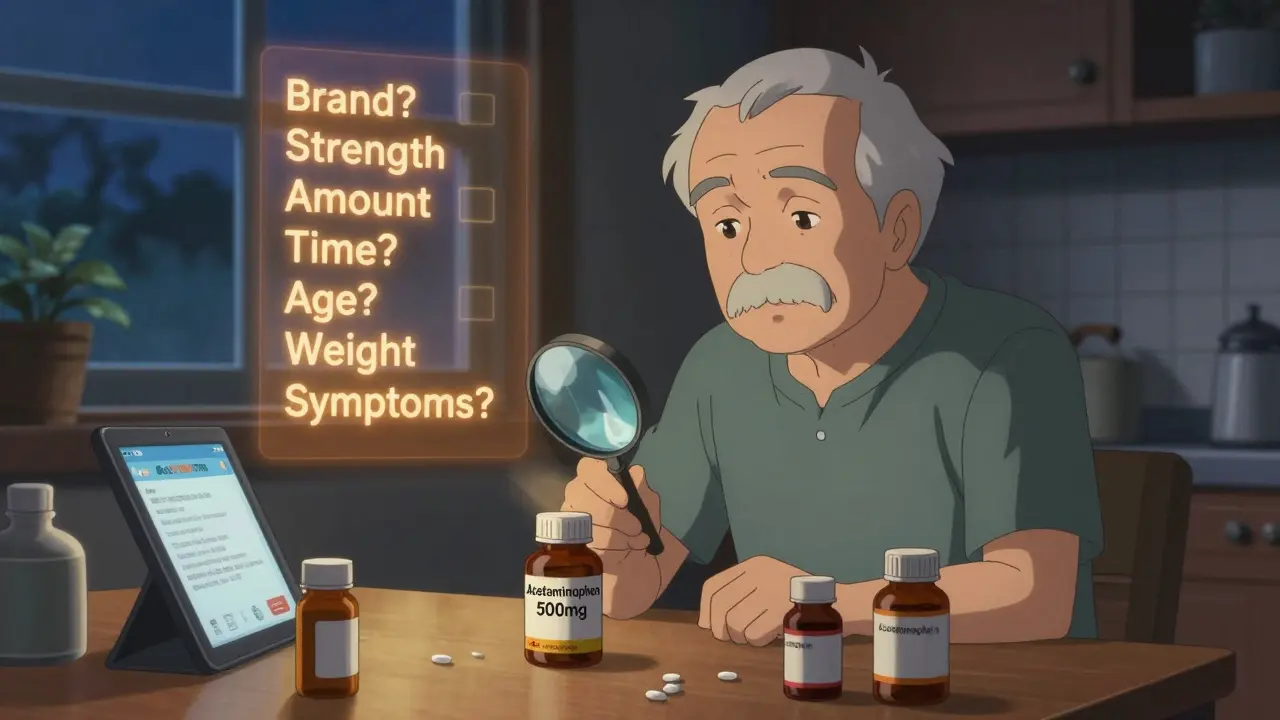
For medication-related calls-which make up nearly half of all exposures-the specialists don’t just ask what you took. They need exact details: brand name, generic name, strength, how much was taken, when it happened, the person’s age and weight, and any symptoms. That’s because 500mg of acetaminophen is safe for an adult, but 15 tablets of it can cause liver failure. The difference isn’t just in the pill-it’s in the numbers.
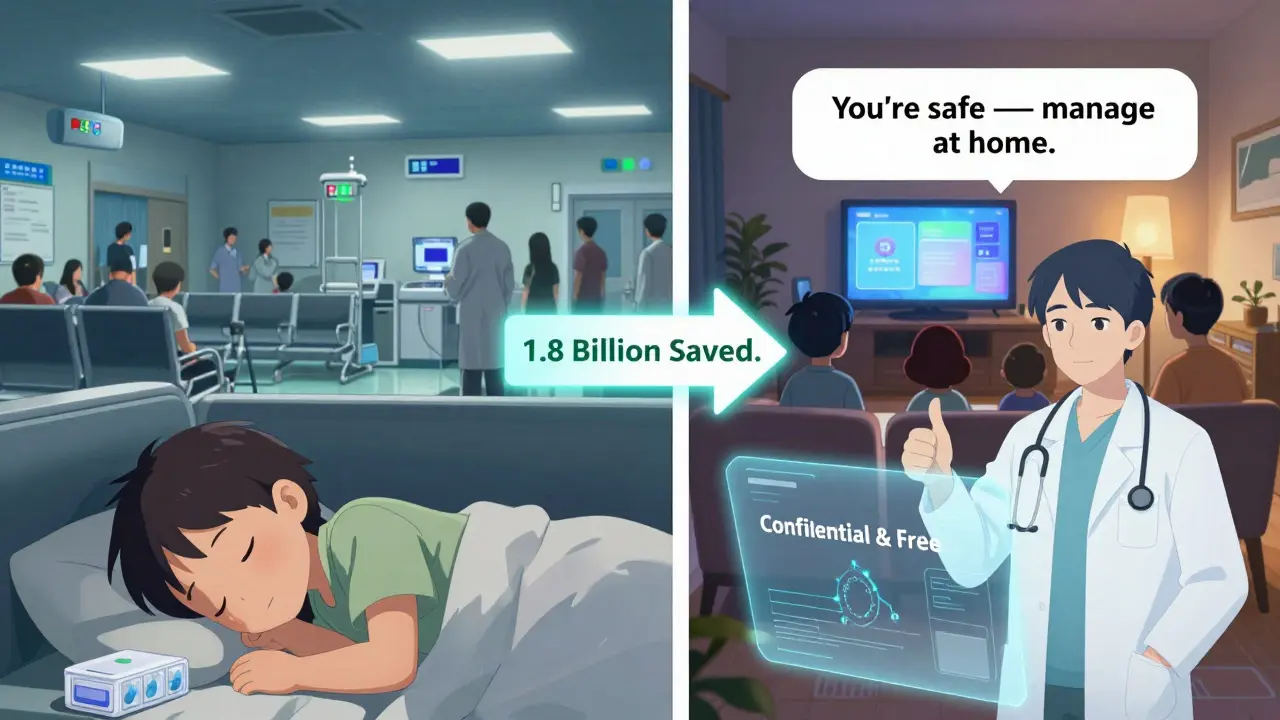
On average, a call lasts 8 to 12 minutes. In 60% of medication cases, you’ll be told to manage it at home. That means avoiding an ER visit, saving time, and reducing costs. In 2019, these calls saved the U.S. healthcare system $1.8 billion by preventing unnecessary hospital trips.
What Exactly to Report About Medications
Don’t say “I took Tylenol.” That’s not enough. Say: “My 3-year-old swallowed 10 tablets of Tylenol Extra Strength, 500mg each, at 2:30 PM.”
Here’s what matters:
- Exact name: Brand (Tylenol) AND generic (acetaminophen). Some pills have different names in different countries.
- Strength: 325mg? 500mg? 650mg? It changes everything.
- Amount: “A few” doesn’t help. “Three pills” or “half a bottle” does.
- Time: When did it happen? 10 minutes ago? 4 hours ago? Timing affects treatment.
- Patient info: Age, weight in kilograms (not pounds), and any existing conditions like liver disease or asthma.
- Symptoms: Nausea? Drowsiness? Vomiting? Even small details help.
And if they’re taking more than one medication? Tell them all of them. About one in three serious medication incidents involves a dangerous interaction between two or more drugs. A common example: mixing a painkiller like oxycodone with a sleep aid like diphenhydramine can slow breathing to dangerous levels. Specialists see this every day.
What They Won’t Tell You (But Need to Know)
Some people think poison control is only for kids. It’s not. Over 40% of calls involve adults-especially older adults managing multiple prescriptions. A 72-year-old mixing blood pressure meds with a new arthritis drug? That’s a common scenario. The hotline handles it all.
Another myth: if you wait to call, you’ll be judged. That’s not true. Specialists have seen it all. A parent who called after their child swallowed a few pills at 2 a.m.? They got calm, clear instructions. A man who took his wife’s antidepressant by mistake? He was guided on what to watch for and when to seek help. No shame. Just help.
And if you’re unsure? Call anyway. The hotline doesn’t charge you for “wasting their time.” In fact, they encourage it. A 2022 survey found 94.7% of callers rated the advice as excellent or good. People especially appreciated how specialists could tell them if a generic version was just as risky as the brand name.
What Happens After You Call
Most calls end with a plan: “Watch for vomiting. Call back if they become sleepy.” Some need follow-up. For acetaminophen overdoses, specialists schedule check-ins at 4, 8, and 24 hours to monitor liver function. In New Mexico, they successfully reached 92% of people for these follow-ups.
You’ll also get an email summary with everything discussed: what was taken, the risk level, what to watch for, and when to call again. About 78% of people save that email. It’s like having a medical note you can show to a doctor later.
Even if you’re not sure you need help, call. A 2022 Reddit post from a pharmacist described how following poison control instructions saved a child’s life. The child had swallowed acetaminophen. The hotline told the parent to give N-acetylcysteine within the critical 8-hour window. Without that call, the child could have needed a liver transplant.
When Not to Call Poison Control
There are times you should call 911 instead:
- The person is unconscious, not breathing, or having seizures.
- They’ve taken a large amount of opioids, sedatives, or alcohol.
- They’ve swallowed more than two different substances at once.
- It was intentional (suicide attempt).
In those cases, call 911 first. Then call poison control while waiting for help. They can guide emergency responders in real time.
Also, the webPOISONCONTROL tool doesn’t handle intentional overdoses or multi-substance cases. That’s why the phone line still matters. It’s the only place where a human specialist can think through the complexity.
Why This Service Is So Important
Medication poisonings are rising. From 2018 to 2022, exposures to opioids jumped 22.3%, sedatives up 19.8%, and heart medications up 15.6%. New weight-loss drugs and synthetic opioids are showing up in poison reports faster than ever.
The system isn’t perfect. Some follow-up calls are delayed. A few users report waiting over an hour. But that’s rare-only 1.2% of cases. The system’s accuracy rate is 97.3% compared to specialist decisions. It’s one of the most reliable health tools in the country.
And it’s funded by taxpayers, hospitals, and state grants-not users. There’s no cost. No insurance needed. No credit card. Just a phone call.
Doctors, hospitals, and emergency responders all rely on it. Every Level I and II trauma center in the U.S. has a formal agreement with a poison center. That’s because they know: poison control saves lives, money, and time.
What You Can Do Today
Don’t wait for an emergency.
- Save 1-800-222-1222 in your phone. Label it “Poison Help.”
- Keep a list of all medications everyone in your household takes-including vitamins and supplements.
- Store meds out of reach of kids and seniors with memory issues.
- Use pill organizers with clear labels.
- Download the webPOISONCONTROL app. It lets you scan barcodes and get instant advice.
If you’re ever unsure-call. Even if it turns out to be nothing, you’ve done the right thing. And you’ve helped keep the system strong. Every call helps poison control track new threats and improve their algorithms. That’s how they catch the next dangerous drug before it hurts someone else.
Is the Poison Control Hotline really free?
Yes, completely free. There are no fees, no insurance checks, and no hidden costs. The service is funded by government grants, hospital support, and state funding. You don’t need to give your name, address, or insurance info to use it.
Can I call poison control for my pet?
No. The Poison Control Hotline in the U.S. only handles human exposures. For pets, call the ASPCA Animal Poison Control Center at 1-888-426-4435. They charge a small fee, but they’re staffed by veterinary toxicologists who specialize in animals.
What if I don’t know the exact name of the medication?
If you don’t know the name, describe it: color, shape, letters or numbers on the pill, or the bottle label. Take a photo if you can. The specialist can often identify it using images or descriptions. Don’t wait to find the exact name-call now.
Do poison control centers handle illegal drugs?
Yes. Whether it’s prescription, over-the-counter, herbal, or illegal substances, they handle all types of exposures. They don’t report users to law enforcement. Their only goal is to prevent harm. If someone took a synthetic opioid or a new street drug, they’ll give you the best advice based on current toxicology data.
Can I use poison control if I live outside the U.S.?
The 1-800-222-1222 number only works within the United States. If you’re overseas, search for your country’s national poison center. Many countries have similar services. For example, Australia has the Poisons Information Centre at 13 11 26. The U.S. system is one of the most accessible, with 99% of Americans within 200 miles of a center.
Will calling poison control affect my medical records?
No. Your call is confidential and HIPAA-compliant. The center won’t share your information with your doctor unless you give permission. However, if you later go to the ER, they may ask if you called poison control-so keeping the email summary can help your provider understand what happened.
This is the most useless government waste I've seen in years. Who the hell calls this number instead of just going to the ER? You're telling me some pharmacist on a phone call knows more than a whole hospital team? Save the taxpayer money and just make people pay for ER visits.
The elegance of this system lies in its quiet humility. It doesn't demand your insurance card, it doesn't require you to be a medical professional, it doesn't even ask for your name. It simply exists as a calm, algorithm-driven voice in the chaos of human error. In a world where everything is monetized, gamified, and surveilled, this is one of the last remaining sanctuaries of pure, unconditioned care. The fact that it saves $1.8 billion annually isn't just a statistic-it's a moral imperative.
I called this line last year when my kid got into my ADHD meds. They talked me through it like I wasn't a panic-stricken mess. No judgment. Just clear steps. I cried after hanging up. Not from fear-from relief. This service is a godsend. Seriously, save the number. You won't regret it.
Call it. Even if it's nothing. You'll feel better.
I work in pharmacy in Mumbai and can confirm that the precision required in reporting medication exposure is universally critical. Even minor inaccuracies-like saying 'a few pills' instead of 'three 500mg tablets'-can lead to catastrophic misjudgments. The structure described here is exemplary. Every healthcare system should adopt this model.
The utilization of evidence-based toxicology algorithms, validated against clinical outcomes across a population of over two million annual exposures, represents a statistically significant reduction in unnecessary emergency department utilization. The 97.3% alignment rate with specialist decision-making is well within acceptable clinical benchmarks for triage protocols.
In South Africa, we don't have this luxury. We have to drive 80 kilometers to the nearest hospital and wait 6 hours. You Americans think you're so advanced because you have a hotline? We have no choice but to pray. This is not progress. This is privilege.
i had no idea they had a texting option! just sent them a pic of a pill my grandma found in her purse and they ided it as metformin 500mg!! saved me a trip to the pharmacy lol
Who cares about brand names just tell them the chemical. If you cant spell acetaminophen you probably shouldnt be around meds
So basically the government pays pharmacists to be your mom. Cool. I'll just keep my pills in a shoebox and call them when I forget what I took. Again.
I'm so glad this exists. My mom is 78 and takes 11 different pills. She mixes them up all the time. I told her to call this number if she's ever confused. She said she'd rather die than admit she doesn't know what she took. So I saved it under 'Emergency Help' in her phone. She still hasn't called. But she knows it's there.
You know what’s funny? The same people who scream about ‘big government’ are the ones who’d be the first to call this line when their kid eats a whole bottle of gummy vitamins. Hypocrisy is just a lifestyle choice.
Please, please, please-save this number in your phone right now. Like, literally right now. Go ahead. I'll wait. You think you won't need it? You will. You'll thank me later. And if you're reading this and you're a parent, a caregiver, or just someone who doesn't want to watch someone you love die because of a typo on a pill bottle-do it. Do it now.
I called them once when I thought I overdosed on melatonin turns out I just ate a whole bag of gummies and was having a panic attack they told me to drink water and breathe and i felt so dumb but also so safe
This isn't just a hotline. It's a lifeline. 🌍 It's the quiet hero in the backroom of every ER, the unsung guardian of sleepless parents, the calm voice that says, 'You're not alone.' Every time someone calls, the world gets a little less dangerous. And if you think that's not worth $1.8 billion? You've never held a child while they're choking on a mistake they didn't know how to make. 🖤