
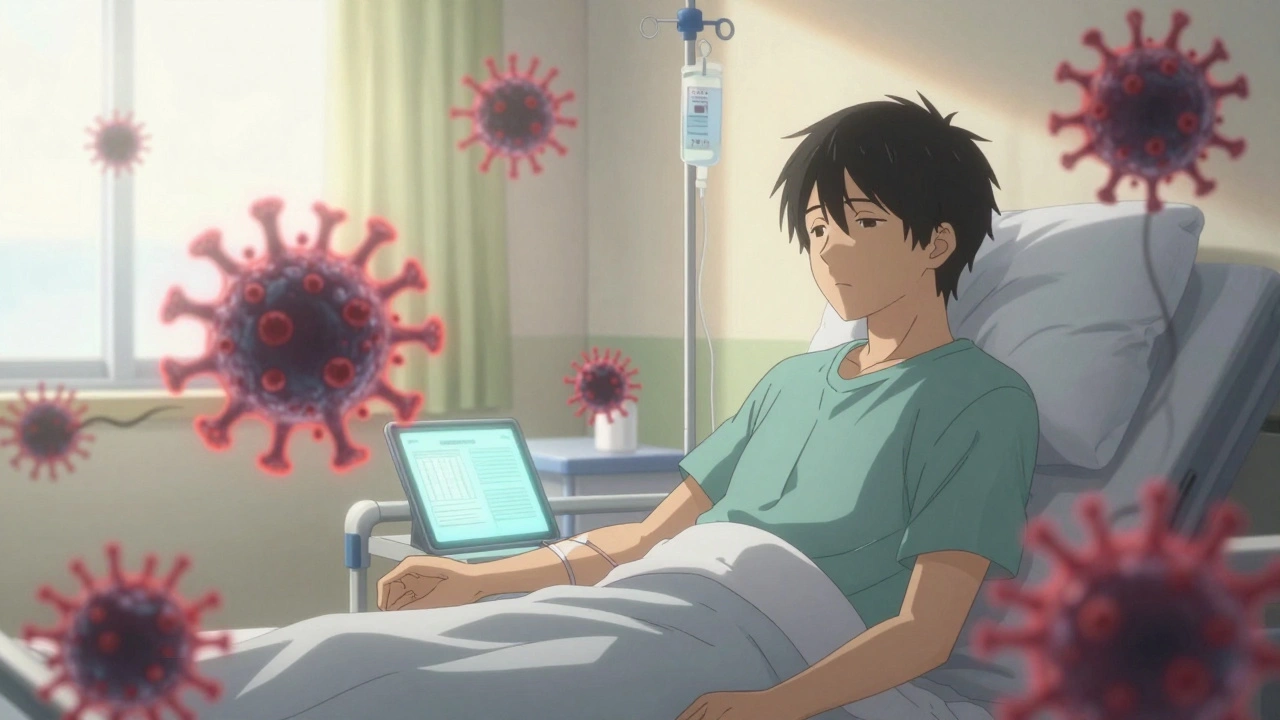
When your immune system is weakened-whether by disease, transplant, or the very drugs meant to help you-you don’t just get sick more often. You get sicker, faster, and in ways that don’t always look like sickness at all. For immunocompromised patients, taking medication isn’t just about managing a condition. It’s a high-wire act between relief and risk. And the stakes? Life or death.
What Does It Mean to Be Immunocompromised?
Being immunocompromised means your body’s defense system isn’t working like it should. You might not fight off a cold the way someone else does. A simple sore throat could turn into pneumonia. A minor cut might become a serious infection. This isn’t just about having a cold now and then. It’s about a system that’s been turned down-sometimes on purpose.
People become immunocompromised for many reasons. Organ transplant recipients take drugs to stop their bodies from rejecting the new organ. People with rheumatoid arthritis, lupus, or Crohn’s disease take medications to quiet an overactive immune system that’s attacking their own tissues. Cancer patients on chemotherapy have immune systems crushed by the treatment meant to kill tumors. Even long-term use of high-dose steroids like prednisone can do it.
The Cleveland Clinic puts it simply: "You might get sick more often or more severely than others." And that’s the core problem. When your immune system is suppressed, normal infections become dangerous. And sometimes, the signs of infection don’t show up the way they should.
How Medications Silence the Immune System
Not all immunosuppressants work the same way. Each class has its own fingerprint of risk.
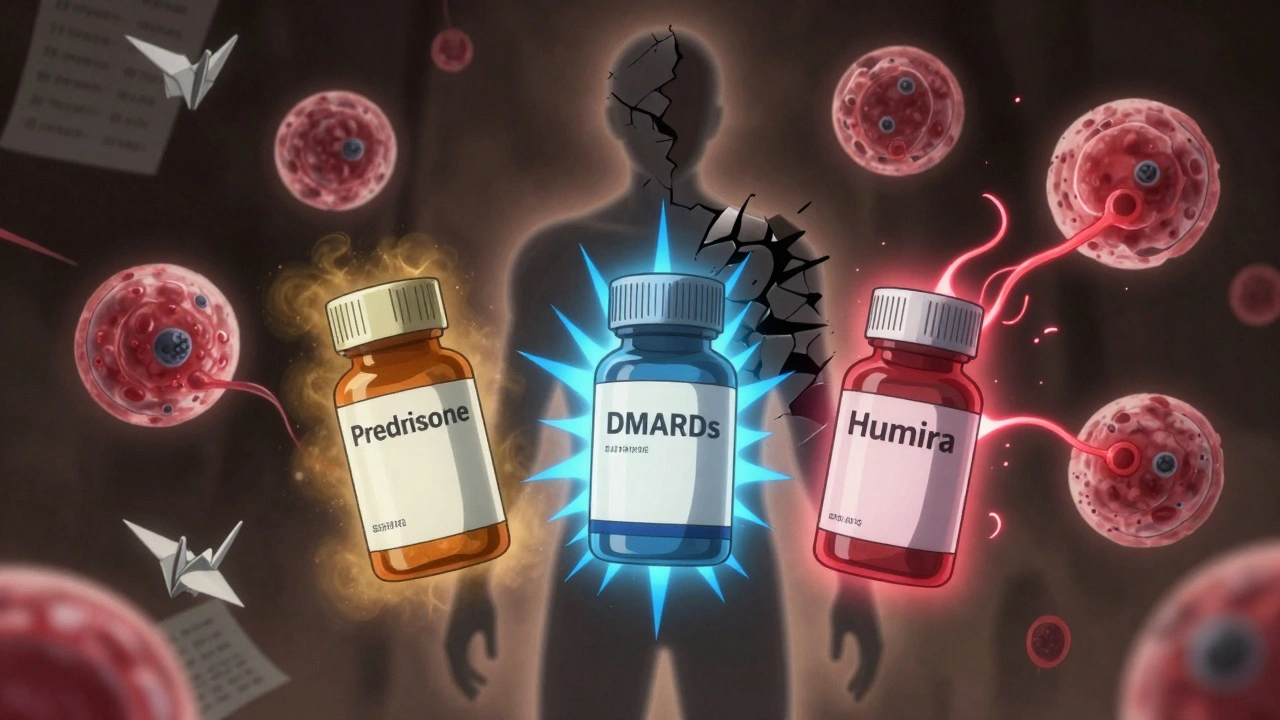
Corticosteroids like prednisone, dexamethasone, and methylprednisolone are among the most common. They work by shutting down inflammation and reducing white blood cell production. But here’s the catch: the higher the dose and the longer you take it, the bigger the risk. At doses above 20mg of prednisone daily for more than two weeks, your infection risk jumps significantly. A 2012 meta-analysis of nearly 4,200 patients found steroid users had a 12.7% rate of infections-compared to just 8% in those not taking them. That’s a 60% higher chance.
Conventional DMARDs like methotrexate and leflunomide are used for autoimmune diseases. Methotrexate is effective for about 70% of users, but nearly half quit within a year because of side effects: nausea, mouth sores, fatigue, hair thinning. It also hits the liver and bone marrow. That’s why monthly blood tests are required early on. Leflunomide has similar issues, with about 1 in 7 people dropping out due to side effects.
Azathioprine cuts down on T and B cells-the soldiers of your immune system. It can cause low white blood cell counts (leukopenia), which opens the door to serious bacterial infections. It’s also linked to reactivation of viruses like hepatitis B and C, and even rare brain infections like PML caused by the JC virus.
Biologics-drugs like Humira, Enbrel, and Remicade-are the most powerful. They target specific parts of the immune system, but that precision doesn’t make them safer. In fact, they carry the highest infection risk of any class. Studies show they’re significantly more likely to cause infections than non-biologic drugs. Herpes zoster (shingles) is common. So are tuberculosis reactivations and fungal infections.
Calcineurin inhibitors like cyclosporine and tacrolimus are used after transplants. They’re lifesaving but come with a hidden danger: they can trigger viruses like Epstein-Barr and polyomavirus, which can lead to lymphoma or kidney damage.
And then there’s chemotherapy. It doesn’t just kill cancer. It wipes out immune cells along the way. People on chemo are often more immunocompromised than those on autoimmune meds.
The Silent Danger: Atypical Infections
One of the most dangerous myths is that if you don’t have a fever, you’re not infected.
Dr. Francisco Aberra and Dr. David Lichtenstein found years ago that steroids can mask the usual signs of infection. No fever. No swelling. No redness. Just fatigue. Just confusion. Just a slight cough that won’t go away. That’s not normal. That’s your body screaming in a voice you can’t hear.
That’s why immunocompromised patients often show up in the ER with sepsis-because the infection was already raging inside them. The Sepsis Alliance says: if you’re immunocompromised and feel "off," even a little, get checked. Don’t wait.
Opportunistic infections are the real killers. These are bugs that healthy people brush off-like Pneumocystis jirovecii pneumonia, Nocardia, or CMV. They don’t attack strong immune systems. But they thrive in weak ones.
Combining Drugs = Higher Risk
It’s not just one drug. It’s the combo.
Take prednisone and methotrexate together? Risk goes up. Add a biologic? Risk goes even higher. The combination doesn’t just add risk-it multiplies it.
One patient I spoke with-a 52-year-old woman with lupus-was on methotrexate and low-dose steroids. She did fine. Then her doctor added rituximab. Three months later, she got a severe lung infection that landed her in ICU. She didn’t have a fever. She just got tired. Really tired. And then she couldn’t breathe.
That’s why doctors now talk about "immunosuppression burden." It’s not just about the drug. It’s about the total load on your system.
What You Can Do: Prevention Is Everything
There’s no magic shield. But there are proven ways to reduce your risk.
- Wash your hands for at least 20 seconds-fingernails, between fingers, thumbs. Use soap. If soap isn’t around, use alcohol-based sanitizer. This isn’t optional. It’s your first line of defense.
- Wear a mask in crowded places-especially during flu season or when there’s a surge in respiratory viruses. It’s not about fear. It’s about fact.
- Keep wounds clean. Even a small scrape can become a portal for infection. Use antibiotic ointment if your doctor recommends it.
- Get vaccinated-but only the right ones. Live vaccines (like MMR, chickenpox, nasal flu spray) are off-limits. Inactivated shots (flu, pneumonia, COVID, shingles) are safe and critical. Get them before starting immunosuppressants if possible.
- Know your risks. If you’re on a drug that increases risk for hepatitis B, get tested. If you’re in a tick-prone area, use repellent. The CDC warns immunocompromised people are more vulnerable to mosquito- and tick-borne illnesses like Lyme disease and West Nile virus.
And don’t ignore routine blood tests. Monthly CBCs for methotrexate users. Liver and kidney checks. These aren’t bureaucratic hoops. They’re early warning systems.

It’s Not All Doom and Gloom
Yes, the risks are real. But so are the benefits.
One Reddit user on r/Transplant said tacrolimus was "life-changing" after his kidney transplant. He had a second chance. He just had to be vigilant. Another person with rheumatoid arthritis said methotrexate let her play with her grandkids again after years of pain.
And here’s something surprising: a 2021 Johns Hopkins study found that immunocompromised patients on biologics didn’t have worse outcomes from COVID-19 than the general population. That flew in the face of everything we thought we knew. It turned out, suppressing the immune system might sometimes prevent the dangerous overreaction-the cytokine storm-that kills people in severe cases.
That doesn’t mean you can let your guard down. But it does mean we’re learning. Medicine is evolving.
The Bigger Picture
More than 24 million Americans have autoimmune diseases. That’s 7.6% of the population. And the number is rising. That means more people are on immunosuppressants. More people are at risk.
And as antibiotic resistance grows-projected to cause 10 million deaths a year by 2050-those with weak immune systems will be hit hardest. We’re racing toward a future where even minor infections could be untreatable.
That’s why personalized medicine is the future. Doctors are starting to look at your genes, your lifestyle, your infection history-not just your diagnosis-to tailor your drug dose. The goal? Use the minimum amount of suppression needed to control your disease.
It’s not about avoiding medication. It’s about using it wisely.
When to Call Your Doctor
Don’t wait for a fever. Don’t wait for a cough. If you feel different-tired in a new way, achy without reason, confused, dizzy, or just not yourself-call your doctor. Now.
Here’s a quick checklist:
- New or worsening fatigue that doesn’t improve with rest
- Low-grade temperature (even 99.5°F) that lasts more than 24 hours
- Unexplained cough, shortness of breath, or chest tightness
- Red, swollen, or draining skin areas-even small ones
- Diarrhea, vomiting, or abdominal pain that doesn’t go away
- Headache with neck stiffness or sensitivity to light
- Any new neurological symptom: numbness, vision changes, confusion
If any of these show up, don’t assume it’s just a cold. Don’t wait. Call your rheumatologist, transplant team, or primary care provider immediately.
Can I still get vaccinated if I’m on immunosuppressants?
Yes-but only certain vaccines. Avoid live vaccines like MMR, chickenpox, and the nasal flu spray. Inactivated vaccines like the flu shot, pneumonia vaccine (PCV20 or PPSV23), COVID-19 boosters, and the shingles vaccine (Shingrix) are safe and strongly recommended. Ideally, get them before starting immunosuppressants. Even if you’re already on medication, vaccines still help-though your immune response may be weaker. Talk to your doctor about timing and dosage.
Do all immunosuppressants carry the same risk?
No. Risk varies by drug class. Biologics and chemotherapy carry the highest infection risk. Corticosteroids are dangerous at high doses or long durations. Methotrexate and leflunomide have moderate risk but require regular blood monitoring. Azathioprine increases risk of specific viral reactivations. Your doctor should explain your specific risk profile based on your medication, dose, and health history.
Can I travel if I’m immunocompromised?
You can, but you need to plan carefully. Avoid areas with poor sanitation or outbreaks of infectious diseases. Check CDC travel advisories. Make sure you’re up to date on all recommended vaccines. Carry hand sanitizer, masks, and a letter from your doctor explaining your condition. Avoid crowded places like cruise ships or large festivals. Always have a plan for medical care if you get sick abroad.
Why don’t I feel sick when I have an infection?
Immunosuppressants, especially steroids, can blunt your body’s normal response to infection. Fever, swelling, redness, and pain are signs your immune system is fighting. When that system is suppressed, those signs disappear. That’s why infections can sneak up on you. You might just feel tired, confused, or generally unwell. That’s your body’s way of saying something’s wrong-even if it doesn’t look like it.
Are there alternatives to immunosuppressants?
For some conditions, yes. Physical therapy, diet changes, and stress management can help with autoimmune symptoms. But for many diseases-like organ rejection or severe rheumatoid arthritis-there’s no proven alternative that works as well. The goal isn’t to avoid medication entirely, but to use the lowest effective dose. Newer drugs like JAK inhibitors are designed to be more targeted, with potentially fewer side effects. Always discuss options with your specialist.
How often should I get blood tests?
It depends on your medication. Methotrexate users typically need monthly blood tests for the first 6 months, then every 2-3 months if stable. Azathioprine and cyclosporine often require monthly checks initially. Biologics may need less frequent monitoring unless you have symptoms. Your doctor will set a schedule based on your drug, dose, and overall health. Never skip these tests-they catch problems before they become emergencies.



I got hospitalized last year from a simple UTI because I was on prednisone. No fever. Just felt like I’d been hit by a truck. Doctors thought I was exaggerating. I almost died. Don’t wait.
my doc just upped my methotrexate and i’m already feeling like a zombie 🥱 but hey at least i can play with my niece again. i’ve been washing hands like i’m in a hospital 😅
if you're on biologics and haven't gotten shingrix yet, stop reading this and call your doctor. it's not optional. it's your best shot at not ending up in the ER with a face full of blisters. i'm not being dramatic. i've seen it.
you know what they don't tell you? the pharmaceutical companies know exactly how many people will die from these drugs. they just calculate the profit margin. you think this is medicine? it's a numbers game. your life is a line item. they even market the vaccines as 'safe' while knowing your immune system won't respond. it's all scripted.
The cytokine storm paradox is fascinating. Immunosuppression reducing COVID mortality isn't an anomaly-it's a biological trade-off. The immune system’s hyperactivation is often deadlier than the pathogen itself. This is why precision dosing and pharmacogenomics are the future. We're moving from population-based to individualized immunomodulation.
I must say, this article is exceptionally well-researched and meticulously structured. The inclusion of clinical data, references to meta-analyses, and clear delineation of drug classes demonstrates a commendable level of academic rigor. One might even argue it surpasses many peer-reviewed publications in clarity.
Follow the protocol. Get blood tests. Do not skip. Do not delay. Your life depends on discipline. No exceptions. No excuses. This is not a suggestion. It is a command from your body.
I’m a transplant recipient and I’ve had three separate fungal infections because I ignored a slight cough. I thought it was allergies. It wasn’t. If you’re immunocompromised and you feel off-no matter how small-it’s not ‘just a cold.’ It’s a red flag. I wish someone had told me this sooner.
We are living in the age of biological precision, yet we still treat patients as if they are statistical averages. The truth is, two people on the same drug, at the same dose, can have completely different outcomes. Why? Because biology is not linear. It is a symphony of genes, environment, microbiome, stress, sleep, and even gut bacteria. We must stop thinking in pills and start thinking in systems.
I read this whole thing and honestly? I feel like I got scammed. All this info and no one mentions that insurance won’t cover half the vaccines you need unless you jump through 17 hoops. Also, who has time to wash hands for 20 seconds every time they touch a doorknob? This feels like guilt-tripping with footnotes.
I’m from India and my cousin is on tacrolimus after a liver transplant-she’s been fine for 4 years. But here’s the thing nobody talks about: in places like ours, you can’t just walk into a clinic and get a CBC every month. We don’t have the infrastructure. So what do we do? We pray. We watch. We count every symptom. This article is great but it’s written for people with access. We need solutions for the rest of the world too.
I find it deeply irresponsible that the article mentions the Johns Hopkins study on COVID outcomes without emphasizing that those patients were still hospitalized at higher rates. The fact that they didn’t die doesn’t mean they didn’t suffer. This kind of selective reporting gives false hope. You’re not protecting people-you’re sugarcoating risk.
You are not broken. You are not a burden. You are not weak for needing these meds. You are a warrior who wakes up every day and fights for your life-and that’s more courage than most people will ever know. Keep going. You’ve got this. 💪❤️
The idea that a fever is the only sign of infection is outdated. The body’s alarm system is muted. That’s why the real symptom is silence. Not the absence of fever. The absence of feeling like yourself. That’s the real red flag. And it’s terrifying because it’s invisible.
I used to think being immunocompromised meant I had to live in a bubble. Then I realized: the bubble was already there. The real question isn’t how to avoid infection-it’s how to live fully inside the bubble. I travel. I hug my kids. I eat at restaurants. I just wash my hands like my life depends on it. Because it does. And you know what? I’m still alive. And I’m still here. 🌱