

Missing a dose of your medication might seem harmless-just once, right? But if it happens often, it can undo years of treatment. Studies show that medication adherence is one of the biggest reasons treatments fail, and 60-70% of missed doses aren’t intentional. People forget. They get busy. Their schedule changes. That’s where pairing meds with daily habits comes in-not as a fancy trick, but as a simple, science-backed way to make taking your pills automatic.
Why Habit Pairing Works
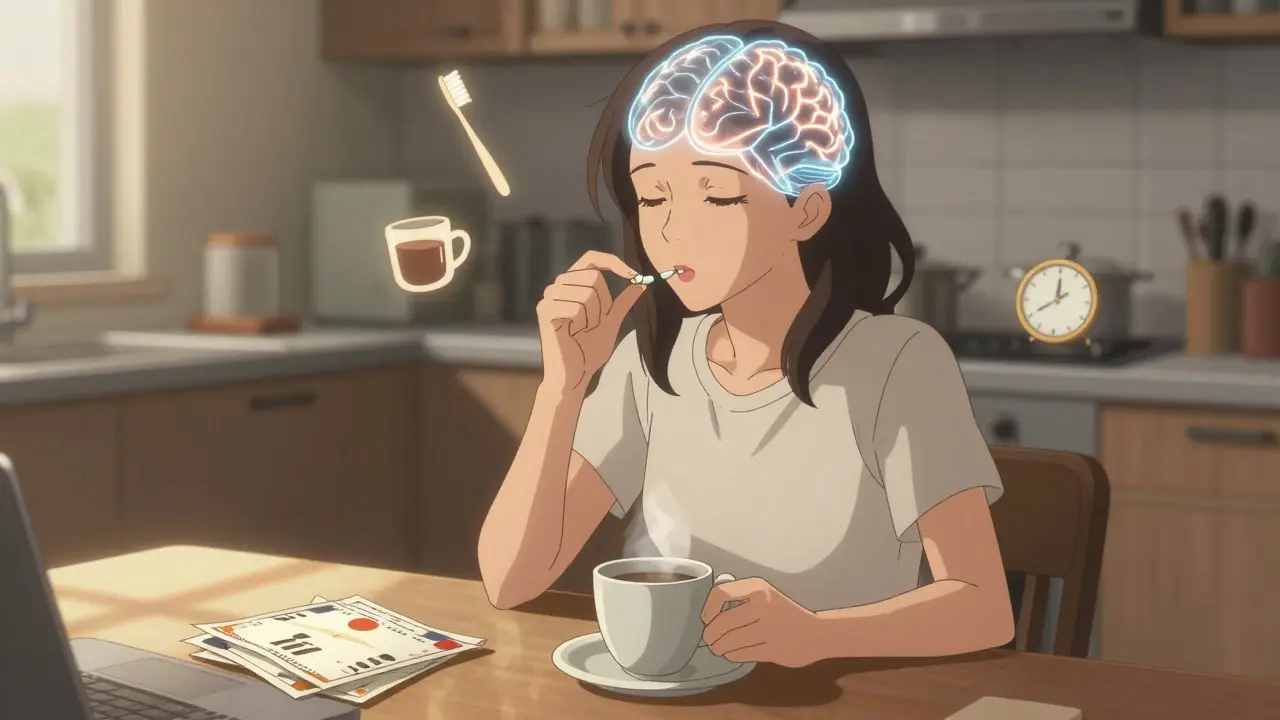
Your brain loves routines. When you do something the same way every day, it stops needing conscious effort. Brushing your teeth, drinking coffee, checking your mail-these are habits already wired into your day. Pairing your medication with one of them tricks your brain into treating pill-taking as just another part of the routine. It’s not about willpower. It’s about wiring. Research from the National Institutes of Health shows that people who link their meds to daily habits cut missed doses by 30-50%. A 2015 study of over 1,200 patients with chronic conditions found that those who used habit pairing were far more consistent than those who relied on alarms or pill organizers alone. And here’s the kicker: it costs nothing. No apps. No gadgets. Just your existing routine.The 3 Best Habits to Pair With Medication
Not every habit works for every person. But three stand out based on real-world data from pharmacies, clinics, and patient surveys:- Brushing your teeth - Especially effective for morning or nighttime meds. Central Pharmacy’s data shows a 92% adherence rate when people take their pills right after brushing. Why? It’s a fixed, non-negotiable routine for most people. You don’t skip brushing because you’re tired-you do it because it’s automatic.
- Eating meals - Perfect for meds that need food (like some diabetes or cholesterol drugs). Pairing with breakfast or dinner gives you a built-in time anchor. The American Diabetes Association recommends this for insulin and oral diabetes meds because it reduces the risk of low blood sugar and improves absorption.
- Checking your mail or sitting down for coffee - Great for daytime pills. If you take a pill at lunchtime, pair it with the moment you sit down after collecting your mail or making your coffee. It’s a quiet, predictable pause in the day that most people don’t skip.
How to Set It Up: A 4-Step Plan
You don’t need a doctor’s help to start. Here’s how to do it yourself in under a week:- Track your routine for 3-7 days. Write down what you do every day at the same time. When do you wake up? When do you eat? When do you brush your teeth? Don’t overthink it-just note the consistent moments.
- Match your meds to the habit. Look at your pill schedule. Which meds are taken once a day? Which need food? Which are time-sensitive? Match them to the most reliable habit. For example: morning blood pressure pill → after brushing teeth. Evening statin → with dinner.
- Place your meds where the habit happens. Put your pill bottle on the bathroom counter next to your toothbrush. Keep your lunchtime pills in a small container on the kitchen table. Visibility matters. Stanford Medicine found that placing meds near the habit location increases initial success by 31%.
- Stick with it for 21 days. That’s the average time it takes for a new behavior to become automatic, according to a 2020 study in the European Journal of Social Psychology. Don’t aim for perfection. Miss one day? Just get back on track the next.
What If Your Routine Isn’t Perfect?
Life isn’t a schedule. Shift workers, caregivers, and people with unpredictable days often struggle with habit pairing. And that’s okay. If your schedule changes daily, try this: pick two backup anchors. For example, if you usually take your pill with breakfast but work nights, have a second anchor: right after you wash your face before bed. Use a pill organizer to separate doses by time of day. Combine habit pairing with a simple phone alarm-just one, not five. The goal isn’t to eliminate all reminders. It’s to reduce the number you rely on. A 2022 study in the Journal of General Internal Medicine found that habit pairing still improved adherence by 23% even when combined with reminders. The key is consistency within a 30-minute window. Taking your pill at 7:15 one day and 7:45 the next? That’s fine. Taking it at 7:15 one day and 10:30 the next? That’s where problems start.What Doesn’t Work (And Why)
Many people try apps. They download Medisafe or MyTherapy. They set five alarms. They feel good for a week. Then they uninstall the app. A 2022 JMIR study found that 68% of people stop using medication apps after three months. Why? They’re intrusive. They’re easy to ignore. They don’t connect to your life-they interrupt it. Pill organizers help, but only if used correctly. A 2022 National Council on Aging survey found that 38% of older adults use them, but only 28% see real adherence gains. Why? They still require conscious action. You have to open the box, remember to take the pill, and put it in your mouth. Habit pairing removes the remembering part. And here’s a warning: habit pairing won’t fix everything. If you’re skipping pills because they make you feel sick, cost too much, or you don’t believe they work, no routine will help. That’s intentional nonadherence. It needs a different solution-like talking to your doctor about side effects or switching to a lower-cost generic.What the Experts Say
Dr. Jennifer L. Smith from the University of Michigan calls toothbrushing the “single most effective low-tech strategy” for morning meds. Her research shows a 43% increase in adherence when patients link pills to brushing. Dr. David S. Sobel from Kaiser Permanente says habit pairing builds neural pathways that turn compliance into automatic behavior-in as little as 21 days. That’s not magic. It’s neuroscience. The American Heart Association, CDC, and American Diabetes Association all recommend this method in their 2023 guidelines. The Agency for Healthcare Research and Quality rates it as “High Strength of Evidence” with a 0.82 effect size-meaning it works better than most medications for improving adherence.
Real Stories
On Reddit, a user named u/HealthyHabitHero wrote: “I used to miss my 8 AM meds 12 times a month. I started taking them right after making coffee. Six weeks later, I missed two. Now I don’t even think about it.” Another user, u/NightShiftStruggles, said: “I work nights. Habit pairing failed until I paired my meds with my post-shift shower. Now I take them every time I wash my face. It’s not perfect, but it’s reliable.” Central Pharmacy’s 2023 patient survey found that 89% of users said habit pairing was “the most helpful strategy” they’d ever tried. The most common reason? “I don’t have to remember. It just happens.”What’s Next?
Digital tools are catching on. MyTherapy’s 2023 update lets you link reminders to calendar events-so if you’re scheduled to make coffee at 7:30, the app nudges you then. Central Pharmacy’s RoutineSync tool analyzes your daily patterns over two weeks and suggests the best pairing. Mayo Clinic is testing AI that detects when you brew coffee or turn on the TV and triggers a gentle reminder. But here’s the truth: none of that matters if you don’t start with the basics. No app can replace the power of tying your pill to something you already do every day. You don’t need a smart home. You don’t need a fancy pillbox. You just need to know your routine-and where you can slip your meds into it.Final Tip: Start Small
Don’t try to pair all your meds at once. Pick one. The one you miss most. The one that’s easiest to link. Maybe it’s your blood pressure pill with your morning coffee. Or your antibiotic with your lunch. Get that one locked in. After 21 days, add another. Slow progress beats no progress every time.Medication adherence isn’t about discipline. It’s about design. Make the right choice the easy choice-and your body will thank you.
Can I pair my medication with any daily habit?
Not all habits are equally reliable. The best ones are consistent, non-negotiable, and happen at the same time every day-like brushing your teeth, eating breakfast, or checking your mail. Avoid habits that vary daily, like “when I get home from work,” unless you have a backup plan. Stick to routines you never skip.
What if I forget to take my pill one day?
Don’t panic. Missing one dose doesn’t undo all your progress. Just take it as soon as you remember-if it’s safe to do so. Then, get back on track the next day. The goal isn’t perfection. It’s consistency over time. One slip doesn’t break the habit.
Should I use a pill organizer with habit pairing?
Yes, especially if you take multiple pills. A pill organizer reduces confusion and makes it easier to see if you’ve taken your dose. When combined with habit pairing, adherence improves by 41% compared to using either method alone. Use the organizer as a visual backup-not the main trigger.
Is this only for older adults?
No. While seniors use it most (68% of those 65+ do), the method works for anyone with a stable routine-students, working parents, retirees. Studies show effectiveness across ages 18-85. The key isn’t age-it’s consistency in daily behavior.
Can I use this for antibiotics or short-term meds?
Absolutely. In fact, it’s especially helpful for short courses like antibiotics, where people often stop taking them once they feel better. Pairing with a daily habit (like brushing teeth) ensures you finish the full course, which helps prevent antibiotic resistance. The CDC now includes habit pairing in its 2024 antimicrobial resistance guidelines.
What if I have dementia or memory issues?
Habit pairing alone isn’t enough. People with dementia need caregiver support. Place meds where they’re visible, use a locked pillbox, and involve a family member or home health aide to supervise doses. The Alzheimer’s Association recommends combining habit cues with direct supervision for safety.
How long does it take to see results?
Most people notice improvement within two weeks. Full automaticity-where you don’t even think about taking the pill-usually takes 21-66 days, depending on how complex the routine is. Be patient. The first week is the hardest. Stick with it, and the habit will take over.
Can my pharmacist help me set this up?
Yes. Pharmacists spend an average of 8.7 minutes per patient explaining how to pair meds with daily habits. Ask them to review your pill schedule and suggest the best anchors. Many community pharmacies now offer this as part of standard counseling. It’s free and built into your medication review.


It's wild how much our brains rely on context to make things automatic. I used to forget my blood pressure med every other day until I started putting it next to my toothbrush. Now I brush, I take it, I go about my day. No thought required. It's like my body just knows. No app, no alarm, no willpower. Just biology doing what biology does best.
People overcomplicate adherence. It's not about discipline. It's about architecture. You design the environment so the right behavior is the path of least resistance. That's it. No magic. Just smart design.
I've seen friends try five alarms, pill organizers, phone reminders. They all burn out. But pairing with brushing teeth? That's the one that sticks. Because you're not adding a task-you're attaching to a ritual that's already sacred.
It's not even about the pill. It's about the rhythm. The toothpaste smell, the sink, the mirror-you're not remembering to take medicine. You're remembering to be you.
And honestly? That's the most powerful thing here. We don't want to be patients. We want to be people who live. Habit pairing doesn't make you compliant. It makes you whole again.
There's a quiet dignity in doing something simple, consistently. It doesn't need applause. It just needs to happen.
YES. This is the only thing that actually WORKED for me. I was taking my statin at night but always forgot. Then I put it on my nightstand next to my glasses. Now I put my glasses on → take pill → go to bed. No thinking. No stress. Just flow.
Also-STOP using apps. They're digital clutter. I deleted Medisafe after 3 weeks. It felt like being nagged by a robot. This method? Feels like self-care. Not surveillance.
Let me guess-you're one of those people who thinks 'brushing teeth' is some revolutionary hack. Newsflash: people have been doing this for decades. It's not science. It's common sense. And if you need a 21-day plan to figure out to take your meds with breakfast, maybe you shouldn't be in charge of your own health.
I'm 62 and have been on 5 meds for 12 years. This method changed my life. I paired my diabetes pill with my morning coffee. Now I don't even notice when I take it. It just happens. I used to miss 4-5 doses a month. Now it's maybe one every 3 months. And I didn't spend a dime.
People act like this is complicated. It's not. You just need to be honest about what you already do every day. And then stick the pill there.
Oh wow. Another ‘simple hack’ from the wellness industrial complex. Brush your teeth, take your pill. How novel. Next they’ll tell us to breathe while walking. I mean, if you’re so forgetful that you can’t remember to take a pill, maybe the real issue isn’t your routine-it’s your relationship with your own body. Or your meds. Or your doctor. Or the $800 co-pay.
But sure, let’s pretend this is a universal fix. Meanwhile, people are skipping insulin because they can’t afford it. But hey-put it next to your toothbrush. Problem solved.
It’s not ‘design.’ It’s distraction. And it’s insulting.
They say habit pairing works but they never mention the real reason it works: because it replaces the mental load with sensory cues. Brushing your teeth is tactile. Smells like mint. Feels like ritual. You don’t think-you feel. And that’s the whole point. Pills are invisible. Routines are visible. You’re not remembering. You’re reacting.
But here’s the dark side: this only works if you have a stable life. What about people working two jobs? Single parents? People with PTSD who can’t have routines? This advice is for the privileged. The system fails them. Then they blame the patient for not ‘just pairing it with coffee.’
It’s not about willpower. It’s about power. And the power is still with the people who can afford to have a routine.
I love this so much. I’m 28, work retail, and my schedule changes every week. I used to miss my thyroid med like clockwork. Then I paired it with my post-shift shower. I wash up → take pill → dry off. It’s not perfect, but it’s reliable. And I don’t feel like a failure when I miss a day. I just reset. No guilt. Just progress.
Also-thank you for saying it’s okay to have backup anchors. I had no idea that was a thing. I thought I was broken because I couldn’t stick to one routine. Turns out, I just needed flexibility. And now I’m actually consistent.
habits are just patterns of behavior that dont require conscious thought right so pairing meds with brushing teeth makes sense because you already do it without thinking but what if you dont brush your teeth? or if you do it at different times? or if you have a medical condition that makes brushing painful? like im a diabetic and my gums bleed all the time so brushing is a chore not a ritual
so this whole thing is built on the assumption that everyone has the same body and same life and that just isnt true
also 21 days? i heard 66. i think they just picked 21 because its catchy
This is the most helpful thing I’ve read all year. I started with my evening pill paired with turning off the lights. One week in, I didn’t miss once. Two weeks? I forgot once and just laughed. No drama. Just took it when I remembered. Now I’m adding my morning pill to my coffee. Slow and steady.
You don’t need to be perfect. You just need to be consistent. And this method makes that possible. I used to hate taking pills. Now I don’t even notice. That’s the win.
Thank you for writing this. So many people need to hear this.
Pharmacists can help with this. Ask them. They’re trained for it. I had mine review my schedule and suggest pairing my blood pressure med with my morning toast. It worked. No cost. No tech. Just a 5-minute chat.
Also-pill organizers are great as a backup. Not the main trigger. Use them to see if you missed one. Not to remind you.
While this method may be effective for some it is not universally applicable. Many patients have cognitive impairments physical limitations or environmental constraints that render such strategies ineffective. The emphasis on personal responsibility ignores systemic barriers to healthcare access and medication affordability. This is not a solution. It is a Band-Aid on a hemorrhage.
I took my dad’s meds for him for 3 years. He had dementia. We tried alarms. We tried apps. We tried pill boxes. Nothing worked. Then we put his daily pill next to his toothbrush. He’d brush. He’d take it. No questions. No resistance. Just routine.
It wasn’t magic. It was simplicity. And it gave us peace.
This is the most important public health insight of the decade. We’ve been treating adherence like a moral failure. It’s not. It’s a design flaw. And this fixes it. No apps. No gadgets. Just human behavior. Thank you for saying it so clearly.
I’ve shared this with my entire family. We’re all doing it now. One pill. One habit. One life.
Of course it works. You’re just attaching a pill to a behavior that already has emotional weight. Brushing teeth isn’t about hygiene. It’s about identity. So is coffee. So is dinner. You’re not taking a pill. You’re reaffirming who you are.
That’s why apps fail. They’re transactional. This is existential.
But let’s be real-this only works if you have the privilege of a stable routine. For the rest of us? We’re just trying not to die.