
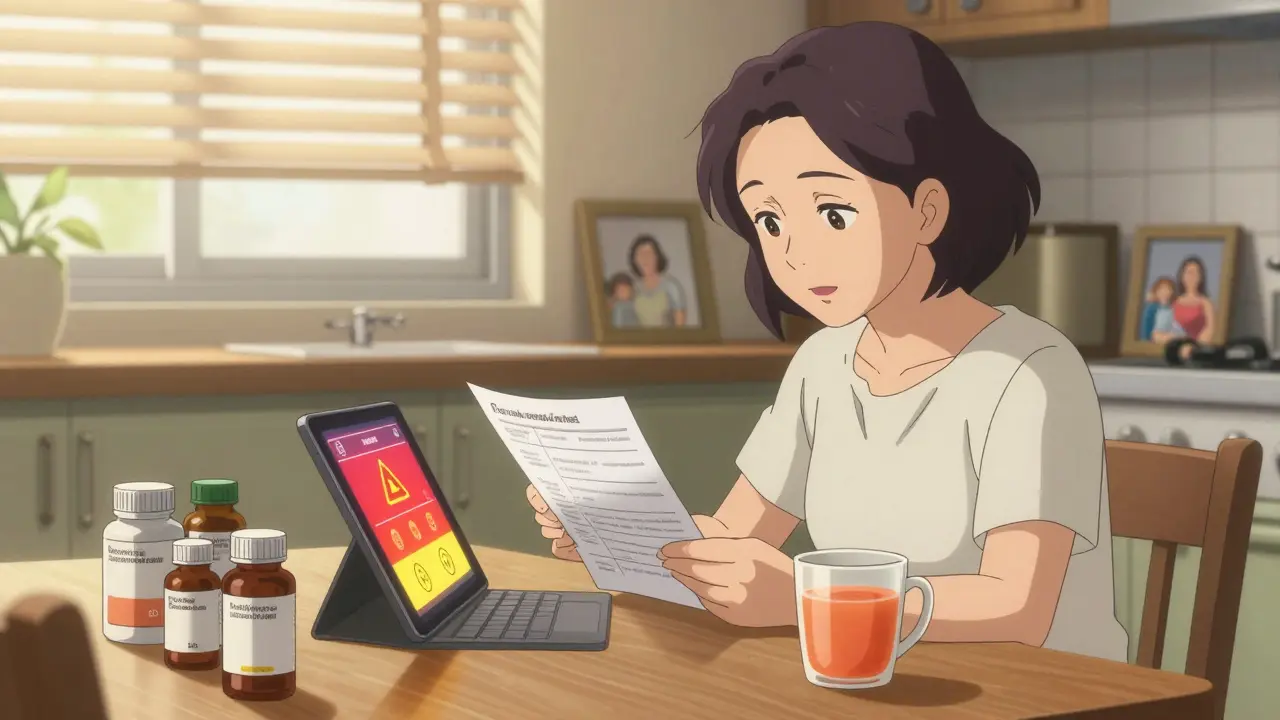
Every year, hundreds of thousands of people end up in the emergency room because of dangerous drug interactions. Many of these cases could have been avoided with a simple check at home. You don’t need to be a doctor to spot a risky combo - you just need the right tools and a clear plan. Whether you’re taking blood pressure pills, antidepressants, pain relievers, or herbal supplements, knowing how to check for interactions can keep you out of the hospital.
What Exactly Is a Drug Interaction?
A drug interaction happens when two or more substances affect each other in your body. This can make one drug stronger, weaker, or cause unexpected side effects. The most common types are:
- Drug-drug interactions - like mixing warfarin and ibuprofen, which can increase bleeding risk.
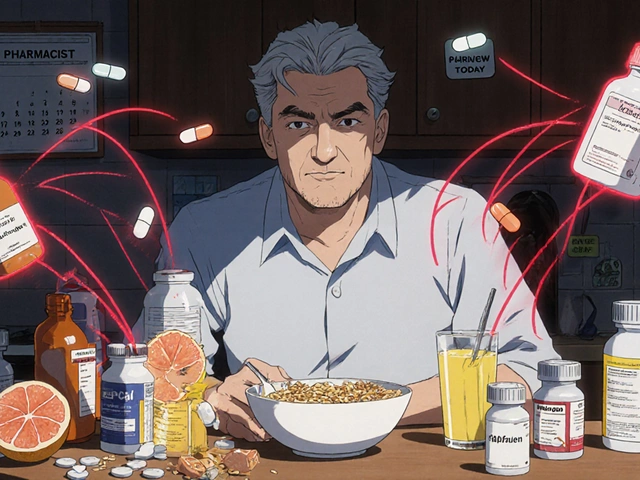
- Drug-food/drink interactions - such as grapefruit juice making cholesterol meds too strong.
- Drug-condition interactions - like taking decongestants if you have high blood pressure.
According to the CDC, these interactions cause over 1.3 million ER visits in the U.S. each year. The risk goes up sharply if you take five or more medications - which about 40% of adults over 65 do. But even younger people are at risk if they combine prescriptions with OTC painkillers, vitamins, or herbal remedies like St. John’s Wort.
How Drug Interaction Checkers Work
These aren’t magic tools - they’re databases built from decades of medical research. Tools like Drugs.com Interaction Checker and a free, widely used tool that scans over 80,000 possible interactions between prescription drugs, OTC medicines, supplements, and foods compare your medication list against known reaction patterns. They don’t guess. They use real data from clinical studies, pharmacology journals, and FDA reports.
Most checkers categorize results into three levels:
- Major - requires immediate action. Could cause organ damage, hospitalization, or death.
- Moderate - needs monitoring or dose changes. Common with blood thinners, antidepressants, or diabetes meds.
- Minor - unlikely to cause harm, but may cause mild side effects like dizziness or dry mouth.
Drugs.com detects 12% more moderate interactions than WebMD, according to independent testing by Farmington Drugs in 2023. That’s because its database includes 24,000 prescription drugs and 3,000 supplements. WebMD covers fewer and sometimes flags false positives - about 23% of users report alerts that turned out to be harmless.
Step-by-Step: How to Check Safely at Home
Here’s how to do it right - no guesswork, no panic.
- Make a complete list of everything you take. Include prescription drugs, OTC meds (like Tylenol, Benadryl, or Pepto-Bismol), vitamins (especially high-dose B12 or vitamin D), herbal supplements (ginkgo, garlic, turmeric), and even CBD. Don’t forget eye drops, patches, or inhalers - they count too.
- Write down the dose and why you take each one. Example: "Lisinopril 10mg daily - for blood pressure." This helps you spot duplicates or unnecessary meds.
- Use a trusted checker. Go to Drugs.com or WebMD. Both are free and updated regularly. Enter each item one by one. Avoid sketchy apps with no clear source - the FDA warned about 17 fake interaction checkers in 2022.
- Read the results carefully. Don’t just look for "major" alerts. Moderate interactions can become serious over time. If you see a red flag, write down the exact interaction and what it means.
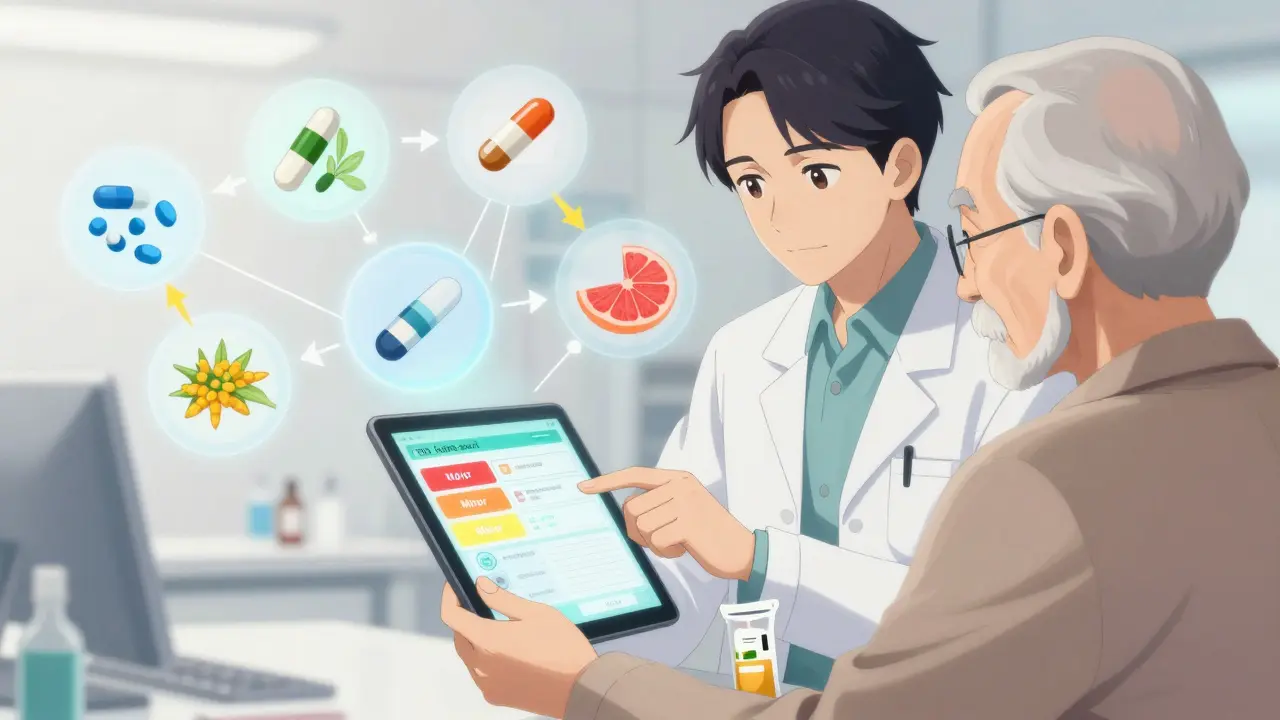
- Take the report to your pharmacist or doctor. Never stop or change a medication based on a website alone. Use the results as a conversation starter.
Pro tip: Use a pharmacy app like Medisafe and a mobile app that tracks medications, sends reminders, and can scan pill bottle barcodes to auto-fill your list. Over 1.2 million people use it to avoid mistakes. Scanning barcodes cuts input errors by 70%.
Common Mistakes People Make
Even with good tools, people still get it wrong. Here’s what usually goes wrong:
- Ignoring OTC meds. Many think "non-prescription" means "safe." But taking Advil every day with blood pressure meds can damage kidneys. Aleve and aspirin can thin your blood just like warfarin.
- Assuming supplements are harmless. St. John’s Wort can make antidepressants, birth control, and heart meds fail. Garlic and ginkgo increase bleeding risk before surgery.
- Not updating the list. If you stop a med or add a new one, update your checklist. The CDC recommends checking every 30 days.
- Not knowing generic names. Your doctor writes "hydrochlorothiazide," but you remember it as "water pill." Use the same name in the checker.
One real case from Farmington Drugs in 2022: A 68-year-old man took sertraline (an antidepressant) and St. John’s Wort daily. He didn’t think the supplement was a drug. The interaction triggered serotonin syndrome - a life-threatening spike in brain chemicals. He was hospitalized. The checker flagged it. He ignored it. That’s why this matters.
When to Trust the Tool - and When to Call a Pro
Drug interaction checkers are great for catching obvious risks. But they’re not perfect. Studies show they catch 70-80% of dangerous interactions - not all. Here’s when to go beyond the app:
- If you take five or more medications - talk to a pharmacist. Polypharmacy is too complex for a tool alone.
- If you have kidney, liver, or heart disease - your body processes drugs differently.
- If the checker flags something you’ve taken for years without issue - don’t panic. Ask your doctor if it’s a false positive.
- If you’re pregnant, breastfeeding, or managing a chronic condition - always get professional advice.
Dr. Susan Cornell’s 2023 study found that combining digital checkers with a pharmacist consultation reduced hospitalizations by 42% in Medicare patients. That’s the sweet spot: tech + human expertise.
What’s Changing in 2026?
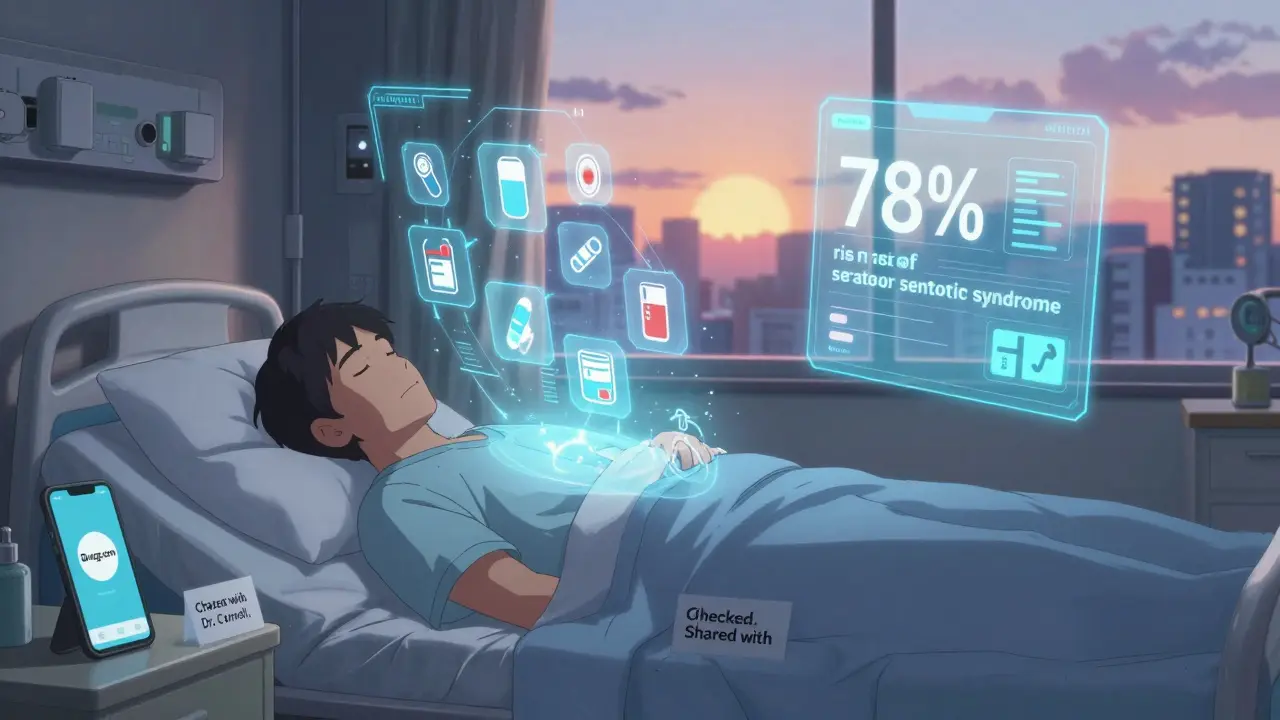
Tools are getting smarter. Drugs.com launched an AI severity predictor in September 2023 that estimates how likely an interaction is to cause harm - not just whether it exists. WebMD added 1,200 new supplement interactions in July 2023. And by mid-2024, the CDC plans to integrate interaction checkers directly into MyMedicare accounts, reaching 65 million users.
In the next few years, genetic testing will play a role. Companies like 23andMe are partnering with GoodRx to offer personalized interaction alerts based on how your body metabolizes drugs. Imagine knowing you’re a slow metabolizer of statins - and getting a warning before you take a new painkiller.
But don’t wait for the future. Start today. The tools are here. The data is reliable. And the stakes? Your health.
Final Tips to Stay Safe
- Keep all your meds at one pharmacy. It cuts interaction risks by 31%.
- Ask your pharmacist to review your list every six months - they’re trained for this.
- Never ignore a "moderate" alert. Many hospitalizations start with ignored moderate interactions.
- If you feel dizzy, confused, nauseous, or have unusual bruising after starting a new med - call your doctor. Don’t wait.
Can I rely on my phone’s medication app to catch all interactions?
No. While apps like Medisafe or MyTherapy are great for tracking and reminders, they use the same databases as websites like Drugs.com. They don’t have access to private medical records or new research that hasn’t been added yet. Always cross-check with a trusted web-based checker and talk to your pharmacist.
Are herbal supplements really dangerous with prescription drugs?
Yes. Many people assume "natural" means safe, but that’s not true. St. John’s Wort can reduce the effectiveness of birth control, antidepressants, and heart meds. Garlic and ginkgo can thin your blood and cause dangerous bleeding during surgery. Turmeric can interfere with diabetes drugs. Always list supplements just like prescriptions when checking for interactions.
What if the checker says there’s an interaction but my doctor says it’s fine?
Trust your doctor - but ask why. Sometimes, the interaction is known but considered low-risk in your specific case. For example, a mild interaction might be safe if you’re on a low dose or have healthy kidneys. Ask your doctor to explain the reasoning. Then, write it down and keep it with your medication list.
Do I need to check interactions if I only take one prescription?
Yes. Even one prescription can interact with OTC meds, supplements, or food. For example, taking a statin with grapefruit juice can cause muscle damage. Taking antibiotics with antacids can make them less effective. You don’t need five drugs to be at risk.
Can I use these tools if I live outside the U.S.?
Yes. Tools like Drugs.com and WebMD include international brand names and generic equivalents. If you take a medication sold under a different name where you live, search by its active ingredient (e.g., "atorvastatin" instead of "Lipitor"). Always confirm with your local pharmacist if you’re unsure.

Just used Drugs.com for the first time after my grandma almost got hospitalized. She was taking fish oil + warfarin and didn’t realize it was a red flag. The checker flagged it as "major" - turned out her PT/INR was creeping up for weeks. Scary stuff. I printed the report and took it to her pharmacist. They adjusted her dose and added a weekly blood test. Best 5 minutes I’ve ever spent online. Seriously, if you take more than 3 things, just do it. No excuses.
I’ve been doing this for years - list everything, even the damn gummy vitamins. My wife thinks I’m obsessive, but last year I caught a sneaky interaction between her thyroid med and a calcium supplement she’d been taking since 2019. The checker said "moderate," but I knew enough to push for a lab check. Turns out her TSH was triple what it should’ve been. She’s been stable since. Point is: don’t trust your memory. Write it down. Update it. Treat your meds like a spreadsheet. It’s not paranoia - it’s basic hygiene.
Also, never ignore "minor." Minor is just the quiet before the storm. I’ve seen people get wrecked by "minor" interactions that built up over months. Dizziness. Confusion. Falls. All avoidable.
And yeah, I know some folks roll their eyes at "supplements." But St. John’s Wort isn’t tea. It’s a potent MAOI. Same with garlic pills. They’re not harmless. They’re pharmacologically active. Your body doesn’t care if it came from a tree or a lab.
Pro tip: Use Medisafe. Scan the barcode. It saved me when I switched from lisinopril to losartan. I forgot the old name. The app auto-updated. No guesswork. No typos. Just clean data.
Bottom line: You don’t need to be a doctor. You just need to be a little bit lazy and a lot paranoid. Your future self will thank you.
Anyone who doesn’t check for drug interactions is a walking time bomb. Seriously. You think you’re being "natural" by popping St. John’s Wort? You’re just one bad combo away from serotonin syndrome. And don’t even get me started on people who take Tylenol every day like candy. Liver failure isn’t a theory - it’s a headline waiting to happen.
And yes, I’m calling you out. You know who you are. The guy who takes 12 different pills and says "I’ve been fine for years." That’s not immunity - that’s luck. And luck runs out.
My uncle died because he trusted his "pharmacist" at the corner store. He didn’t even know the difference between generic and brand. He took two different versions of the same drug. Double dose. Cardiac arrest. 62 years old.
This isn’t about convenience. It’s about survival. If you’re not checking, you’re gambling with your life. And that’s not just irresponsible - it’s selfish. You think your family wants to bury you because you were too lazy to type a few meds into a website?
Stop. Just stop. Do the damn check. Now.
As a clinical pharmacist with 18 years in the trenches, let me drop some truth bombs: Drugs.com isn’t just "better" than WebMD - it’s the gold standard. WebMD’s algorithm still flags 23% false positives - like pairing ibuprofen with a low-dose aspirin. That’s not a risk - that’s noise. Drugs.com? Its 24K-drug + 3K-supplement DB is built on real-world pharmacovigilance data from the FDA’s FAERS and EMA’s EudraVigilance.
And let’s not forget the pharmacokinetic nuance: CYP450 polymorphisms. If you’re a CYP2D6 poor metabolizer (20% of Caucasians), even "minor" interactions can blow up. That’s why I tell my patients: don’t just check the interaction - check your genotype if you’re on antidepressants, beta-blockers, or opioids.
Also, "moderate" isn’t a suggestion - it’s a red flag with a siren. I’ve seen 70-year-olds on warfarin + trimethoprim develop intracranial bleeds because they thought "it’s just a UTI med." It’s not. It’s a CYP2C9 inhibitor with a half-life longer than your marriage.
And yes - scan the barcode. Use Medisafe. Automate. Your brain isn’t a database. Stop pretending it is.
2026’s AI severity predictor? Finally. Took long enough. But the real win is CDC’s MyMedicare integration. 65M users. That’s not innovation - that’s public health infrastructure. We’re finally catching up.
Just wanted to say thank you for this post. I was scared to even look into my meds until I found this. I’m 32, take 4 prescriptions, and thought I was fine. Then I started tracking everything - including my turmeric capsules. Found out it was bumping up my blood thinners. Scared me straight. Now I use Medisafe, scan everything, and see my pharmacist every 6 months. It’s not a chore - it’s self-care.
Also, my mom used to say "if it’s natural, it’s safe." I used to believe her. Now I know better. Natural doesn’t mean gentle. It means potent. And potent can kill.
Keep doing this. More people need to see this. You’re helping.
Oh wow. So we’re all supposed to become pharmacists now? Because clearly, the FDA, the AMA, and every doctor in America are just too lazy to warn us. Let me guess - next you’ll tell us to memorize the entire Merck Manual before we can take a nap.
Meanwhile, my 80-year-old neighbor takes 17 pills and still drives. She doesn’t use an app. She uses a pill organizer labeled "morning," "afternoon," and "oops." And guess what? She’s alive. Healthy. Happy.
Maybe the real problem isn’t drug interactions - it’s anxiety masquerading as advice.
This is a textbook example of the erosion of personal responsibility in modern America. Instead of teaching citizens to think critically, we hand them apps and tell them to scan barcodes. We’ve turned healthcare into a digital checklist - a series of checkboxes to be ticked by algorithmic overlords.
Where is the dignity in relying on a website to tell you whether your medicine is safe? Where is the wisdom of the physician? The intuition of the patient? We have become a nation of data-dependent automatons, terrified of our own bodies.
And let us not forget: the FDA, WebMD, and Drugs.com are corporate entities. Who funds them? Who owns the data? Who profits from your fear?
True safety comes from discipline, not digitization. From knowledge, not apps. From the ancient art of listening - to your body, to your doctor, to your ancestors - not from a 2023 database update.
Stop outsourcing your health. Reclaim it. Or be prepared to be managed - like cattle - by the very systems that profit from your dependence.
Let’s clarify the pharmacology here: CYP3A4 inhibition by grapefruit is a first-pass effect - it’s not about dosage, it’s about enzyme saturation. A single 200mL glass can inhibit metabolism for 72 hours. That’s why even occasional consumption is risky with statins, calcium channel blockers, or immunosuppressants.
Also, St. John’s Wort induces CYP3A4 and P-glycoprotein - it doesn’t just "interact," it actively reduces plasma concentrations of substrates. Birth control failure rates jump from 0.3% to 9% in users of SJW + oral contraceptives. That’s not anecdotal. That’s Level 1 evidence.
And yes - the CDC’s 2024 integration into MyMedicare is monumental. It’s the first time federal infrastructure has directly interfaced with consumer-facing pharmacovigilance tools. This isn’t convenience. It’s systemic risk mitigation at scale.
For those dismissing "moderate" interactions: the median time from first flagged interaction to hospitalization is 117 days. Not months. Not years. 117 days. You think that’s a coincidence?
Oh sure. Let’s all panic because a website says so. What’s next? QR codes on your toilet paper to check for "bowel interaction risks?"
Here’s the real story: Big Pharma and health tech companies want you scared. Why? So you’ll buy more apps, more tests, more "premium" subscriptions. That "Drugs.com" site? They get paid every time you click. Every alert = revenue.
And don’t get me started on "genetic testing for drug metabolism." That’s just the next frontier for insurance discrimination. You think they’ll use it to help you? No. They’ll use it to deny you coverage.
Trust your body. Trust your doctor. Not a website that’s funded by ad revenue and data brokers.
I’m Nigerian, live in Houston, and I’ve been helping my auntie here navigate her meds since she moved. She takes 11 pills. No one told her about the grapefruit thing. No one warned her about the turmeric. I found this post, printed it, sat with her, and went through every bottle. She cried. Said no one ever cared enough to explain.
It’s not about tech. It’s about care. We need more of this - simple, clear, no jargon. Just: here’s what to do. Here’s why. Here’s how.
And yeah - I used Medisafe. Scanned every bottle. It’s a game-changer. My auntie now has a voice reminder that says "Don’t forget: no orange juice with your simvastatin." She laughs. But she listens.
This isn’t fear. It’s love. And we need more of it.
Let’s be real: this whole system is a distraction. The real issue isn’t drug interactions - it’s that 80% of Americans can’t afford to see a pharmacist. They’re using WebMD because they can’t get a real consult. The tools are free, but the care isn’t.
And don’t get me started on the racial bias in pharmacogenomics. Most databases are built on white, middle-class populations. What about African variants of CYP2D6? Or the fact that African Americans metabolize beta-blockers differently? The app doesn’t know. The algorithm doesn’t care.
This isn’t safety. It’s surveillance with a pretty UI.
Welp. I guess I’m the guy who started this thread. Just got a reply from my pharmacist - she said my list was the most complete she’s ever seen. Even included my CBD tincture and the eye drops. She said most people forget the drops. Turns out, eye drops can cause systemic interactions too. Who knew?
Thanks to everyone who chimed in. I didn’t know about CYP polymorphisms. I’m getting tested next month. If I live long enough, I’ll report back.