

Most people think of aspirin as a simple pain reliever. But for about 1 in 10 adults with asthma, taking even a single tablet can trigger a dangerous reaction - wheezing, chest tightness, nasal congestion, and sometimes a trip to the emergency room. This isn’t an allergy. It’s aspirin-exacerbated respiratory disease - or AERD - a chronic condition that links asthma, nasal polyps, and sensitivity to common painkillers like ibuprofen and naproxen.
What Exactly Is AERD?
AERD, sometimes called Samter’s Triad, isn’t three separate problems. It’s one disease with three clear signs: persistent asthma, recurring nasal polyps, and severe reactions to aspirin and other NSAIDs. These symptoms usually show up together in adulthood, often between ages 20 and 50. Unlike childhood asthma, AERD doesn’t fade with time. It gets worse.
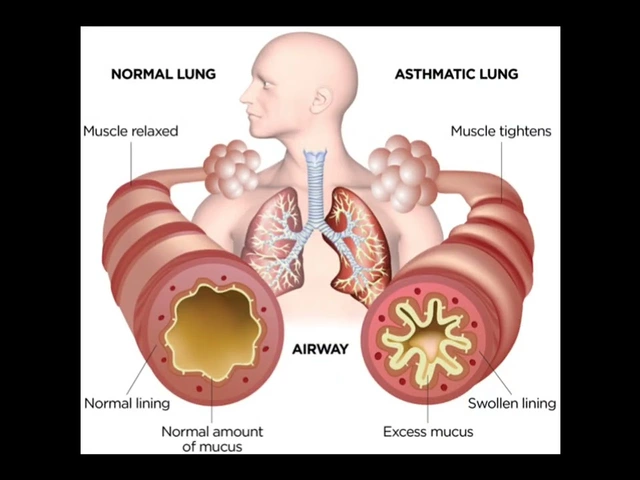
What happens in the body is complex. Normally, your cells break down fats called arachidonic acid into different chemicals - some that cause inflammation, others that calm it down. In AERD, this balance breaks. You make too many inflammatory leukotrienes and not enough protective prostaglandins. This triggers a flood of immune cells called eosinophils into your airways and sinuses. The result? Swelling, mucus, and polyps that block your nose and lungs.
The key point? NSAIDs don’t cause AERD. They just reveal it. If you’ve had asthma and nasal polyps for years and suddenly can’t take Advil without wheezing, you might have AERD.
How Do You Know If You Have It?
The symptoms are unmistakable if you know what to look for. Over 98% of AERD patients have constant nasal congestion. Nearly everyone develops nasal polyps - soft, grape-like growths in the sinuses that block airflow and kill your sense of smell. More than 90% lose some or all of their ability to smell. Sinus infections come back again and again, even after surgery.
Down in the lungs, asthma is worse. Wheezing, coughing, chest tightness - these aren’t mild. People with AERD visit the ER 2.3 times more often than other asthma patients. Hospital stays are 1.8 times more common. Standard inhalers? They only work well for about 35% of AERD patients.
And then there’s the alcohol factor. Most people don’t realize it, but 75% of AERD patients react to alcohol - even one glass of wine or beer. It can cause the same nasal blockage, chest tightness, and flushing as aspirin. Many doctors miss this. Patients report being told they’re “just sensitive to alcohol” when it’s actually part of the same disease.
Reactions to NSAIDs usually hit within 30 to 120 minutes. You might get a pounding headache, watery eyes, stomach pain, or a rash. But the most dangerous sign? Sudden, severe breathing trouble after taking a common painkiller.
Why Is It So Hard to Diagnose?
Most patients wait 7 to 10 years before getting the right diagnosis. Why? Because AERD doesn’t show up on standard allergy tests. Skin prick tests and blood IgE tests come back negative. So doctors assume it’s just “bad asthma” or “chronic sinusitis.”
Many patients go through multiple sinus surgeries - sometimes four or five - only to have polyps grow back within months. One Reddit user, PolypWarrior87, shared that it took 11 years and four ENT specialists before someone finally connected his asthma attacks after taking Advil to his nasal polyps.
The problem isn’t just patient confusion. Many primary care doctors and even some allergists aren’t trained to recognize AERD. A 2022 survey found that 65% of AERD patients struggled to find a doctor who understood their condition. Average ratings for general practitioners treating AERD hover around 2.8 out of 5. Specialists? They score 4.3.

What Are the Treatment Options?
There’s no cure - but there are ways to take control.
1. Avoid NSAIDs - This is the first step. But it’s not enough. Avoiding aspirin and ibuprofen won’t stop polyps from growing or asthma from worsening. It just prevents acute reactions.
2. Steroid Sprays and Inhalers - Nasal corticosteroids help shrink polyps temporarily. Asthma inhalers keep airways open. But as noted, only 35% of patients get full control with these alone.
3. Biologics - Drugs like dupilumab (Dupixent) target the specific inflammatory pathways in AERD. They reduce polyp size by 50-60% and improve breathing. But they cost $38,500 a year, and only 38% of patients have insurance that covers them.
4. Aspirin Desensitization - This is the most effective long-term treatment. Under medical supervision, you’re given gradually increasing doses of aspirin over 2-3 days until your body no longer reacts. Then you take a daily low dose (650 mg twice a day) forever.
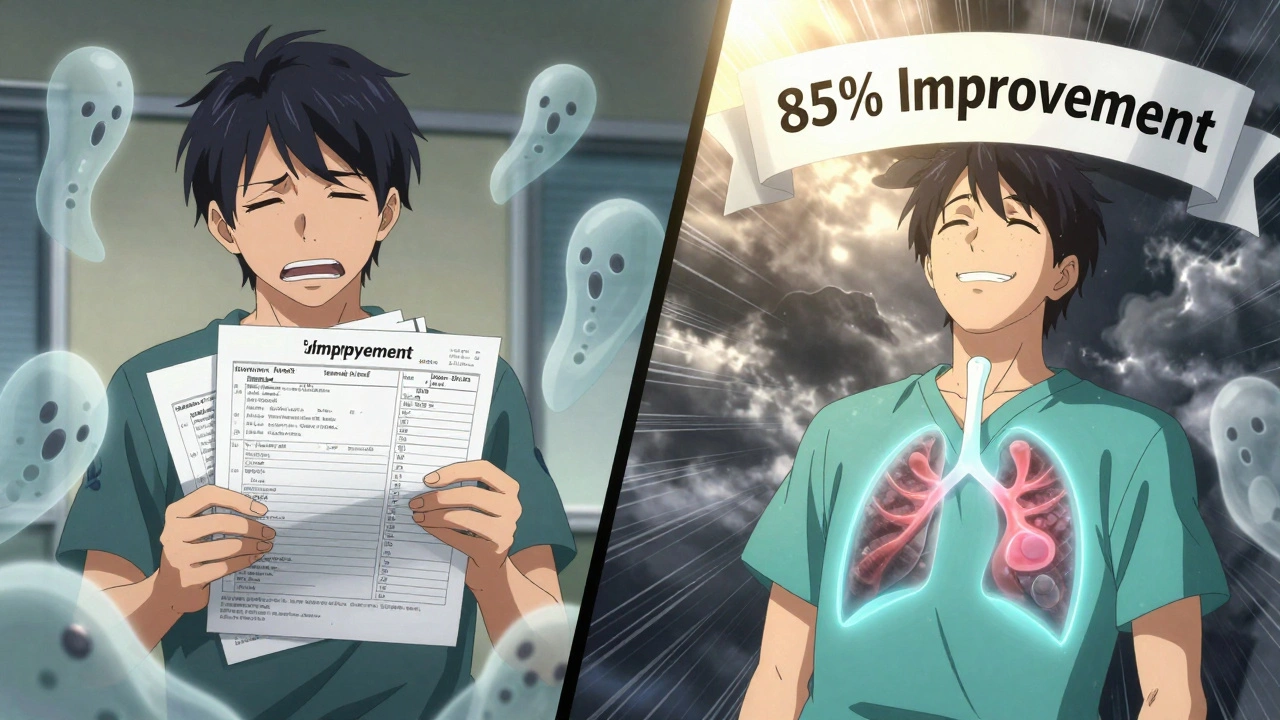
Studies show 85% of patients who complete desensitization see major improvements: fewer sinus infections, slower polyp regrowth, better asthma control, and fewer ER visits. One patient, NoseFree99, said his polyps stopped coming back every 6 months - now they take 3 years.
Success rates are high - 92% at top centers like the University of Pennsylvania. But only 12% of allergy clinics in the U.S. offer it. And it requires a hospital stay. Many patients avoid it because they’re scared of the process.
The Real Cost of Living With AERD
AERD isn’t just a medical condition - it’s a financial burden. With about 1.2 million Americans affected, it costs the system $1.8 billion a year. Why? Repeated sinus surgeries average $15,000 each. Emergency visits add up fast. And biologics? They’re expensive and hard to get.
Patients also lose quality of life. Smell is gone. Breathing is hard. Sleep is poor. Work and social life suffer. A 2022 survey of 1,243 AERD patients found that 68% felt their quality of life improved after desensitization. But 42% had bad reactions during the process. That fear keeps people from treatment.
And there’s inequality. Black and Hispanic patients wait 3.2 years longer for diagnosis than white patients. That delay means more surgeries, worse lung damage, and higher costs.
What’s Changing in 2025?
Research is moving fast. In June 2023, the FDA gave breakthrough status to a new drug called MN-001 (lodadustat), which targets leukotrienes and cut polyp regrowth by 70% in early trials. A national patient registry, backed by $5.2 million from the NIH, is now tracking 2,000 AERD patients to find better treatments.
Experts predict that by 2028, precision medicine will reduce the need for sinus surgery by 40%. The goal isn’t just to manage symptoms - it’s to stop the disease before it damages your lungs and sinuses permanently.
But progress depends on awareness. If you have asthma and nasal polyps - especially if you react to aspirin or alcohol - don’t wait. Ask for a referral to an AERD specialist. There are only about 35 such centers in the U.S. But they exist. And they can change your life.
Where to Start
If you suspect AERD, here’s what to do:
- Stop taking aspirin, ibuprofen, naproxen, and other NSAIDs until you’re evaluated.
- Write down every time you’ve had a reaction - including after drinking alcohol.
- Find an allergist or immunologist who specializes in AERD. The Samter’s Society (samterssociety.org) has a directory.
- Ask about aspirin desensitization. It’s not for everyone, but if you’re a candidate, it’s the most effective treatment available.
- Join a patient community. Thousands of people share tips, experiences, and support online.
You don’t have to live with constant congestion, recurring surgeries, or fear of painkillers. AERD is rare, but it’s real. And with the right care, you can take back your breathing - and your life.
Is AERD the same as a food or drug allergy?
No. AERD is not an IgE-mediated allergy like peanut or penicillin allergies. It’s an immune system imbalance triggered by the way your body processes certain painkillers. Standard allergy tests won’t detect it. The reaction is caused by biochemical changes in your airways, not an immune response to a foreign protein.
Can I take Tylenol if I have AERD?
Yes. Acetaminophen (Tylenol) does not inhibit COX-1 the same way aspirin or ibuprofen do, so it’s generally safe for AERD patients. However, some people still react to high doses or long-term use. Always start with a low dose under your doctor’s guidance.
Do I need to avoid all alcohol forever?
Not necessarily. About 75% of AERD patients react to alcohol, but reactions vary. Some can tolerate small amounts of certain types, like clear spirits, while others react to wine or beer. Keeping a symptom diary helps identify triggers. Desensitization to aspirin often reduces alcohol sensitivity over time.
If I’ve had sinus surgery, does that mean I don’t have AERD?
No. In fact, frequent sinus surgeries are a red flag for AERD. People with AERD have polyp recurrence rates of 70-100% within 18 months after surgery - much higher than non-AERD patients. If your polyps keep coming back, AERD should be suspected.
Can children get AERD?
Very rarely. AERD almost always begins in adulthood, typically between ages 20 and 50. If a child has asthma and nasal polyps, other causes like cystic fibrosis or primary ciliary dyskinesia are more likely. AERD is not inherited and doesn’t appear in childhood.
What happens if I stop taking daily aspirin after desensitization?
Your symptoms will return. The daily aspirin dose keeps your immune system regulated. If you stop, inflammation returns within days to weeks. Polyps begin regrowing, asthma worsens, and you may lose the benefits of desensitization. It’s a lifelong commitment - but for most, the trade-off is worth it.
Are there any natural remedies for AERD?
There’s no proven natural cure. Some people try omega-3 supplements or anti-inflammatory diets, but these don’t reverse the underlying immune imbalance. Avoiding NSAIDs and alcohol, using nasal rinses, and following medical treatment are the only proven strategies. Don’t delay real treatment for unproven alternatives.


So let me get this straight - we’re telling people to avoid ibuprofen, naproxen, AND alcohol, but Tylenol is fine? Meanwhile, Big Pharma’s quietly pushing biologics that cost more than a Tesla. Someone’s making bank while we’re all just trying not to suffocate in our own sinuses.
Let’s be real - this isn’t medicine, it’s a corporate extortion scheme. You get diagnosed with AERD, you’re handed a lifetime prescription for $38K/year drugs, forced into a 3-day hospital ordeal just to get back to baseline, and then told to take aspirin forever like it’s a vitamin. Meanwhile, the NIH funds another registry instead of a cure. Pathetic.
As someone who’s lived with this for 14 years, I can confirm: the smell loss is the worst part. Not the wheezing. Not the surgeries. It’s the moment you realize you can’t smell your child’s hair, your partner’s coffee, or rain on pavement. That’s not a symptom - that’s a grief.
If you’re reading this and think you might have AERD - please, don’t wait. I was told I had ‘chronic allergies’ for eight years. I had five sinus surgeries. I lost my sense of smell completely. Then I found a specialist. Desensitization changed my life. I can breathe. I can sleep. I can smell my dog again. It’s not easy - but it’s worth it.
AERD exists. Avoid NSAIDs. See specialist. Done.
Just read this article after my third nasal polyp surgery in three years - and I’ve been avoiding NSAIDs since 2018. I still get full-on asthma attacks after one glass of wine. No one told me alcohol was part of this. My allergist said it was ‘just a coincidence.’ Now I’m researching desensitization. If you’re reading this and you’re in the same boat - you’re not alone. There’s a community out there. Reach out.
Been there. Done that. Got the scar tissue and the PTSD from the ER. Desensitization was terrifying - I thought I was gonna die. But now I take my aspirin like toothpaste. No more polyps. No more panic attacks when I reach for Advil. Just… breathe. It’s not perfect, but it’s better than being a prisoner in your own body.
Western medicine is a scam. In India, we treat these things with turmeric, neem, and pranayama. You don’t need expensive drugs or hospital stays. You need discipline. You need ancient wisdom. This whole AERD narrative is just another way for the West to sell you pills you don’t need.
Hey, I’m from India too - and I’ve got AERD. I tried turmeric, yes. But my polyps came back worse. I’m now on dupilumab and taking low-dose aspirin daily. It’s expensive, but I got it through a clinical trial. Shalini - I get your pride in traditional medicine, but sometimes science saves your life. I’m alive because I listened to both.
Let me paint you a picture: You’re at a BBQ. Your buddy hands you a beer. You take one sip. Suddenly your nose is a slammed door, your chest feels like a vise, and your lungs are full of wet cement. And you’re smiling because you don’t want to be ‘that guy’ who ruins the party. That’s AERD. It’s not dramatic - it’s quiet, relentless, and lonely. And no one sees it until you’re on the floor gasping.
Pathetic. Another article written by a pharma-funded influencer pushing desensitization like it’s a miracle. The real problem? The medical system doesn’t care. They’d rather bill you for five surgeries than invest in real research. This isn’t science - it’s profit-driven triage disguised as compassion.
I want to thank everyone sharing their stories. I’ve been quietly living with this for years - afraid to speak up because I didn’t want to sound like a hypochondriac. But reading this, I realize I’m not broken. I’m not failing. I’m just fighting a disease no one taught us about. If you’re out there feeling alone - you’re not. We’re here. And we’re learning together.
Did you know the FDA’s breakthrough designation for MN-001 was pushed through because a lobbyist’s daughter had AERD? The NIH registry? Funded by a pharmaceutical consortium. The ‘experts’ writing these guidelines? All get paid by biotech firms. You think this is medicine? It’s a well-oiled PR machine. Desensitization works? Maybe. But it’s not because it’s science - it’s because they’ve spent decades making you believe it is.