

Starting a new medication can feel like a big step-especially when you’re already taking others. What you might not realize is that even harmless-seeming drugs can clash in dangerous ways. A simple combo like a statin and a blood pressure pill could spike your muscle damage risk. Or a common herbal supplement might make your blood thinner useless. These aren’t rare edge cases. Drug interactions happen far more often than most people think, and they’re one of the top causes of preventable hospital visits.
Why Drug Interactions Happen
Drug interactions aren’t random accidents. They follow clear patterns. There are two main types: pharmacokinetic and pharmacodynamic.Pharmacokinetic interactions change how your body handles the drug. Think of it like traffic on a highway. One drug might slow down the breakdown of another by blocking liver enzymes-especially CYP3A4, which processes about half of all commonly prescribed medications. For example, if you start taking diltiazem (a heart medication), it can dramatically slow how fast your body clears simvastatin (a cholesterol drug). That means simvastatin builds up to dangerous levels. The result? Muscle pain, weakness, even kidney failure. That’s why guidelines say: if you’re on diltiazem, never take more than 10 mg of simvastatin a day.
Pharmacodynamic interactions are about effects. Two drugs might do the same thing-like making you drowsy or thinning your blood-and together, they amplify the result. Take opioids and promethazine (a nausea pill). Alone, each causes drowsiness. Together? They can dangerously slow your breathing. Or combine warfarin with amiodarone (an irregular heartbeat drug), and your bleeding risk jumps by 30-50%. That’s not a guess-it’s backed by clinical data.
Who’s at Highest Risk?
It’s not just older adults. But they’re the most vulnerable. Over 40% of people over 65 take five or more medications. That’s not unusual-it’s the norm. And with each added drug, your chance of a bad interaction climbs. If you’re on eight medications, your risk isn’t just doubled-it’s multiplied.People with kidney or liver problems are also at higher risk. These organs clean drugs out of your system. If they’re not working well, drugs stick around longer, increasing interaction chances. Studies show interaction risks jump 2.5 to 4 times in patients with low kidney function (eGFR under 30).
And then there’s the supplement problem. Most people don’t tell their doctor about vitamins, herbs, or CBD. Yet St. John’s Wort-a popular mood booster-can slash the effectiveness of cyclosporine (used after transplants), birth control pills, and even some antidepressants by 40-60%. A 2022 survey found 68% of patients never mention supplements to their provider. That’s a huge blind spot.
What You Must Do Before Starting a New Drug
Don’t wait for side effects to show up. Be proactive. Here’s what to do before you even take your first pill.- Make a full list of everything you take. Not just prescriptions. Include over-the-counter meds (like ibuprofen or antacids), supplements, herbal teas, and even recreational substances like alcohol or marijuana. Write down the dose and how often you take it.
- Bring this list to every appointment. Even if you’ve given it before. Medications change. So do your health conditions. Your list should be updated every time you see a provider.
- Ask your pharmacist to review it. Pharmacists catch 40-60% more interactions than doctors alone. They’re trained to spot hidden risks. Many pharmacies offer free medication reviews-ask for one.
- Check for known high-risk combos. Some pairings are so dangerous they’re listed in official guidelines. Examples: warfarin + amiodarone, simvastatin + diltiazem, MAO inhibitors + aged cheese (yes, cheese). If you’re prescribed one of these, ask: Is there a safer alternative?

What Your Doctor Should Do
Good prescribing isn’t just about writing a script. It’s about thinking ahead.Doctors should follow four key steps when starting a new medication:
- Minimize the number of drugs. If you’re on six medications, ask: Can any be stopped? Studies show cutting just one drug reduces interaction risk by 15-25%.
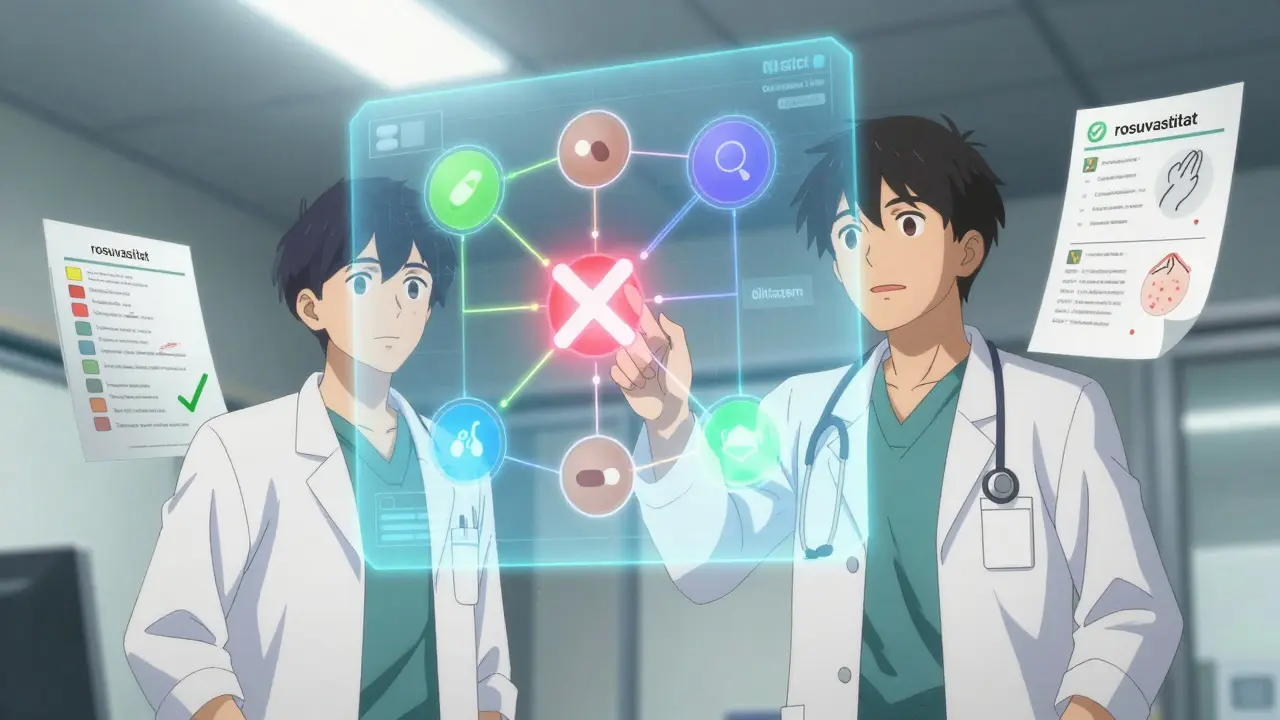
- Choose alternatives wisely. If you need a statin and are on a calcium channel blocker, don’t default to simvastatin. Pravastatin or rosuvastatin don’t interact the same way. Ask for the safer option.
- Plan for monitoring. For high-risk combos like warfarin and amiodarone, your INR (a blood clotting test) needs to be checked within 3-5 days of starting the new drug. Then weekly for a month. No one should start this combo without a clear monitoring plan.
- Use clinical tools. Modern systems flag interactions-but they’re not perfect. Doctors need training to understand the severity levels: contraindicated, major, moderate, minor. A 2023 study showed physicians ignore 95% of alerts-but when the warning says “do not use” or “dose must be cut by 50%,” they follow it 75% of the time.
What to Watch For in the First Week
The first week after starting a new drug is the most critical. That’s when interactions often show up.Pay attention to these signs:
- Unusual fatigue or weakness. Could be muscle damage from a statin interaction.
- Unexplained bruising or bleeding. Bleeding risk from blood thinners combined with NSAIDs or supplements like fish oil.
- Dizziness or fainting. Could mean your blood pressure dropped too low from a combo.
- Confusion or extreme drowsiness. Common with opioid + sedative combos.
- Upset stomach or dark urine. Possible liver stress from enzyme-blocking interactions.
If you notice any of these, don’t wait. Call your doctor or pharmacist. Don’t stop the drug yourself-but don’t ignore it either.
How Technology Helps (and Hurts)
EHR systems and pharmacy apps promise to catch interactions before they happen. But they’re flawed.On the good side: AI tools like IBM Watson Medication Safety now predict severe interactions with over 92% accuracy. That’s better than most humans.
On the bad side: Alert fatigue is real. Doctors see so many pop-up warnings-many of them low-risk-that they start ignoring them all. A 2023 study found physicians override 90-95% of interaction alerts. The system is broken.
Here’s what’s changing: Starting in 2025, all certified electronic health records must use standardized severity labels: contraindicated, major, moderate, minor. That’s a step forward. But it won’t fix the problem unless doctors are trained to respond to the right alerts.
What You Can Do Right Now
You don’t need to be a doctor to protect yourself. Here’s your action plan:- Get your medication list in order. Use a notebook, phone app, or printable form. Include every pill, patch, injection, and supplement.
- Call your pharmacy. Ask them to run a drug interaction check on your full list. Most will do it for free.
- Ask your doctor two questions: “Is this the safest option given what I’m already taking?” and “What should I watch for in the next week?”
- Don’t start new supplements without checking. Even “natural” doesn’t mean safe. St. John’s Wort, garlic, ginkgo, and green tea extract all interfere with common drugs.
- Keep a symptom journal. Note any new feelings-good or bad-starting the day you begin the new medication.
The Bottom Line
Starting a new medication isn’t just about taking a pill. It’s about managing a web of risks. Most interactions are preventable-if you act before the problem starts. You’re not just a patient. You’re the most important part of your own safety team.Don’t wait for a side effect. Don’t assume your doctor knows everything you take. Don’t ignore that herbal tea you’ve been drinking for years. The system has gaps. But you can fill them.
One list. Two questions. One call to your pharmacist. That’s all it takes to avoid a hospital visit.
Can I still take supplements while on new medication?
Not without checking. Many supplements interact with medications. St. John’s Wort can make birth control, antidepressants, and transplant drugs ineffective. Garlic and ginkgo can increase bleeding risk with blood thinners. Even vitamin K can interfere with warfarin. Always tell your doctor or pharmacist about every supplement you take-no matter how small or natural it seems.
What if my doctor prescribes a drug that interacts with one I’m already taking?
Ask if there’s a safer alternative. For example, if you’re on amlodipine and need a statin, simvastatin is limited to 20 mg/day-but pravastatin or rosuvastatin have no such restriction. If no alternative exists, ask about monitoring: Will your blood levels be checked? Will you need more frequent tests? Never assume the interaction is safe just because your doctor prescribed it. Push for clarity.
How long after starting a new drug should I worry about interactions?
The first 7 days are the most critical. That’s when most interactions become noticeable. But some, like those affecting blood thinners or kidney function, can build up over weeks. For high-risk combinations, monitoring may need to continue for 4-6 weeks. Always follow your provider’s advice on follow-up tests or check-ins.
Are drug interactions more common in older adults?
Yes. About 45% of adults over 65 take five or more medications. Each additional drug increases interaction risk. Older adults also have slower metabolism and reduced kidney function, which makes it harder for the body to clear drugs. That’s why interactions are the third most common cause of medication errors in this group, according to the Institute for Safe Medication Practices.
Can I trust my pharmacy’s interaction checker?
Yes, but don’t rely on it alone. Pharmacy systems catch many interactions, but they miss up to 20% of high-risk combos, especially those involving supplements or rare drugs. Always cross-check with your doctor or a clinical pharmacist. If your pharmacy flags an interaction, don’t ignore it. If they don’t flag anything, ask them to double-check anyway.
What if I forget to tell my doctor about a medication I’m taking?
It happens to everyone. The key is to fix it as soon as you remember. Call your doctor or pharmacist and update your list. Even if you’ve been taking the drug for years, a new prescription can suddenly make it dangerous. Never assume it’s too late to correct the mistake. Early reporting can prevent serious harm.
Next Steps
If you’re starting a new medication today, do this before your next dose:- Write down every medication and supplement you take.
- Call your pharmacy and ask for a free interaction check.
- Ask your doctor: “Is this the safest option for me right now?”
- Set a reminder to check for side effects in 3 days.
Small steps now can prevent big problems later. You’re not just taking a pill-you’re managing your health. Be in control.


Stop taking random supplements. St. John’s Wort isn’t ‘natural healing’-it’s a pharmaceutical saboteur. If you’re on anything serious, it’s a one-way ticket to hospital land.
The CYP3A4 enzyme system is the silent killer in polypharmacy. When diltiazem inhibits hepatic metabolism of simvastatin, you’re looking at rhabdomyolysis risk elevation beyond the therapeutic index-yet clinicians still default to statin prescriptions without pharmacokinetic profiling. It’s systemic negligence.
Pharmacodynamic synergy between warfarin and amiodarone isn’t theoretical-it’s documented in UpToDate with Class I evidence. Yet EHR alerts are buried under 200+ low-priority flags. Alert fatigue isn’t a bug-it’s a feature of broken systems.
Patients don’t disclose supplements because they’re told ‘it’s just herbs.’ But ginkgo biloba inhibits platelet aggregation with the same potency as low-dose aspirin. And no, ‘organic’ doesn’t mean ‘non-interacting.’
The 2022 survey showing 68% of patients omitting supplement use? That’s not ignorance-it’s institutional gaslighting. Providers don’t ask. They assume. And then blame the patient when the INR spikes.
Pharmacists catch 40–60% more interactions? That’s because they’re the only ones trained to read between the lines of the medication list. Doctors are pressured to see 30 patients/hour. They don’t have time to think-so they prescribe.
Using pravastatin or rosuvastatin instead of simvastatin isn’t ‘alternative’-it’s standard of care when CYP3A4 inhibitors are involved. If your prescriber doesn’t know this, find a new one.
Monitoring INR within 3–5 days of adding amiodarone? Mandatory. Not optional. Not ‘if you have time.’ And yet, 87% of primary care docs don’t schedule follow-ups unless the patient complains. That’s malpractice by omission.
EMR systems will standardize severity labels in 2025? Good. But training? No one’s talking about training. Without clinician education, you’re just adding another layer of noise to an already deafening system.
You’re all just parroting FDA pamphlets. Real risk? It’s the doctors who prescribe 8 drugs to an 80-year-old with eGFR 22 and then wonder why they end up in ICU. No one’s holding them accountable. The system is designed to fail.
I just started a new BP med last week and honestly? I was scared to even tell my doc about my green tea extract. But I did-and she said it’s fine at my dose, but to watch for dizziness. Thank god I spoke up. You’re right-we’re our own best advocates. Small steps, y’all.
Reading this felt like someone finally put into words what I’ve been screaming about for years. That list? That one call to the pharmacy? That’s the difference between going to the ER and going to bed. You’re not alone in this. Start today. You’ve got this.
So… if I take turmeric for ‘inflammation’ and warfarin, and my pharmacist doesn’t flag it, does that mean it’s safe? Or just that the algorithm is still on dial-up?
Also, why is ‘aged cheese’ still on the list? Did someone die from a brie sandwich in 1987? Asking for a friend.
I took 40mg simvastatin with diltiazem for 3 months. Muscle pain so bad I couldn’t lift my coffee cup. ER said ‘rhabdo.’ I’m lucky I didn’t lose a leg. Now I use rosuvastatin. Don’t be me.
Thank you for this. I’m from India, and here, people take 10+ ayurvedic supplements daily-no one checks for interactions. My aunt took ashwagandha with levothyroxine and ended up in the hospital with TSH over 100. This isn’t just an American problem. It’s global. Please share this with everyone you know.