

When your doctor hands you a prescription with a boxed warning, it’s easy to panic. That thick black border around the text on the label feels like a red flag-like the drug might be dangerous, or even deadly. But here’s the truth: a boxed warning doesn’t mean you can’t take the medicine. It means you need to understand why it’s being prescribed, how to stay safe, and what to watch for.
What Exactly Is a Boxed Warning?
A boxed warning, also called a black box warning, is the strongest safety alert the U.S. Food and Drug Administration (FDA) can require on a prescription drug. It’s not just a footnote or a small note at the bottom of the label. It’s placed at the very top of the prescribing information, in a bold, black-bordered box, with clear language about serious or life-threatening risks. These warnings exist because some medications, while effective, carry dangers that can’t be ignored. They might cause heart attacks, liver failure, suicidal thoughts, severe bleeding, or birth defects. The FDA doesn’t slap these on lightly. They’re added after real-world data shows harm that wasn’t clear during clinical trials-trials that often involve only a few thousand people. Once a drug is used by millions, rare but deadly side effects start showing up. As of 2023, more than 400 prescription drugs carry a boxed warning. That’s about 1 in 7 of all medications on the market. They’re common in categories like antidepressants, antipsychotics, diabetes drugs, cancer treatments, and blood thinners.Why Do These Warnings Exist?
The system started after the thalidomide disaster in the 1960s, when a drug given to pregnant women caused severe birth defects. The Kefauver-Harris Amendments of 1962 forced drug companies to prove safety before selling their products. The black box format itself didn’t appear until the 1970s, but the idea was simple: if a drug can kill, the warning can’t be missed. Today, these warnings are legally part of the drug’s approved labeling. That means the manufacturer must include them, and doctors are required to discuss them with patients. The FDA doesn’t allow drug ads to skip these warnings-no more “reminder ads” that only say the drug name without mentioning risks. But here’s the catch: many warnings are added years after the drug hits the market. A 2019 study found that nearly half of all boxed warnings came more than five years after approval. Why? Because clinical trials can’t catch every risk. Real people, with real health conditions, taking real combinations of drugs, experience side effects that never showed up in controlled studies.What’s in a Boxed Warning?
Not all boxed warnings are the same. They’re specific. They don’t just say “this drug is dangerous.” They tell you exactly what the danger is, who’s most at risk, and what you should do. For example:- Antidepressants carry a warning about increased suicidal thoughts in young adults under 25. This doesn’t mean they’re unsafe-it means the first few weeks of treatment need close monitoring.
- Isotretinoin (Accutane), used for severe acne, has a boxed warning for birth defects. That’s why patients must enroll in the iPLEDGE program, get monthly pregnancy tests, and use two forms of birth control.
- Methotrexate, used for rheumatoid arthritis and some cancers, warns of liver damage and low blood counts. That means you need regular blood tests-every 4 to 8 weeks-no exceptions.
- SGLT2 inhibitors (like Jardiance and Farxiga) got a new boxed warning in 2023 for serious urinary tract infections that can lead to sepsis.
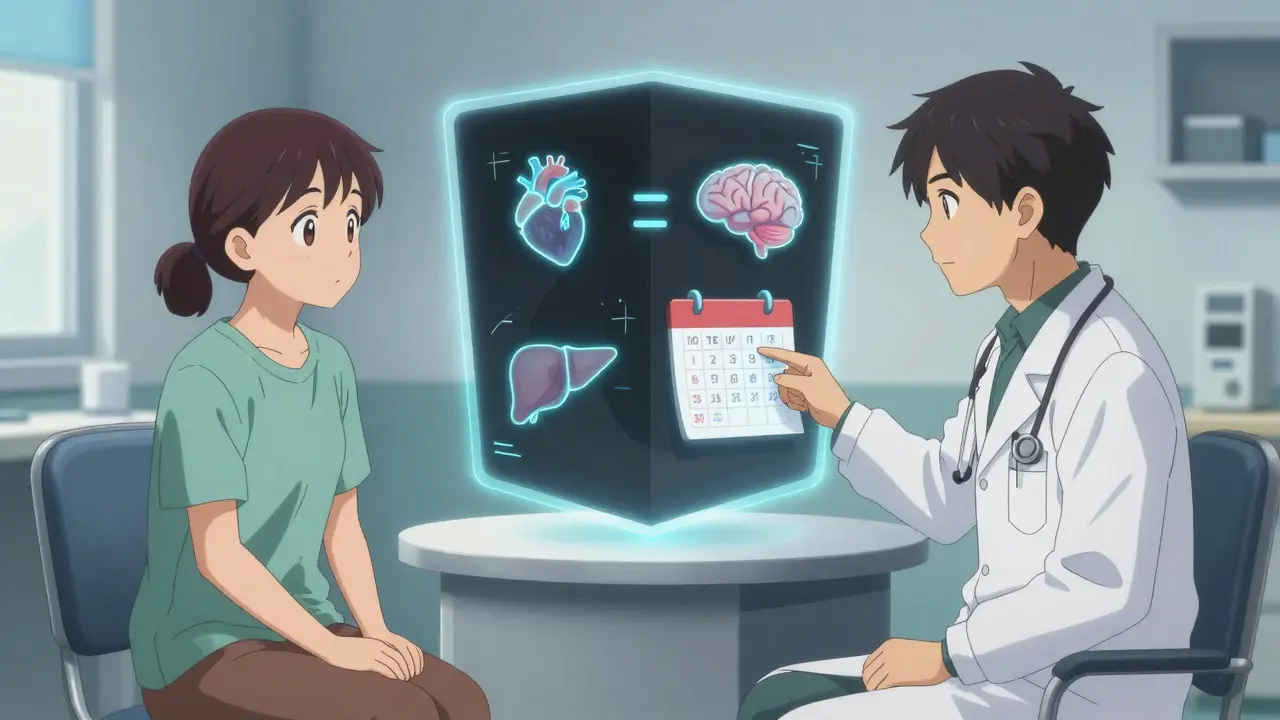
What Boxed Warnings Are NOT
A lot of patients misunderstand these warnings. A 2022 survey found that 41% of people prescribed a drug with a black box warning thought they shouldn’t take it at all. That’s wrong. A boxed warning doesn’t mean “avoid this drug.” It means “this drug needs careful use.” Many people live full, healthy lives on medications with boxed warnings because their doctors helped them weigh the risks against the benefits. For example, a person with severe depression might have a 2% increased risk of suicidal thoughts in the first month on an antidepressant. But without treatment, their risk of suicide is 10 times higher. The benefit outweighs the risk. Or take blood thinners like warfarin or apixaban. They carry a black box warning for serious bleeding. But if you have atrial fibrillation, your risk of stroke without them is 5% per year. With them, it drops to 1-2%. The trade-off makes sense. The warning isn’t there to scare you off. It’s there to help you make an informed choice-with your doctor.What Should You Do If Your Prescription Has a Boxed Warning?
Don’t stop the medication. Don’t panic. Do this:- Ask for a clear explanation. Don’t settle for “it’s risky.” Ask: What exactly is the risk? How likely is it? What are the signs I should watch for?
- Know your personal risk. Are you older? Do you have kidney disease? Are you pregnant or planning to be? Some risks only apply to certain people. Your doctor should tell you if you’re in a higher-risk group.
- Ask about monitoring. Will you need blood tests? How often? Who schedules them? Some drugs require monthly labs. If you miss one, the warning becomes much more dangerous.
- Use the teach-back method. After your doctor explains, say: “So, just to make sure I got this-this drug can cause liver damage, and I need to get blood tests every 4 weeks. If I feel really tired, nauseous, or my skin turns yellow, I should call right away.” If you can’t say it back clearly, ask again.
- Report side effects. If you have a bad reaction, report it to the FDA’s MedWatch program. You can do it online or by phone. These reports help the FDA spot new risks faster.

Are Boxed Warnings Working?
Studies show they do-mostly. When a boxed warning is added, inappropriate prescribing drops by 15 to 25%. That’s good. Fewer people get drugs they shouldn’t. But there’s a downside. A 2021 report found that appropriate use also drops by 10 to 20%. Why? Doctors get nervous. They fear lawsuits. They avoid prescribing even when the patient would benefit. That’s a problem. A patient with severe psoriasis might avoid a highly effective drug because of a boxed warning about liver damage-even if their liver is healthy. The warning, meant to protect, ends up limiting care. Experts like Dr. Jerry Avorn from Harvard say the warnings sometimes aren’t specific enough. Saying “this drug can cause liver damage” doesn’t help if you’re 30 and healthy. It should say “this drug can cause liver damage in patients with existing liver disease or those taking other liver-toxic drugs.” The FDA is trying to fix this. In 2023, they started a pilot program to rewrite warnings in plain language. Instead of “risk of hepatotoxicity,” it might say “this drug can hurt your liver-especially if you drink alcohol or take Tylenol.”What Resources Can Help You?
You don’t have to figure this out alone.- Consumer Reports Best Buy Drugs compares medications in the same class-like different antidepressants or diabetes drugs-and rates them on safety, effectiveness, and cost.
- Drug Effectiveness Review Project (DERP) gives independent, science-based reviews of high-cost or high-risk drugs.
- PatientsLikeMe lets you read real patient experiences with drugs carrying black box warnings. Over 1,200 people have shared how they managed bleeding risks with blood thinners or suicidal thoughts on antidepressants.
- Your pharmacist is a hidden resource. They read the full prescribing info. Ask them: “What’s the most important thing I need to know about this warning?”
Final Thought: It’s About Balance
A boxed warning is not a death sentence. It’s a tool. It’s a signal that this drug needs attention-not avoidance. Millions of people safely use medications with black box warnings every day. They live longer. They feel better. They avoid strokes, seizures, and hospitalizations. The key isn’t avoiding risk. It’s managing it. With the right information, the right monitoring, and the right doctor, you can use these powerful drugs-and stay safe while doing it.Does a boxed warning mean I shouldn’t take the medication?
No. A boxed warning means the drug carries serious risks that require careful use-not that it’s unsafe for everyone. Many people benefit greatly from these medications when risks are properly managed. The warning is there to ensure you and your doctor fully understand those risks before starting treatment.
How long have boxed warnings been around?
The FDA’s boxed warning system evolved after the thalidomide tragedy in the 1960s, but the distinctive black border format became standard in the 1970s. It’s been part of U.S. drug labeling for over 50 years, and it’s now one of the most recognized safety tools in medicine.
Can a boxed warning be removed?
Yes, but it’s rare. If new evidence shows the risk is much lower than originally thought-or if better monitoring practices reduce harm-the FDA can remove or revise the warning. For example, some older warnings about antidepressants have been updated to reflect more precise age-based risks.
Are boxed warnings the same in other countries?
No. The European Medicines Agency (EMA) uses a system called “special warnings and precautions for use,” which is similar but less visually prominent. Other countries may not use black boxes at all. This can create confusion for patients taking the same drug in different regions.
What should I do if I miss a required blood test for a drug with a boxed warning?
Contact your doctor immediately. Missing a required test can increase your risk of serious side effects. Do not take your next dose until you’ve spoken with your provider. For drugs like methotrexate or certain antipsychotics, skipping monitoring can lead to liver damage, low blood counts, or other life-threatening conditions.
Can I report a side effect from a drug with a boxed warning?
Yes. The FDA’s MedWatch program allows patients to report adverse events directly. You can file a report online or by phone. These reports help the FDA identify new safety issues faster and update warnings when needed. Your report could help protect others.
Why do some drugs get boxed warnings years after approval?
Clinical trials involve only a few thousand people over months or a few years. Once a drug is used by millions over decades, rare side effects-like liver failure in older adults or suicidal thoughts in teens-start to appear. Boxed warnings are often added after this real-world data comes in, which is why many warnings are issued 5 to 10 years after a drug hits the market.



I never realized how many meds have these black box warnings until I read this. My uncle’s on methotrexate and he gets blood work every month like clockwork. He says it’s annoying but he’d rather be alive than lazy about it.
Boxed warnings are just corporate liability theater
Let’s be real-the FDA doesn’t care about you. They care about lawsuits. That’s why they slap these on after the drug made billions. The real danger isn’t the drug-it’s the system that lets Big Pharma profit off your fear.
They don’t remove warnings even when evidence clears the drug. Why? Because admitting they messed up would cost them more than letting people panic.
I’ve seen people ditch life-saving meds because of this. That’s not safety. That’s fearmongering dressed up as regulation.
And don’t get me started on the iPLEDGE program. It’s a nightmare for teens with acne. They’re treated like criminals for needing treatment.
The system is broken. We’re not being protected-we’re being manipulated into compliance.
And yes I know this sounds like a conspiracy but when 400+ drugs carry these warnings and half are added YEARS after approval… something’s off.
They’re not warning us. They’re covering their asses.
Have you ever wondered why the same drugs with black boxes are aggressively marketed in the U.S. but barely available in Europe? Coincidence? I think not.
There’s a reason the EMA doesn’t use black boxes. They know it’s psychological manipulation.
And why do these warnings appear after 5-10 years? Because the FDA is complicit. They’re paid by pharma lobbyists. The data? Suppressed until profits peak.
Next thing you know, they’ll start putting QR codes on your pills that link to a survey asking if you’re still alive.
Most people don’t read the insert anyway. The warning exists because lawyers demanded it, not because patients needed it.
You think this is bad? In Nigeria, we don’t even get boxed warnings. We get expired meds with no labels. You’re lucky you have a warning at all. Stop complaining and be grateful you’re not dying from counterfeit antibiotics.
I appreciate this breakdown. My mom was scared to take her blood thinner after seeing the warning. I showed her the stats-stroke risk dropped from 5% to 1.5%. She’s been fine for two years now.
It’s not about avoiding risk. It’s about managing it with eyes wide open.
THIS. So many people panic and quit meds. I’ve seen it. My cousin stopped her antidepressant because of the warning and ended up in the ER. The warning isn’t a stop sign-it’s a caution sign. Talk to your doc. Don’t google it at 3 a.m.
Actually, the real issue is that doctors don’t explain these properly. I had a doctor say ‘this has a black box’ and then just walk out. That’s not informed consent. That’s negligence.
And don’t even get me started on how pharmacies hand you the script like it’s a coupon. No context. No discussion. Just ‘here’s your death sentence.’
It’s not the warning-it’s the lack of human interaction around it.
Oh wow another feel-good PSA about how scary drugs are actually fine if you just trust the system
Right. Because that’s why my cousin’s liver failed on methotrexate after ‘regular monitoring’
Boxed warnings are the medical equivalent of ‘this product may cause spontaneous combustion’
And now I’m supposed to be grateful they didn’t put a skull and crossbones on it
While the intention behind boxed warnings is commendable, their implementation often lacks nuance. The clinical utility of such warnings is diminished when they are not accompanied by standardized patient education protocols. A more structured, tiered risk communication framework may yield superior outcomes.
so i just found out my antidepressant has a black box?? like??? what does that even mean??
im not even sure if i should keep taking it??
my doctor just said ‘its fine’
but now i’m scared
like… what if i suddenly turn into a zombie??
or worse… start thinking about… you know
People don’t understand that boxed warnings are the result of real deaths
Stop acting like the FDA is the villain
If you don’t like it don’t take the drug
But don’t pretend your fear is moral superiority
It’s funny how we treat medicine like a moral test. A warning isn’t a verdict. It’s a mirror. It reflects the complexity of the human body and the limits of our science.
We want drugs to be magic bullets. But biology doesn’t work that way.
A boxed warning is the closest thing medicine has to humility.
Let’s be honest-this entire system is a farce. The FDA is a puppet of Big Pharma. The ‘black box’ is just a marketing tactic to scare you into compliance while they rake in billions.
And don’t get me started on the ‘iPLEDGE’ program-why are teenage girls treated like criminals for needing acne treatment? This isn’t medicine. It’s control.
They don’t want you to be healthy. They want you dependent. On pills. On tests. On fear.
And now they’re ‘rewriting’ warnings in ‘plain language’? As if ‘liver damage’ was too hard to understand? Please. This is theater.
The real danger isn’t the drug. It’s the system that profits from your anxiety.
Just read your comment about the FDA being a puppet. You’re not wrong about the system being broken-but blaming the warning itself is like blaming the smoke alarm for the fire.
The warning isn’t the problem. The silence before it is.